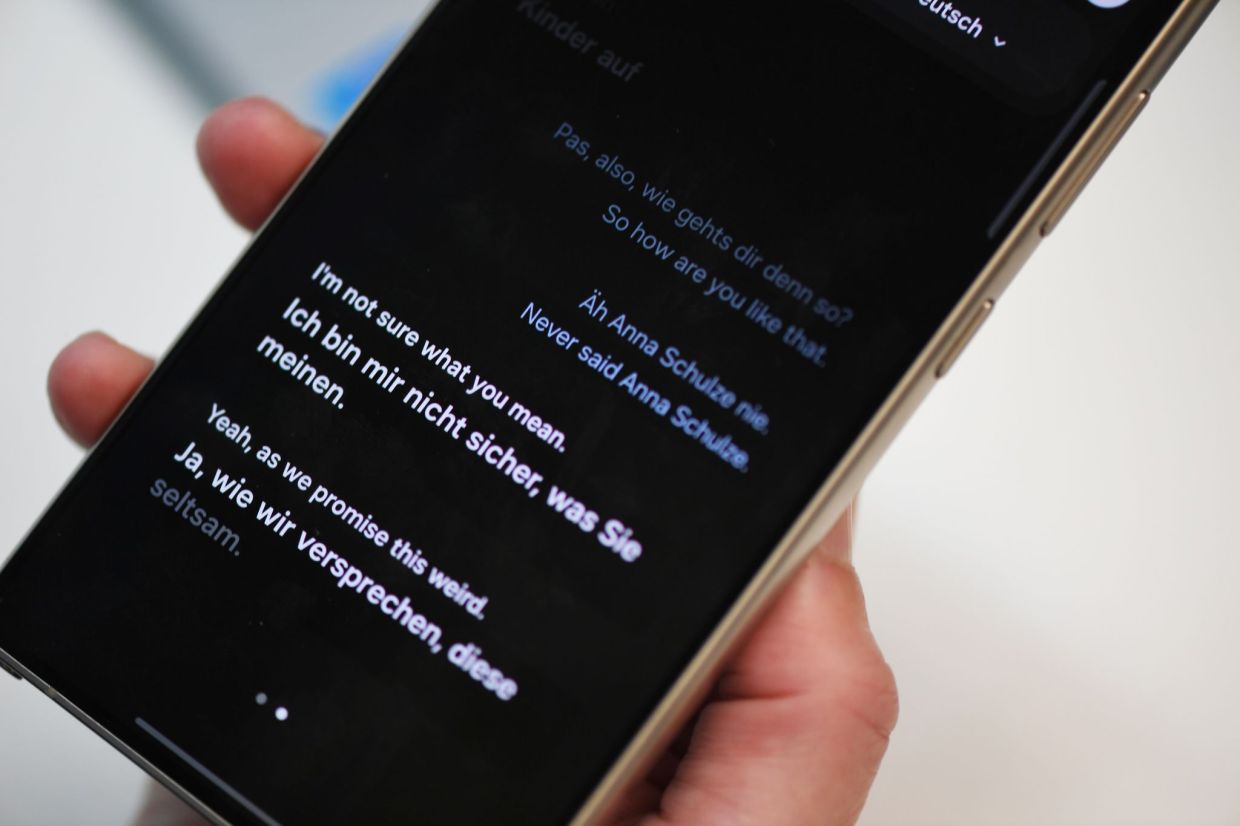
Despite rapid improvements in machine translation technology, artificial intelligence systems remain fundamentally inadequate for high-stakes translation work that demands cultural sensitivity and political awareness, according to research conducted by scholars at Hong Kong and Chinese universities. The findings suggest that reports of human translators and interpreters facing imminent obsolescence may be significantly overstated, at least in the near term.
Researchers from Lingnan University in Hong Kong and Chongqing University of Posts and Telecommunications examined how AI chatbots handled translation and interpretation tasks compared to professional human translators. Their analysis revealed persistent gaps in how machine learning models grasp the deeper layers of meaning embedded in language, particularly when dealing with speeches and documents carrying political, diplomatic, or cultural significance. The team discovered what they characterised as "ideological disparities" between the approaches taken by artificial systems and experienced human professionals, suggesting that the two work according to fundamentally different logics.
Wang Binhua, who leads the Centre for English and Additional Languages at Lingnan University, and his colleague Gao Fei of Chongqing University of Posts and Telecommunications found that even when artificial intelligence systems were supplied with extensive contextual information—including speakers' positions, the dates speeches were delivered, and the prevailing social and political circumstances—the machines still produced translations that diverged markedly from human versions. This discovery carries particular weight for Southeast Asian contexts, where political language often carries layered meanings shaped by regional histories, diplomatic relationships, and cultural traditions that require deep contextual knowledge to convey accurately.
The researchers identified specific patterns in how AI systems failed to preserve meaning. Machine translation tools consistently overrelied on passive grammatical constructions while stripping away the rhetorical flourishes that human translators recognised as essential to the original message. By flattening language into blander, more generic formulations, the artificial systems inadvertently obscured crucial concepts such as responsibility, obligation, and agency—elements that carry particular weight in political discourse where attribution and accountability matter greatly.
The distinction between literal accuracy and meaningful translation emerges as the crucial fault line exposed by this research. A sentence translated word-for-word might appear correct at first glance, yet miss entirely the rhetorical force or political implications the original speaker intended to convey. This problem becomes especially acute in diplomatic contexts, where a single mistranslation can damage relationships between nations or obscure important policy positions. Malaysian policymakers and business leaders engaged in regional negotiations would likely find such mechanical translations inadequate for protecting national interests or ensuring their positions are understood precisely as intended.
Wang and Gao emphasise that "human judgement and oversight remain essential, particularly in politically, diplomatically and culturally sensitive settings." Their conclusion represents a measured but firm assertion that the technology, regardless of recent headline-grabbing improvements, has not yet reached the threshold where it can operate independently in contexts where accuracy carries high stakes. The researchers argue that translation work in sensitive domains requires the exercise of informed professional judgment about how linguistic choices reflect interpersonal relationships, convey rhetorical intent, and express culturally specific meanings.
This research finding gains additional significance when set against recent pronouncements from major technology companies about employment implications of artificial intelligence. Microsoft, in an analysis based on usage patterns of its Copilot artificial intelligence assistant, identified translators and interpreters as professions facing substantial job displacement risk in coming years. That assessment, however, appears to underestimate the persistent demand for human expertise in high-value translation contexts, particularly those involving government communications, international business negotiations, and cross-cultural diplomacy where errors carry real consequences.
For Southeast Asian nations like Malaysia, which operate as bridges between numerous linguistic and cultural traditions and maintain complex diplomatic relationships across the region and globally, the persistence of human translation expertise takes on strategic importance. Government agencies, multinational corporations, and international organisations operating in Malaysia and across ASEAN would struggle to manage sensitive communications relying solely on machine translation systems that demonstrably lack the contextual awareness this research has documented.
The gap between machine and human translation also points to broader questions about artificial intelligence's limitations in domains requiring not merely information processing but genuine understanding. Translation at its highest level involves more than looking up words in a dictionary or applying grammatical rules—it demands comprehension of cultural contexts, historical references, and the subtle ways language communities encode meaning beyond explicit definitions. These elements remain difficult to quantify and encode into algorithmic systems, even as general artificial intelligence capabilities expand.
Future development of translation technology will likely proceed along two tracks rather than following a simple trajectory toward full automation. Routine translation tasks—technical manuals, basic commercial documents, straightforward informational content—may increasingly fall to artificial systems. Simultaneously, high-value translation work in politically sensitive, culturally complex, or strategically important contexts will probably continue to rely on human professionals, potentially augmented by artificial intelligence tools that assist rather than replace human judgment. This division of labour would preserve substantial employment for skilled translators while allowing technology to handle more routine work.
The research underscores an important principle as countries worldwide grapple with artificial intelligence's workforce implications: technological capability does not automatically translate into technological readiness for deployment in every context. Recognising where human expertise remains irreplaceable, particularly in work involving language, culture, and politics, represents a form of technological wisdom that policymakers should heed as they develop artificial intelligence governance frameworks.

