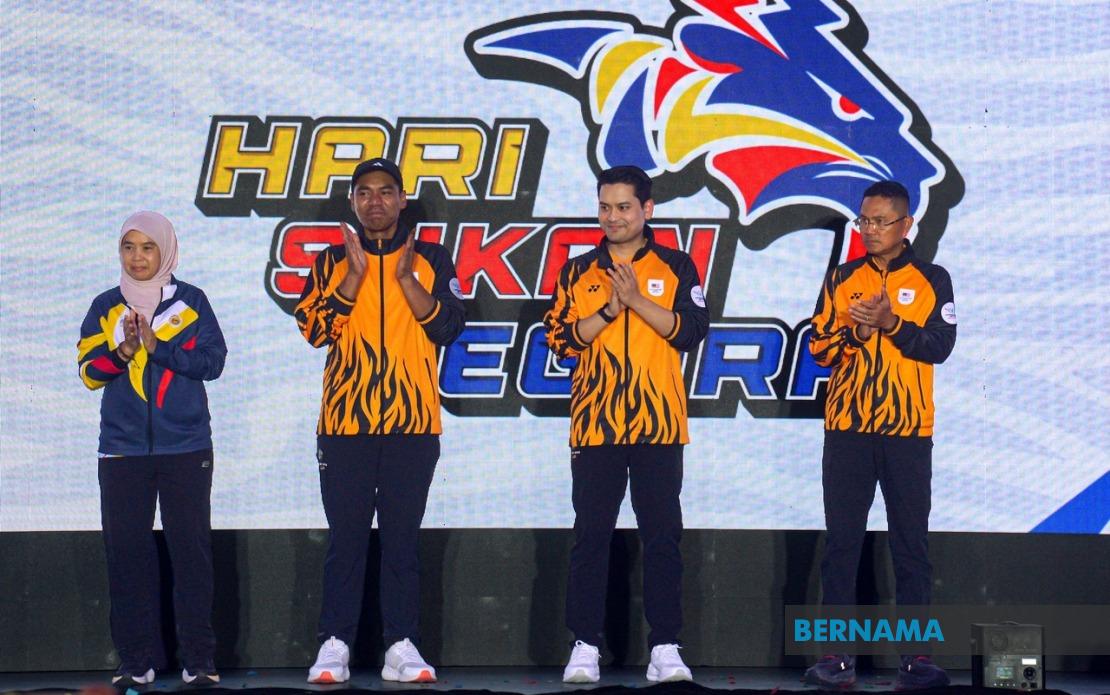
Malaysia's Youth and Sports Minister Dr Mohammed Taufiq Johari has unveiled ambitious plans for the 2026 National Sports Day (HSN), setting a participation target of more than 5.3 million Malaysians during the three-day celebration scheduled for October 9 to 11. The initiative represents a significant shift in how the country approaches public engagement with sports, moving beyond traditional recreational programming to incorporate emerging technologies and digital innovation into its core framework.
The 2026 edition introduces a reimagined visual identity alongside a thematic pivot centred on digital technology and artificial intelligence. This represents more than cosmetic rebranding; it signals a deliberate strategy to position sports development within Malaysia's broader digitalisation agenda. Rather than treating technology as peripheral to sports, the ministry has chosen to make it foundational, embedding AI considerations into programme design and delivery across all participation levels.
A notable aspect of the HSN 2026 pre-launch ceremony was the prominent role of virtual reality technology, signalling the ministry's commitment to experiential modernisation. By incorporating VR elements into the launch itself, organisers demonstrated their vision of how technological tools can enhance public engagement with sporting activities. This approach reflects a recognition that younger demographics, in particular, respond more readily to events that blend traditional sports with contemporary digital experiences.
Dr Mohammed Taufiq addressed a potential misconception about technology-driven sports, particularly regarding esports. He emphasised that the ministry's integration of esports into the HSN framework is not an endorsement of sedentary gaming but rather an opportunity to encourage physical complementarity. The philosophy underpins a broader philosophy that digital athletes should maintain conventional fitness standards, thereby bridging the divide between virtual and physical wellness.
The three-day celebration will incorporate multiple activity streams designed to appeal to diverse participant demographics. The MADANI Fun Run and MADANI Fun Walk represent traditional grassroots participation mechanisms, while the Active Malaysia segment and Sports Industry initiatives provide structure for more organised engagement. The inclusion of Rakan Muda Lifestyle elements ensures that youth-focused programming receives dedicated attention, addressing concerns about declining sports participation among younger Malaysians.
Prime Minister Datuk Seri Anwar Ibrahim will officiate the national-level launch at the National Stadium in Bukit Jalil on October 10, lending significant political weight to the event. This high-level endorsement underscores the government's commitment to repositioning sports within the national development narrative. The choice of the National Stadium as the ceremonial venue carries symbolic importance, linking HSN 2026 to Malaysia's sporting heritage and infrastructure investments.
The timing of HSN 2026 serves a strategic dual purpose within Malaysia's sporting calendar. Beyond the immediate objective of encouraging mass participation in physical activities, the celebration functions as a crucial catalyst for building public enthusiasm ahead of the 2027 SEA Games, which Malaysia will host. By establishing momentum through HSN 2026, organisers hope to generate sustained interest in regional sporting excellence and create a supportive environment for Malaysian athletes competing at higher levels.
Coordination between the Youth and Sports Ministry and the Malaysia SEA Games Organising Committee (MASOC) has intensified, with plans for a dedicated SEA Games Roadshow operating alongside HSN 2026 activities. This integrated approach allows communities across Malaysia to experience elements of the upcoming regional games while simultaneously engaging in their own sporting pursuits. The roadshow component addresses geographical disparity in awareness and participation, ensuring that populations outside major urban centres have meaningful exposure to the 2027 Games narrative.
The expansion of HSN programming across district, state and national levels ensures that participation opportunities exist within accessible geographic proximity for most Malaysians. This decentralised structure democratises access to organised sports activities, reducing barriers for citizens in smaller towns or rural areas. By distributing events across administrative levels, organisers increase the likelihood of achieving their 5.3 million target while strengthening grassroots sports engagement infrastructure.
For Malaysia's broader sports development strategy, HSN 2026 represents an inflection point. The explicit integration of digital technology and AI signals a departure from conventional approaches and positions the country as forward-thinking within the Southeast Asian sporting context. As other regional nations grapple with similar questions about technology's role in sports promotion, Malaysia's comprehensive approach may establish benchmarks for technology-integrated mass participation events.
The initiative also addresses contemporary concerns about public health and sedentary lifestyles, which have intensified following the COVID-19 pandemic. By creating accessible, technology-enhanced sports experiences, the government aims to counteract declining physical activity levels across the population. The explicit linking of esports to conventional fitness represents an acknowledgment that engagement pathways must adapt to contemporary leisure preferences to effectively mobilise participation.
Looking ahead, the success of HSN 2026 will depend on effective implementation across multiple administrative levels and sustained engagement from state and district authorities. The participation target of 5.3 million represents approximately 16 percent of Malaysia's population, an ambitious but achievable figure if execution matches planning. Regional observers will monitor whether this technology-centric approach successfully translates elevated interest into sustained sports participation beyond the October celebration period, potentially reshaping how Southeast Asian nations conceptualise mass sports engagement in the digital age.

