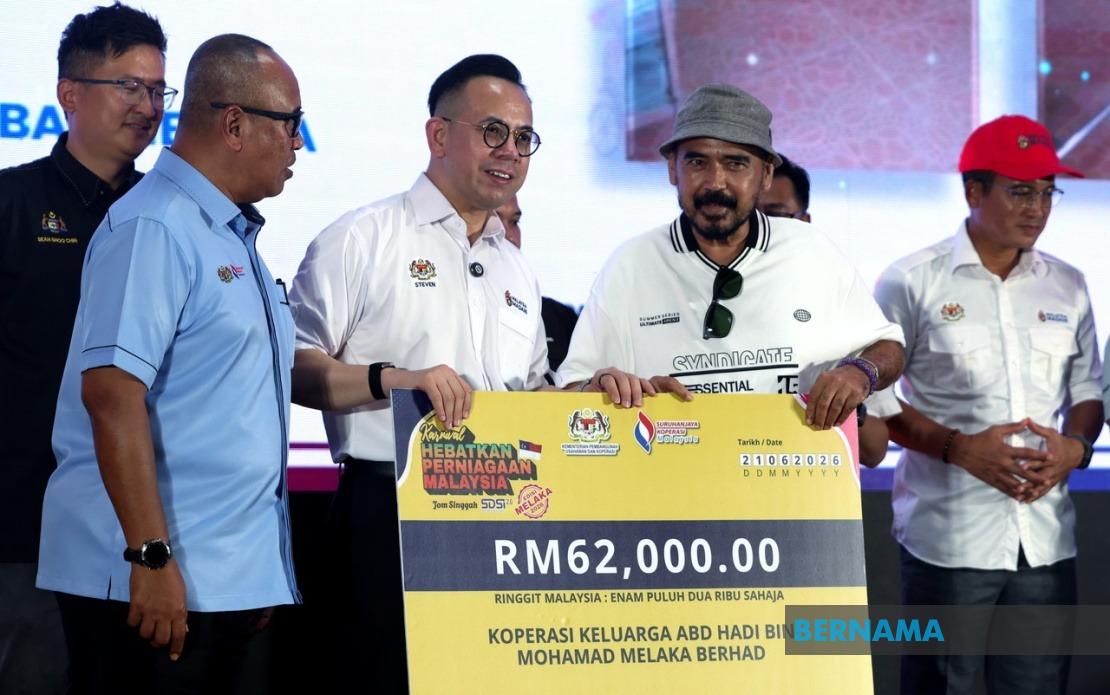
The Empowering Malaysian Businesses Carnival (Karnival Hebatkan Perniagaan Malaysia 2026), held in Melaka from June 19 to 21, has exceeded expectations by generating RM8.45 million in combined business matching value and potential financing for local entrepreneurs. The three-day event, organized by the Ministry of Entrepreneur Development and Cooperatives (KUSKOP), underscores the government's commitment to fostering a vibrant small and medium-sized enterprise ecosystem across the country.
The carnival attracted an impressive footfall of 70,000 visitors throughout its run, reflecting substantial public interest in entrepreneurial opportunities. Beyond mere attendance, the event translated this engagement into tangible commercial outcomes. Direct product sales by participating entrepreneurs reached RM532,802.77, providing immediate revenue streams for participating businesses and demonstrating consumer appetite for locally produced goods and services.
The headline achievement centres on business matching activities, where entrepreneurs connected with potential partners and investors. A total of 72 dedicated matching sessions brought together 25 prospective entrepreneurs with established business leaders and stakeholders. These structured interactions yielded a business matching value of RM6.4 million, representing concrete opportunities for collaboration, expansion, and market entry. Such matchmaking initiatives are crucial in Malaysia's entrepreneurial landscape, where many SMEs struggle with networking and accessing decision-makers who can unlock growth pathways.
Parallel to business matching, the carnival addressed a critical constraint facing Malaysian micro, small, and medium enterprises: access to capital. The financial interaction sessions proved particularly successful, with 55 MSMEs engaging with financing providers and exploring funding options. These conversations generated RM2.05 million in potential financing commitments, a significant outcome given the persistent credit constraints that limit MSME expansion and innovation in Malaysia. Access to affordable financing remains one of the top barriers to enterprise growth in Southeast Asia, making such direct finance-seeker interactions invaluable.
The Melaka carnival represents the second installment in the HPM 2026 series, with momentum carrying forward to subsequent events. KUSKOP has already scheduled the third edition for Penang, set to unfold from July 17 to 19 at the Penang Waterfront Convention Centre. This roadmap approach ensures that entrepreneurial support reaches different regions across the country, recognizing that enterprise ecosystems vary geographically and that regional stakeholders bring distinct opportunities and challenges.
The carnival operates under the broader Hebatkan Perniagaan Malaysia agenda, spearheaded by KUSKOP Minister Steven Sim Chee Keong. This initiative is anchored on the ABCD framework—Accelerating Productivity, Bureaucracy Reduction, Capital Accessibility, and Developing Market Access—which addresses systemic barriers constraining local business development. By combining productivity improvements with reduced red tape, enhanced financing access, and expanded market opportunities, the framework provides a holistic approach to strengthening Malaysia's entrepreneurial foundation.
For Malaysian and Southeast Asian entrepreneurs, the carnival model offers a replicable blueprint for enterprise promotion. Rather than relying solely on passive business advice or theoretical training, the event creates an active marketplace where entrepreneurs, investors, financiers, and corporate partners converge in a single space. This ecosystem approach mirrors successful models in more mature entrepreneurial hubs, adapting them to Malaysia's cultural and economic context. The high visitor numbers and substantial matching values suggest that demand for such integrated platforms is considerable and largely unmet.
The implications extend beyond immediate transaction values. Business matching sessions generate networking effects that persist long after the carnival concludes. Entrepreneurs who connect at these events often establish ongoing relationships, share market intelligence, and collaborate on joint ventures. Similarly, access to financing at such events can catalyze a cascade of economic activity—secured loans fund inventory purchases, workforce expansion, equipment upgrades, and marketing initiatives, each generating secondary and tertiary economic activity throughout the supply chain.
Regional economic dynamics also play a role in the carnival's relevance. Southeast Asia's entrepreneurial landscape is increasingly competitive, with countries like Thailand, Vietnam, and Indonesia aggressively promoting their SME sectors. Malaysia's HPM initiative positions the country as actively invested in enterprise development, which can influence both domestic entrepreneurs' confidence and foreign investor perceptions of the market's dynamism. Regular, well-executed carnival events signal institutional commitment to business development beyond electoral cycles or policy announcements.
The data from the Melaka edition provides policymakers with concrete evidence of program efficacy. The conversion of carnival attendance into matched business opportunities and financing discussions demonstrates that carefully designed interventions can bridge the gap between entrepreneurs seeking growth and capital providers seeking viable investment opportunities. This information should inform future carnival design, potentially suggesting modifications to maximize matching quality, enhance financing conversion rates, or extend reach to underrepresented entrepreneur segments.
Looking ahead, the progression to Penang suggests scalability potential. If the Penang carnival replicates or exceeds Melaka's outcomes, KUSKOP may justify expanding the series to additional regions—Johor, Sabah, Sarawak, and the northern corridor all represent potential venues. Scaling the initiative across Malaysia's geographic and economic diversity would accelerate capital flow to underserved entrepreneurial communities and reinforce the government's pro-business positioning.
The HPM carnival ultimately reflects recognition that entrepreneurial success in Malaysia requires more than policy reform or financial incentives. It requires ecosystems where entrepreneurs can readily access expertise, capital, market information, and collaborative partners. By creating temporary but intensive platforms where these elements converge, KUSKOP addresses a real gap in Malaysia's business support infrastructure. As subsequent carnivals unfold, monitoring outcomes will reveal whether this model can sustain momentum and consistently deliver transformative results for Malaysian enterprises.