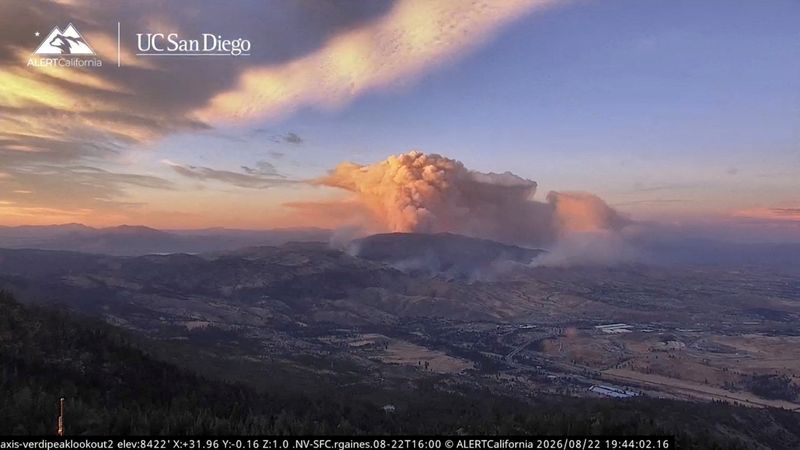
In an era when smartphones and social media platforms generate an endless stream of photographs and video footage documenting events as they unfold—from personal celebrations to natural disasters—news organisations face an unprecedented challenge. The democratisation of content creation has furnished global journalism with raw material from eyewitnesses at the scene of history. Yet this same ecosystem has become a breeding ground for deception. Artificial intelligence has advanced to the point where it can generate hyper-realistic images and videos of events that never occurred, or alter genuine footage to misrepresent what actually transpired. For a major news organisation like Reuters, distinguishing authentic documentation from sophisticated fabrication has become a core editorial function.
Reuters operates a dedicated team of journalists focused exclusively on visual verification, tasked with combing through the vast quantities of images and video circulating online whenever significant events break. Their mission is straightforward but labour-intensive: establish whether the imagery genuinely depicts the events, locations, and times claimed by those who share it. From conflict zones to border crossings, from street protests to humanitarian crises, these specialists examine hundreds of submissions daily, ultimately publishing perhaps a dozen after rigorous validation. This gatekeeping function reflects a fundamental principle that has governed Reuters since World War Two—the obligation to deliver news that is accurate, impartial, and trustworthy.
The practical necessity for this verification apparatus stems from the sheer geographic and temporal impossibility of traditional news gathering. Although Reuters maintains a global presence with approximately 2,600 journalists stationed across some 200 locations worldwide, no news organisation can station reporters at every location where news breaks. Critical events occur unpredictably and without warning in countless places simultaneously. Eyewitness footage has thus become indispensable to modern journalism. Reuters has broken major international stories precisely because its verification teams authenticated images from ordinary citizens documenting events firsthand—evidence of American missiles striking an Iranian school, details of fatal police actions in American cities, and documentation of countless other incidents that might otherwise have remained hidden from public view. The public, in effect, has become an extended global newsgathering network.
Yet the emergence of increasingly sophisticated artificial intelligence poses a direct threat to this model. What was once easily detectable—AI-generated images marred by unrealistic details like fingers numbered incorrectly or text rendered in nonsensical characters—has evolved into content nearly indistinguishable from authentic photography. Operators with malicious intent can feed genuine photographs and video of real locations, real people, and real events into AI systems, which then manipulate this material to create convincing but false versions. Recent examples abound: following reports in January of Venezuelan President Nicolás Maduro's alleged capture, social media users circulated artificial images purporting to show him in handcuffs—a false depiction of a genuine event. Similar tactics have been employed in the lead-up to the 2026 U.S. midterm elections, where fabricated advertisements have been weaponised to mislead voters about candidate behaviour and positions.
Beyond AI-generated content, traditional forms of media manipulation persist and complicate verification efforts. Social media users regularly repurpose archival footage of genuine protests, demonstrations, or incidents from years past, but misdate or relocate them by falsely claiming the material documents current events occurring elsewhere. This form of deception requires no sophisticated technology—merely dishonest intent—yet it spreads rapidly and can shape public perception of ongoing situations. The verification team must thus contend with both cutting-edge synthetic media and conventional bad-faith misrepresentation.
The Reuters visual verification process follows a methodical protocol designed to establish authenticity with confidence. Critically, the team attempts to locate the individual who originally captured the image or video. Confirming the source's identity and, when possible, conducting an interview allows journalists to corroborate details about what the eyewitness observed and the circumstances under which they documented the event. Many digital images and videos contain embedded metadata—technical information recording the precise location and time of capture, plus details about the device used. When available, this metadata provides concrete evidence anchoring the content to specific coordinates and moments.
Verification journalists cross-reference visual content against multiple sources of publicly available information. Meteorological records establish what weather conditions prevailed at the location and time in question. Satellite imagery provides independent confirmation of geographic features and can reveal changes in landscapes or infrastructure. Street-view applications and archival photographs offer comparative visual references. The position and angle of shadows within an image can determine the approximate time of day when the photograph was taken, narrowing the temporal window. Official statements, news reports from other organisations, and corroborating footage shot from different angles by other eyewitnesses all contribute to building a comprehensive evidentiary picture.
This assembling of evidence resembles the construction of a puzzle—individual pieces may initially suggest different interpretations, but once sufficient elements align, a coherent and convincing image emerges. Only at that point does Reuters consider the material sufficiently authenticated for publication. The process is deliberately laborious, acknowledging that premature or erroneous publication can cause significant harm by spreading misinformation.
To address the AI dimension specifically, Reuters journalists employ detection tools trained to identify traces of artificial manipulation or synthesis. These technological filters scan images and video for digital artefacts that suggest AI involvement, sometimes detecting anomalies invisible to human observation. However, these tools remain imperfect—they cannot yet identify all synthetic content with absolute certainty, and they occasionally generate false positives. The detection software functions as an additional check rather than a definitive answer. The ultimate judgment rests with the journalist, who must synthesise all available evidence—metadata, corroborating sources, detection software outputs, and direct communication with the content creator—into a reasoned conclusion about authenticity.
This decision-making process grows incrementally more demanding as AI capabilities advance. Each technological leap in synthetic media generation challenges the verification team's existing methods and requires continuous adaptation. The team must remain perpetually current with emerging AI capabilities, understanding not merely what is theoretically possible but what criminals and state actors are actively deploying. This arms race between those generating synthetic content and those attempting to detect it shows no signs of slowing.
For Malaysian and Southeast Asian readers, these verification challenges carry particular relevance. The region has witnessed increasing instances of coordinated disinformation campaigns exploiting social media platforms, often employing doctored images to inflame communal tensions or discredit political opponents. As election cycles approach and regional geopolitical tensions persist, the techniques Reuters describes become directly applicable to local news consumption. Individual citizens can apply similar verification principles when encountering striking images on social media—checking sources, seeking corroborating evidence, and remaining skeptical of content that appears too perfectly illustrative of a particular narrative.
The broader implication extends beyond technical verification procedures. Reuters' commitment to maintaining rigorous standards for visual content reflects a foundational principle of modern journalism: that citizens deserve access to truthful information, and that news organisations bear responsibility for ensuring the material they publish meets evidentiary standards. In a media ecosystem increasingly corrupted by synthetic content and deliberate misrepresentation, this commitment becomes more essential, not less. The journalists dedicated to visual verification occupy the frontline of this battle, examining hundreds of images so that readers can trust the handful that appear in the publication.

