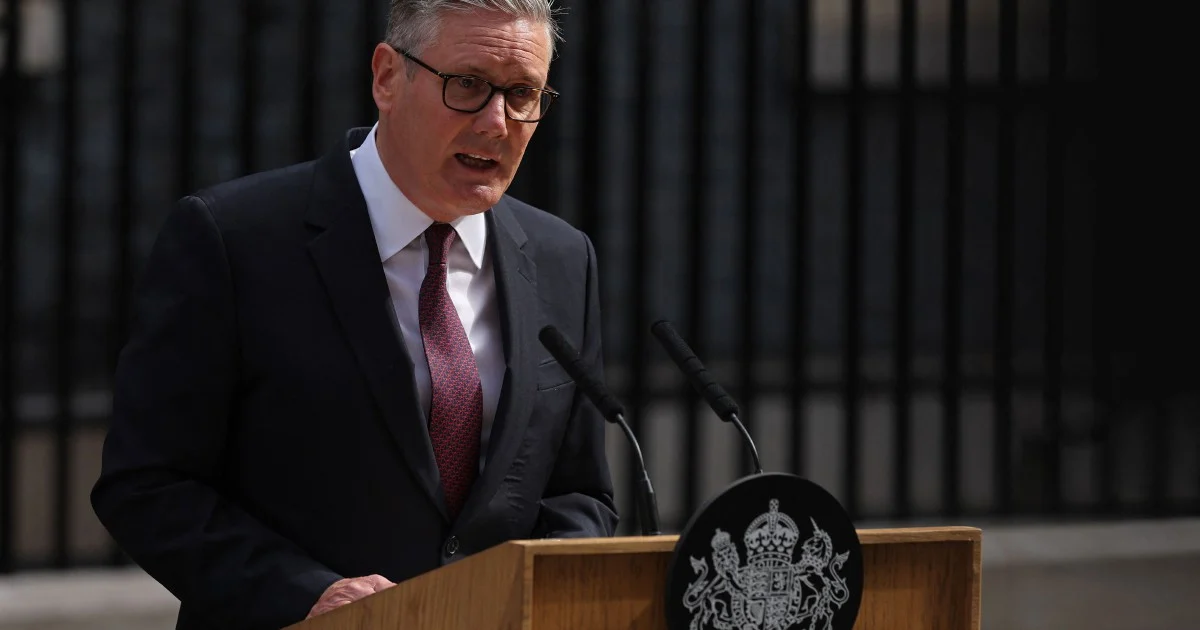
Keir Starmer's announcement on Monday that he intends to step down as Prime Minister has triggered a significant institutional process that will reshape Britain's political landscape by autumn. The timeline for his departure is constrained by the parliamentary calendar: the government must settle on a replacement before lawmakers return from their summer recess in September, leaving little margin for a prolonged transition period. This compressed schedule reflects the practical necessity of having a functioning cabinet and clear party direction when the House of Commons resumes legislative business.
The succession mechanism within Britain's constitutional framework differs markedly from many other democracies. The country does not hold national elections to determine which individual becomes Prime Minister; instead, the role passes to whoever commands the confidence of the House of Commons. In practice, this typically means the leader of whichever party holds a parliamentary majority. Since Labour secured that position in the 2024 general election, the party's internal selection process will effectively decide the next occupant of 10 Downing Street.
Within the Labour Party, the leadership election process involves members from across the United Kingdom voting on candidates who have secured sufficient endorsements from fellow MPs. The democratic dimension of British party leadership contests has evolved significantly over recent decades, with rank-and-file members now wielding considerable influence rather than MPs alone determining the successor. This expansion of the electorate has made Labour leadership races increasingly competitive and unpredictable, as appeals to grassroots activists may differ substantially from those that resonate with parliamentary colleagues.
The endorsement threshold required before candidates can proceed to the membership ballot serves as a crucial gating mechanism. Prospective leaders must gather backing from a specified minimum number of Labour MPs, currently set at a proportion of the parliamentary group. This requirement aims to ensure that serious candidates possess demonstrable support among elected representatives while preventing the ballot from becoming unwieldy with numerous contenders. The threshold consequently filters the field to a manageable number of heavyweight figures with genuine parliamentary backing.
The compressed timeline until September creates distinct advantages and disadvantages for various potential candidates. Those with high public visibility and established party credentials can mobilise support more quickly, whereas less prominent figures face a steep climb in establishing themselves as credible alternatives. The speed of the process may also favour candidates who avoid controversial positions during the campaign itself, given the limited time for sustained media scrutiny and public debate on divisive policy questions.
For Malaysian and broader Southeast Asian observers, Britain's leadership succession presents an intriguing contrast to political systems in the region. The involuntary nature of Starmer's departure—a resignation rather than an election defeat—highlights how Westminster systems can experience abrupt leadership changes driven by internal party dynamics or public pressure. This differs from presidentialist models where a fixed term provides greater stability, though it also raises questions about party authority and accountability.
The pattern of seven prime ministers within a decade underscores a troubling volatility that has characterised British politics since 2014. David Cameron, Theresa May, Boris Johnson, Liz Truss, Rishi Sunak, and now the imminent departure of Keir Starmer illustrate how the office has become increasingly unstable despite the formal constitutional framework remaining unchanged. This instability complicates Britain's capacity to pursue long-term strategic objectives in areas ranging from economic policy to international relations, a concern that resonates with any government seeking predictable partnership with the UK.
The substance of Labour's leadership contest will likely centre on the party's direction following what many perceived as disappointing early performance by the Starmer administration. Candidates will need to articulate visions for economic management, public service reform, and international positioning that appeal both to the membership's ideological preferences and to swing voters in key constituencies necessary for electoral victory. The balance between these constituencies within Labour has historically generated considerable tension, and the next leader will inherit this fundamental tension.
International dimensions deserve attention as well. Britain's position within NATO, its approach to European relations post-Brexit, and its capacity to engage constructively with allies including Malaysia and other Commonwealth nations all depend on having coherent strategic direction from the top. A leadership change during a period of geopolitical uncertainty adds an element of unpredictability to Britain's foreign policy posture, particularly regarding engagement with Southeast Asia where the UK has been attempting to strengthen partnerships.
The Labour Party's rules governing the timetable for its leadership election will compress considerably the usual campaign period. Rather than the months-long contests that characterised some previous Labour leadership elections, candidates will have weeks to present themselves, gather endorsements, campaign among members, and allow the membership to vote. This acceleration may advantage incumbents or those already in senior positions within the party apparatus, who possess existing networks and media platforms.
Political betting markets and media analysis will intensify dramatically once candidates formally declare their intentions. Figures such as Shadow Secretary of State for Environment, Food and Rural Affairs Yvette Cooper or others in prominent shadow cabinet positions may emerge as frontrunners, though surprise candidacies occasionally reshape leadership races. The outcome will depend on how effectively individual candidates mobilise parliamentary supporters and subsequently appeal to the broader membership during what will necessarily be a frenetic campaign.
Ultimately, the succession of Keir Starmer illustrates both the flexibility and the fragility of Westminster governance. While the system successfully transitions between leaders without constitutional crisis, the frequency of such transitions under Starmer's tenure suggests deeper problems relating to party management, public confidence, and the sustainability of governments operating with narrow parliamentary majorities. Malaysia and other nations observing British politics may find instructive lessons about the importance of political stability and the risks that emerge when leadership becomes excessively volatile.