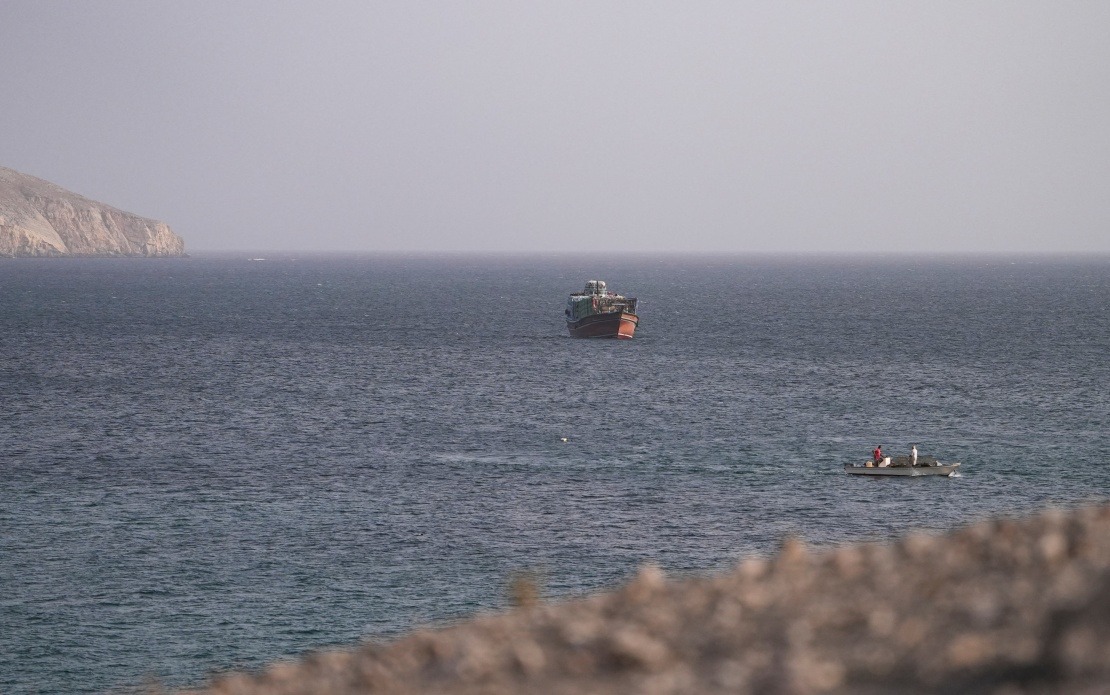
Iran's Foreign Ministry Spokesperson Esmaeil Baqaei has asserted that the Strait of Hormuz, one of the world's most critical chokepoints for global energy supplies, will not revert to its pre-war configuration under any circumstances. Speaking during a televised interview on Sunday night, Baqaei stressed that any forthcoming agreement with Oman should not be misinterpreted as a simple reopening of shipping lanes to their previous state. Instead, Tehran views the current period as an opportunity to fundamentally reshape maritime governance in the strategically vital waterway that separates Iran from Oman on the Arabian Peninsula's eastern edge.
The Iranian government has framed its ongoing bilateral negotiations with Oman as rooted in a shared responsibility between the two coastal nations to manage security and ensure safe passage through the strait. These discussions have intensified since a ceasefire took effect on April 8, following what Iran references as "the war." The timing and substance of these talks underscore Iran's determination to lock in any agreements before external pressures or changed circumstances can intervene. Baqaei emphasised that multiple rounds of diplomatic exchanges have already occurred, suggesting a structured negotiation process rather than ad-hoc discussions.
The Iranian diplomat highlighted that Foreign Minister Abbas Araghchi made Oman his first international destination following the conflict, a symbolic gesture that demonstrates the primacy Tehran assigns to reshaping the strait's management. During those meetings with Sultan Haitham bin Tariq and Oman's foreign minister, officials discussed both the immediate humanitarian imperative of establishing secure maritime routes and the longer-term institutional framework for the waterway's future governance. This positioning of Oman as Tehran's primary interlocutor on the issue reflects Iran's preference for bilateral rather than multilateral arrangements.
According to Baqaei, the provisions of the memorandum of understanding that concluded the conflict explicitly assign responsibility for the strait's future management to Iran, though with a requirement to consult Oman and engage in dialogue with other regional actors. Clause five of this agreement appears to grant Tehran substantial discretion in determining how the waterway functions going forward. This contractual foundation provides diplomatic cover for Iran's unilateral assertion of authority while maintaining the appearance of regional consensus-building.
Baqaei disclosed that during the initial three weeks of implementing the ceasefire agreement, the northern shipping route through the strait operated without significant impediment and maintained regular traffic flows. However, he attributed the subsequent disruption of these arrangements to what he characterised as "an act of aggression against Iran," suggesting that developments beyond the bilateral Iranian-Omani framework destabilised the tentative normalisation. This narrative construction allows Tehran to blame external actors rather than accept responsibility for constraining maritime access.
Crucially, the Iranian spokesman revealed that any newly agreed maritime corridor would constitute a third option, distinct from both the current northern and southern routes through the waterway. This redrawing of maritime geography would essentially allow Iran and Oman to establish customised navigation channels that reflect their security preferences and geopolitical interests. The creation of such a bespoke route would represent a significant departure from the historical free passage that international law traditionally guarantees through international straits.
Baqaei emphasised that these maritime discussions remain strictly bilateral and do not involve third-party interests, a statement designed to deflect international concern and assert Iranian sovereignty over the negotiation process. However, the Strait of Hormuz's global significance—approximately one-third of the world's maritime oil trade transits through it—means that any substantive restrictions inevitably affect international commerce and geopolitical interests far beyond Iran and Oman. This disconnect between Iran's framing of the discussions as purely regional and their obvious international dimensions reflects the diplomatic tension inherent in the situation.
The Iranian official articulated Tehran's central security concern: preventing the strait from being weaponised by actors who have engaged in military action against Iran. This preoccupation reflects the country's experience during recent conflicts and its determination to establish mechanisms that respect Iranian sovereignty while restricting access by perceived adversaries. Baqaei's insistence that "Iran's sovereign rights are fully respected" signals that any maritime framework must enshrine Iran's ability to deny or restrict passage under conditions it determines.
Baqaei addressed American threats against Iran with studied dismissiveness, contending that such rhetoric represents nothing novel and pales compared to the military actions the country has already endured. He referenced what he described as multiple instances of "high-intensity military aggressions," framing Iran's strategic posture as hardened by experience. This rhetorical positioning attempts to inoculate Iran against international pressure by suggesting that intimidation tactics have historically failed to alter Tehran's behaviour.
The Iranian spokesperson reiterated that Tehran's strategic calculations rest entirely on national interest and security considerations, dismissing suggestions that warnings or media campaigns might prove persuasive. He attributed recent claims by American officials that Iran sought to de-escalate to deliberate misinformation, describing such statements as psychological warfare. This framing allows Iranian officials to maintain an aggressive public stance while potentially engaging in quiet diplomatic channels without appearing to contradict their principled positions.
Baqaei referenced recent diplomatic contacts from Bulgaria, the United Kingdom, and Ukraine, suggesting international engagement continues despite tensions. He reframed Iran's messaging as fundamentally cautionary rather than threatening, asserting that Tehran merely warns about consequences rather than initiating confrontation. This rhetorical strategy positions Iran as a reasonable actor responding to external provocations. Yet his subsequent statement that countries providing military support to aggressor states would share responsibility for their actions suggests Iran reserves the right to respond against nations it views as complicit.
The Iranian official concluded by decoupling the question of whether the Strait of Hormuz functionally reopens from the question of what maritime arrangements eventually replace previous conditions. This distinction allows Iran to claim progress toward normalisation while maintaining the capacity to restrict traffic if circumstances change. He explicitly linked the waterway's ultimate status to "regional security developments and actions taken by the United States," indicating that American policy will remain a decisive factor in Iran's willingness to fully restore maritime commerce.
For Malaysian policymakers and businesses dependent on maritime trade, this Iranian statement signals that the Strait of Hormuz's operational status remains fluid and contingent on geopolitical developments beyond commercial interests. Any substantial disruption to the waterway would directly threaten Malaysia's energy imports and regional trade flows, making the outcome of the Iranian-Omani negotiations a matter of significant economic consequence for Southeast Asia.

