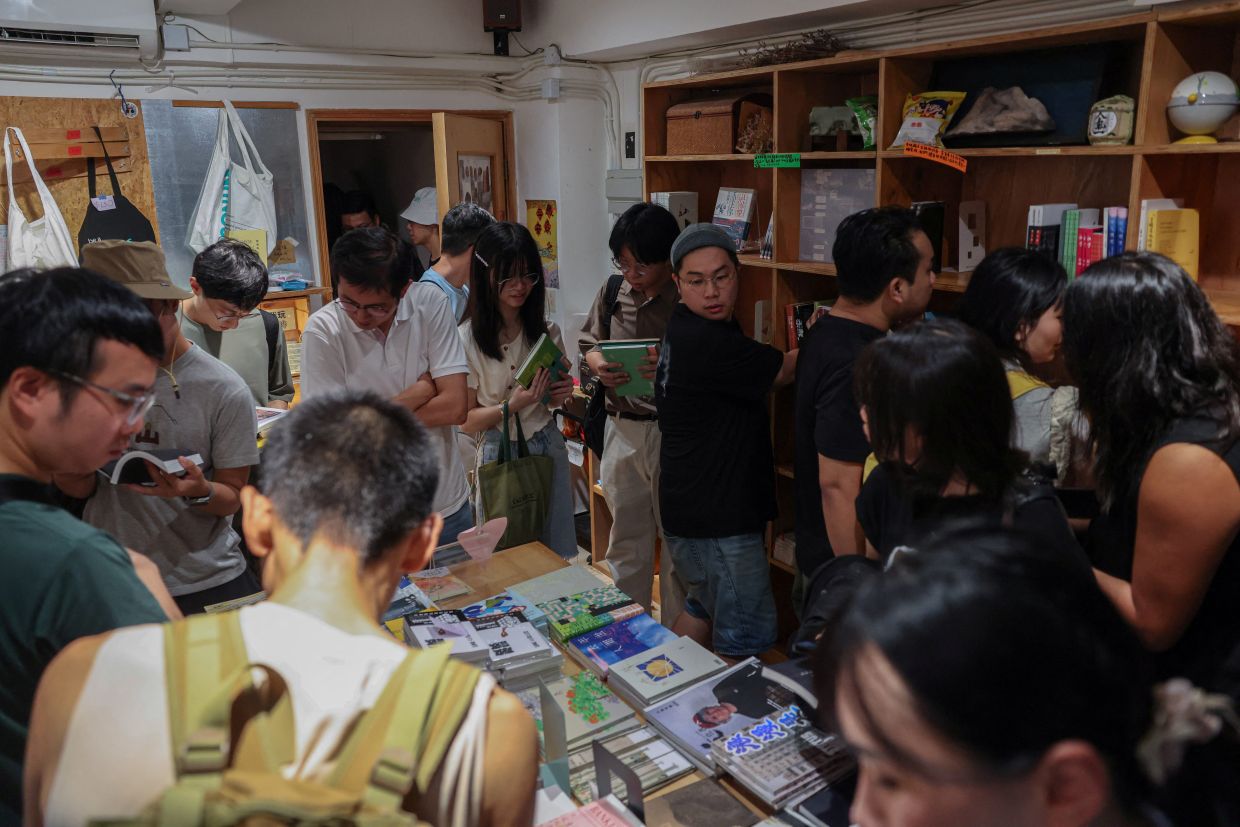
Hong Kong's thriving ecosystem of independent bookstores—spaces where mainland Chinese university students could access politically sensitive titles and encounter perspectives absent from Beijing's controlled media—now teeters on the brink of collapse. Recent police operations targeting four bookshops over alleged sedition charges have accelerated a retreat that began with the 2020 security law, raising concerns about the erosion of intellectual freedom in a city once celebrated as a publishing powerhouse. The closures represent far more than the shuttering of retail operations; they symbolise the tightening of ideological boundaries in a territory that promised to maintain distinctive freedoms after its 1997 return to Chinese sovereignty.
For mainland readers like Fleming Cheng, these bookstores functioned as windows onto a world unavailable at home. Before discovering Greenfield Book Store, Cheng had only glimpsed book covers online through virtual private networks designed to circumvent Beijing's Internet censorship. Once inside the shop, he encountered works offering critical analysis of China's political systems and accounts of leaders who sympathised with pro-democracy movements, particularly the figures associated with the Tiananmen Square demonstrations of 1989. These volumes represented not merely different opinions but fundamentally alternative narratives—perspectives that diverged sharply from the mainland's tightly curated official accounts. For Cheng, the bookstore represented a tangible connection to intellectual pluralism.
The independent bookstore sector's vulnerability became starkly apparent within a compressed timeframe. Between March and July, authorities arrested booksellers at Book Punch, Hunter Bookstore, Greenfield, and Have A Nice Stay on charges of selling seditious publications. Greenfield, which had operated for fifty years, announced its closure upon lease expiration following the police action, though bail was granted to those detained. Have A Nice Stay, established by former journalists, shut its doors in August citing both "elusive red lines" and mounting financial pressures, creating an atmosphere of uncertainty even before its proprietors faced arrest on the same day as Greenfield's operators. This coordinated enforcement pattern conveyed unmistakable messaging to the broader independent publishing community.
The strategic significance of these bookstores extends beyond Hong Kong's borders. They have provided crucial conduits through which mainland readers access materials their government suppresses—works examining sensitive historical events, critiques of governance, and analyses of China's political trajectory. By closing these physical spaces, authorities effectively narrow the channels through which alternative viewpoints circulate among educated mainland audiences. As Cheng observed, the transformation of Hong Kong into ideological alignment with mainland practices would represent a profound loss for those seeking intellectual diversity. The bookstores functioned not as radical political platforms but as ordinary commercial spaces where readers could encounter unfiltered information.
The legal framework authorising these enforcement actions remains deliberately opaque. Officials prohibit statements with "seditious intention" designed to incite hatred against or overthrow the governments of China or Hong Kong, yet authorities have declined to specify which books they classify as seditious or to establish an official banned list. Security Secretary Chris Tang offered an analogy: booksellers bear responsibility for their inventory much as food vendors ensure their products do not sicken consumers. This formulation obscures rather than clarifies the boundaries of permissible speech, forcing booksellers into positions of perpetual legal jeopardy. An anonymous bookseller described the paralysing uncertainty surrounding what constitutes seditious content, particularly regarding titles addressing China's contemporary political landscape. Landlords, meanwhile, have begun scrutinising their tenancy agreements after facing official harassment, effectively weaponising property rights as an enforcement mechanism.
Hong Kong's transformation represents a dramatic reversal from its historical trajectory. As a former British colony, the territory cultivated a distinct identity grounded in freedoms of publication and expression that exceeded those available on the mainland. In 2015, however, the disappearance of bookseller Lam Wing-kee and his associates from Causeway Bay Books—a shop renowned for selling politically sensitive titles—signalled the fragility of these protections. Lam's subsequent revelation that Chinese authorities had detained him contradicted official narratives and exposed the vulnerability of Hong Kong's supposedly independent judicial system. Following that episode, publications addressing sensitive political topics progressively vanished from Hong Kong's commercial shelves.
The 2020 national security law intensified this trajectory dramatically. The legislation precipitated the arrest of prominent activists, the dissolution of civil society organisations, and the systematic removal of books addressing the Tiananmen crackdown and works by pro-democracy figures from public library collections. At the city's annual book fair, smaller independent publishers faced exclusion from exhibitions, whilst pro-Beijing media outlets characterised independent book events as manifestations of "soft resistance." Despite this escalating pressure and intensified official inspections, many bookstores persisted, some combining retail operations with cultural activities designed to sustain intellectual engagement. That resilience now appears to have fractured under the weight of sedition prosecutions.
Taiwan has emerged as an alternative publishing hub for Chinese-language works as Hong Kong's restrictions deepened. Between 2020 and 2024, Taiwan's publishers released six times the volume of books addressing Hong Kong compared to the preceding five-year period, according to Tunghai University sociology professor Cheng Tsu-Bang. This dramatic expansion reflects a deliberate effort by Taiwanese publishers to fill the void created by Hong Kong's contracting intellectual space whilst simultaneously establishing what amounts to an archive of works addressing sensitive topics. Taiwan has functioned as a repository and distribution point for material that Hong Kong authorities might suppress. However, that lifeline now faces potential constriction; reports indicate that logistics firms have begun refusing orders to ship books from Taiwan to Hong Kong bookstores under investigation, effectively implementing informal censorship across the strait.
The human dimensions of this crackdown resonate particularly among younger readers and diaspora communities. Iris Wang, a Guangdong university student, recognised that Hunter Bookstore distinguished itself by encouraging critical thinking rather than merely replicating the commercial practices of mainland retailers. Brian Leung, a Hong Kong resident, found each independent bookstore possessed distinctive character and significance; when arrests occurred at shops he frequented, he experienced the loss as something fundamentally precious to Hong Kong's identity being systematically rejected. Some readers visited these spaces for non-political reasons—seeking niche publications or simply appreciating their tranquil atmospheres. Lee, a Hong Kong author who relocated to Taiwan and published works addressing the city's pro-democracy movement, described independent bookstores as bridges connecting diaspora writers to their homeland and conduits through which works about Hong Kong reached the city itself.
The closure trajectory suggests that what once appeared as temporary restrictions now represents permanent architectural change. Lee invoked the metaphor of a boulder rolling downhill, crushing everything in its path—a description of how civil society structures collapse once foundational protections erode. The independent bookstores, though physically modest, constituted crucial spaces where citizens could maintain intellectual autonomy and access unmediated information. Their disappearance carries symbolic weight extending far beyond retail economics; it signals the effective completion of Hong Kong's integration into mainland governance structures regarding information control and ideological conformity. As Lee observed, readers face a stark, deliberate, and seemingly irreversible message that the "borrowed time" during which Hong Kong maintained distinctive freedoms approaches its terminus.
For Southeast Asian observers, Hong Kong's trajectory offers cautionary instruction regarding how security legislation can be weaponised to contract intellectual freedom within nominally autonomous jurisdictions. The absence of explicit banned book lists, the vague characterisation of seditious intent, and the reliance on prosecutorial discretion create systems where self-censorship becomes rational behaviour. Publishers, booksellers, landlords, and logistics firms all respond by retreating from borderline cases, producing effective censorship without formal banning mechanisms. This model potentially influences how other regional governments conceptualise security governance, particularly those seeking to balance nominal freedoms with enhanced information control. The bookstores' collapse demonstrates how incremental legal innovations, when deployed against vulnerable cultural institutions lacking powerful political constituencies, can fundamentally restructure the intellectual landscape of entire cities.

