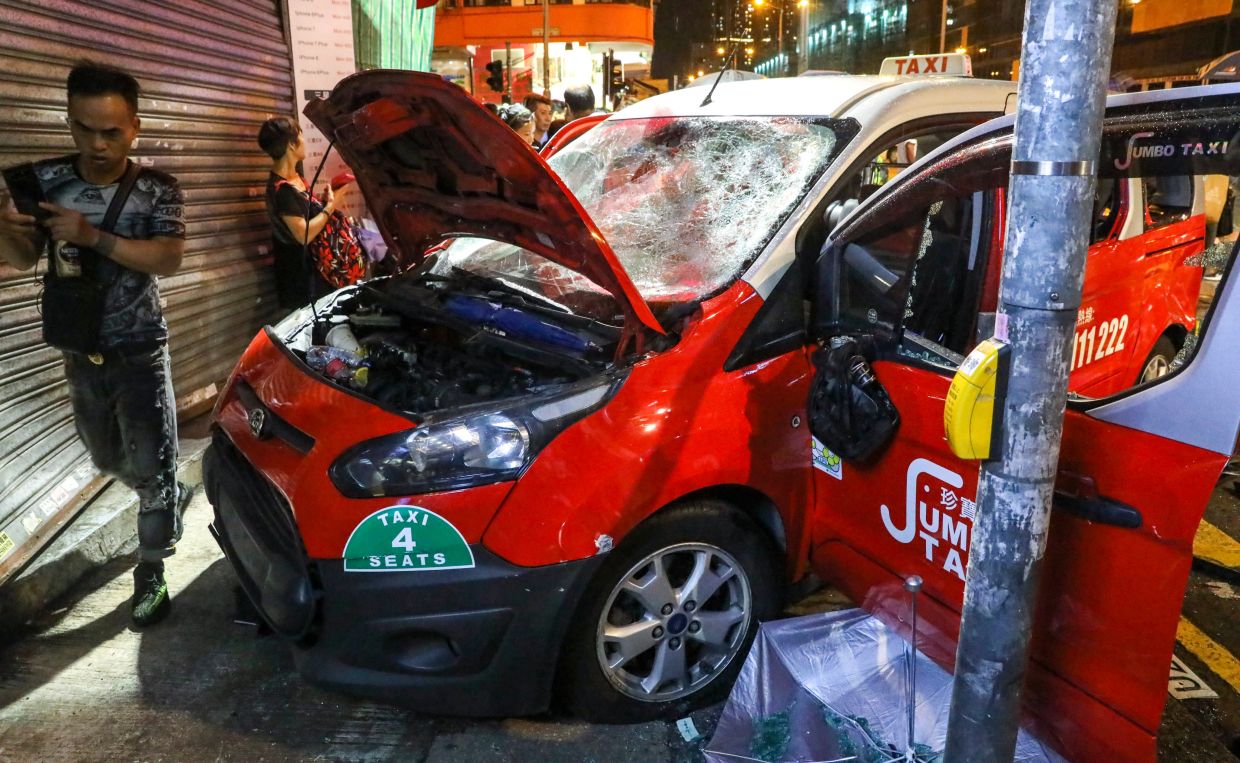
Park Hoi-lam's legal team presented closing arguments this week seeking HK$8.4 million (US$1.07 million) in compensation from taxi driver Henry Cheng Kwok-chuen after his vehicle struck her on a pavement in Sham Shui Po on October 6, 2019. The case, initiated in 2022, has become a focal point for examining how Hong Kong courts apportion responsibility in incidents occurring during the chaotic protest environment that defined that period. The plaintiff's counsel contends that Cheng's actions were fundamentally negligent, regardless of circumstances surrounding the broader confrontation.
The collision occurred as Park made her way through Sham Shui Po after road closures forced her and companions to leave a bus partway through their journey to Tsim Sha Tsui. When rail services also proved inaccessible, the group opted to walk toward Mong Kok. Park became separated from her friends and was traversing Yen Chow Street when the incident happened. She described the immediate environment as calm before a sudden commotion erupted near the taxi. She has consistently maintained she was not participating in the protest itself, merely attempting to move through an obstructed urban landscape.
According to Park's testimony, the vehicle approached at considerable speed without warning. She heard the commotion, attempted to flee, and moments later the taxi struck her with force she described as severe. She reported seeing no other occupants inside the vehicle besides the driver. The impact caused substantial trauma to her lower extremities, necessitating seven surgical interventions over the subsequent three months. She remained hospitalized until mid-January 2020, after which she required extended outpatient care.
The plaintiff's legal counsel, Susanna Leong, argued that the driver's failure to sound a warning or attempt braking before the collision demonstrates clear negligence and inadequate duty of care. She emphasized that the subsequent assault on the driver by demonstrators remains entirely separate from the question of how the accident occurred and why the taxi mounted the pavement. This distinction proves crucial to the case, as the defence has positioned the driver as equally victimized by the day's violence.
Cheng's legal representatives have mounted a notably different framing of the incident. They characterize him as an innocent party who suffered grievous violence at protester hands, describing attacks involving metal rods and blunt objects. The defence argues that holding the driver liable to the plaintiff constitutes seeking compensation from another victim of the surrounding disorder, effectively transferring harm from one casualty to another rather than achieving genuine justice. This characterization has introduced complexity to what might otherwise appear a straightforward personal injury claim.
Park's recovery has been incomplete and ongoing. Though her physical condition has stabilized somewhat, she continues experiencing significant knee pain that prevents her from standing or walking for more than an hour without requiring rest. Her employment as a kindergarten clerk near her Tuen Mun home carries physical demands she now struggles to meet. She cannot lift substantial objects or comfort distressed children through physical contact, limitations that fundamentally alter her capacity to perform her role. A cosmetic surgeon has recommended reconstructive procedures for scarring on her legs, but Park lacks financial resources for such treatment.
Medical assessments indicate further deterioration may occur. Physicians have advised that her condition will not improve despite two additional surgical interventions she underwent after hospital discharge. She faces a likely necessity for knee replacement surgery in future years. This medical trajectory suggests that Park's injuries represent not merely a temporary disruption but a chronic condition affecting her long-term quality of life and earning capacity. The compensation sought reflects both immediate losses and projected future medical requirements.
The defence strategy has included attempts to challenge Park's credibility and the severity of her ongoing limitations. When cross-examined regarding her decision to retain legal counsel while providing a police statement in March 2020, Park stated she was protecting her personal interests rather than responding to protest-related concerns. The defence also presented covert surveillance footage obtained by private investigators, arguing it demonstrated Park maintaining near-normal activity levels. However, Park countered that occasional shopping and dining activities do not constitute a meaningful existence or contradict her documented functional limitations.
This case reflects broader tensions in Hong Kong's legal system regarding incidents arising from the 2019 protest period. The court must determine liability in circumstances where violence and disorder surrounded the specific incident, yet the collision itself resulted from decisions made by the driver independent of the broader conflict. The trial before Justice Simon Leung Chun-man is expected to extend across six days, with the judgment likely to carry implications beyond the immediate parties involved. For Malaysian observers, the case illustrates how tumultuous political circumstances can complicate conventional personal injury claims, and how courts navigate the intersection between individual negligence and collective social upheaval. The outcome may influence how regional courts address similar incidents where personal injury occurs within broader contexts of civil unrest or political mobilization.

