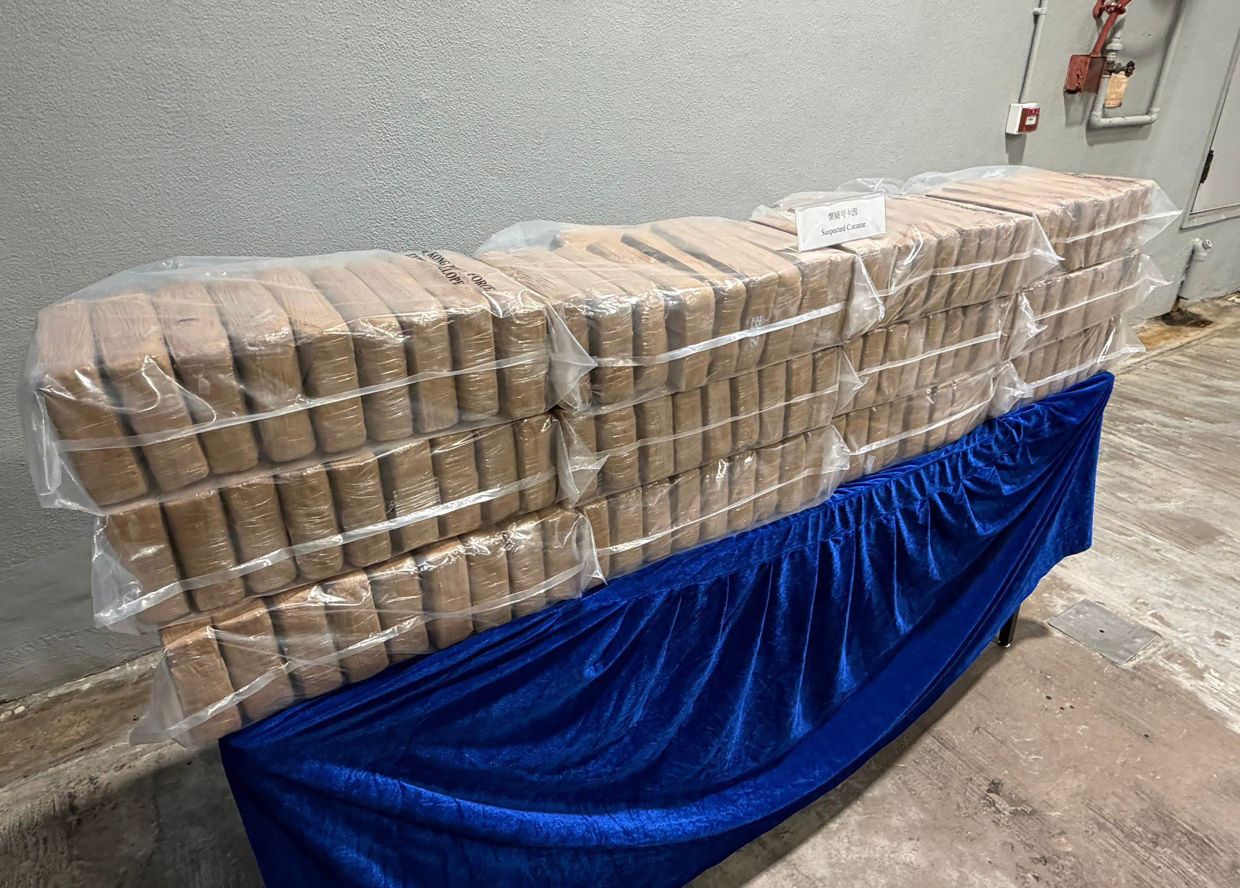
Hong Kong's narcotics enforcement agencies have dealt a significant blow to international drug trafficking networks, uncovering what ranks as the territory's largest cocaine seizure in the past twelve months following coordinated operations targeting vessels in Aberdeen Typhoon Shelter. The breakthrough came when officers conducted a fresh raid on Sunday on a six-metre yacht moored near previously targeted vessels, discovering approximately 120 kilograms of cocaine packaged in brick form. This latest operation, combined with an earlier interception that netted 241 kilograms of the same narcotic on Friday, has resulted in authorities confiscating a combined 361 kilograms—equivalent to 796 pounds—of the illicit substance with an estimated street value reaching HK$270 million.
The proximity of the two vessels and the consistency in packaging and weight of the cocaine shipments discovered at each location have led investigators to conclude that both seizures are connected to a single trafficking operation. Narcotics bureau officials believe the syndicate deliberately positioned multiple yachts in the anchorage as a distributed storage strategy, spreading inventory across vessels to minimize losses should authorities detect any single location. This pattern suggests a sophisticated criminal organization with considerable resources and experience in concealing high-value contraband within Hong Kong's busy maritime environment.
The timing and geographic clustering of these operations underscore how major drug smuggling networks continue to exploit Hong Kong's extensive coastline and bustling harbours as transit and distribution points for international narcotics. Aberdeen Typhoon Shelter, a natural anchorage serving both legitimate fishing activities and recreational boating, has historically presented challenges for law enforcement attempting to monitor irregular maritime traffic. The shelter's position on the southern coast of Hong Kong Island makes it accessible to vessels arriving from international waters while maintaining proximity to urban distribution networks throughout the territory.
Arrest records reveal that authorities have systematically dismantled the operational structure of this trafficking syndicate. A suspected mastermind and two additional core operatives were detained following the initial Friday raid, all claiming employment either in fishing or stating they were unemployed—a common cover story among those engaged in maritime-based criminal enterprises. The investigation expanded on Monday with the apprehension of a 45-year-old Hong Kong resident who served as the registered owner of the second yacht targeted on Sunday. Police indicated she was being held for further questioning and is currently without employment, suggesting she may have served as a nominee owner—a common technique used by trafficking organizations to obscure vessel ownership and complicate prosecution.
The scale of this operation reflects the substantial profit incentives driving transnational cocaine smuggling through East Asian ports. Hong Kong's position as a global financial hub with deep-water container facilities and established trade infrastructure creates natural opportunities for criminal organizations to integrate narcotics shipments within legitimate commercial flows or to exploit the territory's maritime governance structure. Additionally, the significant mark-up from wholesale to street-level distribution—represented by the HK$270 million valuation of the 361-kilogram seizure—illustrates the enormous financial resources available to these networks for corruption, recruitment, and operational expansion.
For Malaysian authorities and regional law enforcement agencies, this case serves as a critical reminder of transnational trafficking patterns within Southeast Asia and the broader Indo-Pacific maritime domain. While this particular shipment was interdicted in Hong Kong waters, similar smuggling corridors traverse Malaysian maritime territory, potentially involving ports in Klang, Johor Bahru, and the Straits of Malacca. The operational sophistication demonstrated by this syndicate—including distributed storage across multiple vessels and the use of nominee owners—represents methodologies that Malaysian port authorities and naval agencies should anticipate encountering in their own jurisdictions.
The investigation's progression also highlights the importance of sustained, intelligence-driven enforcement operations that move beyond single interceptions to dismantle entire networks. By identifying the connection between the two yacht seizures within days, Hong Kong authorities prevented the trafficking organization from recovering or relocating its inventory. This approach contrasts with reactive interdiction that might disrupt a single shipment while leaving the broader operational infrastructure intact and capable of rapid repositioning.
Regional security analysts note that cocaine trafficking through Asian ports has intensified over the past five years as Latin American suppliers expand distribution networks beyond traditional Caribbean and North American markets. The profitability of cocaine distribution in Asia, combined with growing demand among affluent urban populations, creates sustained pressure on law enforcement across the region. Hong Kong's location on the South China Sea and its connectivity to regional shipping routes positions it as a natural transshipment hub, making comprehensive maritime surveillance and port security increasingly critical to national and regional security objectives.
Looking forward, this case will likely prompt heightened scrutiny of yacht operations throughout Hong Kong's anchorages and similar recreational boating areas across Southeast Asia. Authorities across the region may intensify vessel registration checks and monitoring of suspicious maritime activity in response to the sophistication displayed by this trafficking organization. The investigation underscores that effectively combating international drug smuggling requires not only tactical enforcement operations but also sustained intelligence collection, inter-agency coordination, and international cooperation—capabilities that remain unevenly distributed across the Asia-Pacific region despite the scale of transnational drug trafficking challenges.

