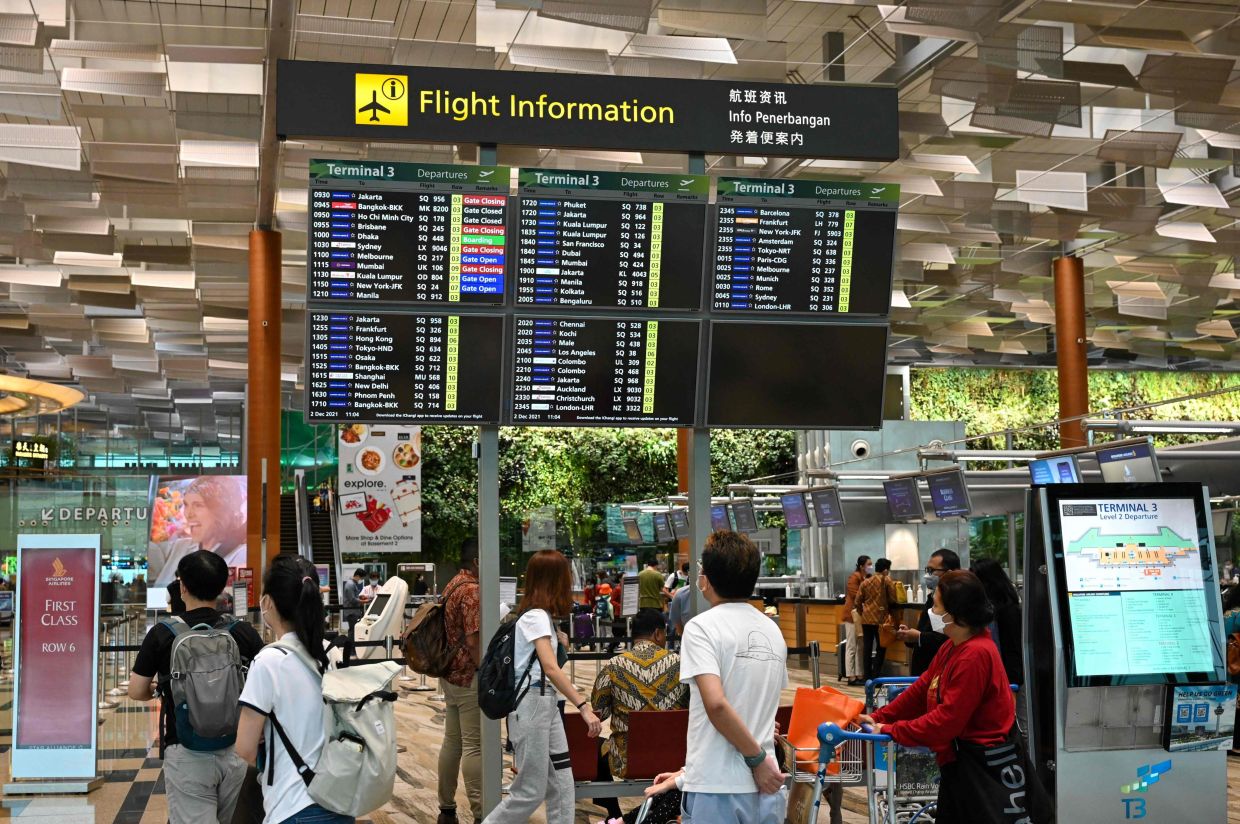
A Singapore court has convicted and imprisoned a Hong Kong mother and her adult son for their roles in a chaotic altercation at Changi Airport that resulted in injuries to both a bystander and a police officer. Chan Sui-kwan, aged 65, received a six-month jail sentence for intentionally causing hurt to deter a public servant from performing his duties, while her son Chan Wing-kwan, 42, was sentenced to 10 days' imprisonment for voluntarily causing hurt. The sentences were handed down on Monday following a court hearing that revealed the disturbing sequence of events that unfolded across multiple levels of the airport's terminal three on June 30, 2024.
The trouble began when Chan Wing-kwan became upset after misinterpreting the actions of nearby passengers, whom he believed were ridiculing him. In his agitated state, he kicked his own mother, drawing the concern of a 69-year-old bystander who approached to check on her welfare. Rather than accepting assistance, the mother told the man to step away, while her son openly invited confrontation by challenging the stranger to fight. This initial exchange set the tone for what would become an increasingly violent encounter that would ultimately involve law enforcement.
The situation deteriorated further when the pair relocated to another section of the terminal building. Chan Wing-kwan kicked his mother a second time, prompting the same bystander to attempt calling the police for assistance. It was at this critical moment that Chan Wing-kwan launched himself at the man, initiating a physical struggle that would inflict substantial injuries. During the scuffle, the son repeatedly struck the bystander with his fists, causing a head haematoma—a pooled collection of blood beneath the skin—along with abrasions to the knee and bruising to the fingers. The violence might have escalated further had police not been en route.
Police officers arriving at the scene took down the passport details of both the mother and son before returning their documents, allowing them to remain at the airport. However, their presence at Changi did not end with that initial police intervention. Later the same afternoon, officers encountered the pair again, this time in the departure hall where a fresh disturbance was unfolding. The mother refused to surrender her passport to authorities and created additional commotion that necessitated her arrest. Her resistance to being taken into custody proved severe enough that she actively fought against the arresting officers.
During the arrest process, Chan Sui-kwan bit a police officer on his right forearm, breaking through his clothing to leave a visible 1-centimetre mark accompanied by bruising. This assault on a law enforcement officer constituted the more serious charge against her, as it was classified as causing hurt specifically intended to obstruct or deter a public servant in the execution of his lawful duties—an offense that carried significantly greater penalties than simple assault. The bite wound and resulting trauma demonstrated the intensity of her resistance to police intervention.
The legal proceedings following the incident took an extended timeline. Chan Sui-kwan was not brought before the court until November 18, 2024, nearly five months after the June incident, while her son was charged as early as April of the previous year. Both defendants were scheduled to appear in court on July 22 this year, but failed to honour that appointment, prompting the issuance of arrest warrants. Following their eventual apprehension, they were convicted on July 29 and subsequently sentenced on Monday.
The case highlights the unpredictable nature of violence that can erupt in high-traffic public spaces and the serious legal consequences that follow. Changi Airport, one of Asia's busiest aviation hubs and a critical node for Southeast Asian travel and commerce, remains a secure facility where authorities maintain strict standards of conduct. The escalation from a private family disagreement to an assault on both civilians and police officers illustrates how quickly situations can spiral when individuals lose emotional control in public settings.
For Malaysian readers and others in the region, the incident serves as a reminder of Singapore's stringent approach to public order and assault offenses. The sentences imposed, while not lengthy in absolute terms, reflect the seriousness with which Singaporean courts treat violence against both the public and law enforcement officials. The presence of a delay between the incident and prosecution—spanning from June 2024 to November 2024—also underscores the thorough investigation procedures employed by Singapore's authorities.
The case also raises questions about the responsibilities of family members in managing behavioural crises and the intervention of bystanders in volatile situations. The 69-year-old bystander's attempt to help, though well-intentioned, inadvertently placed himself in harm's way and contributed to the escalation. For travellers transiting through major airport hubs across Southeast Asia, the incident is a stark reminder that maintaining composure in public spaces, particularly in airports where security protocols are heightened, remains essential.

