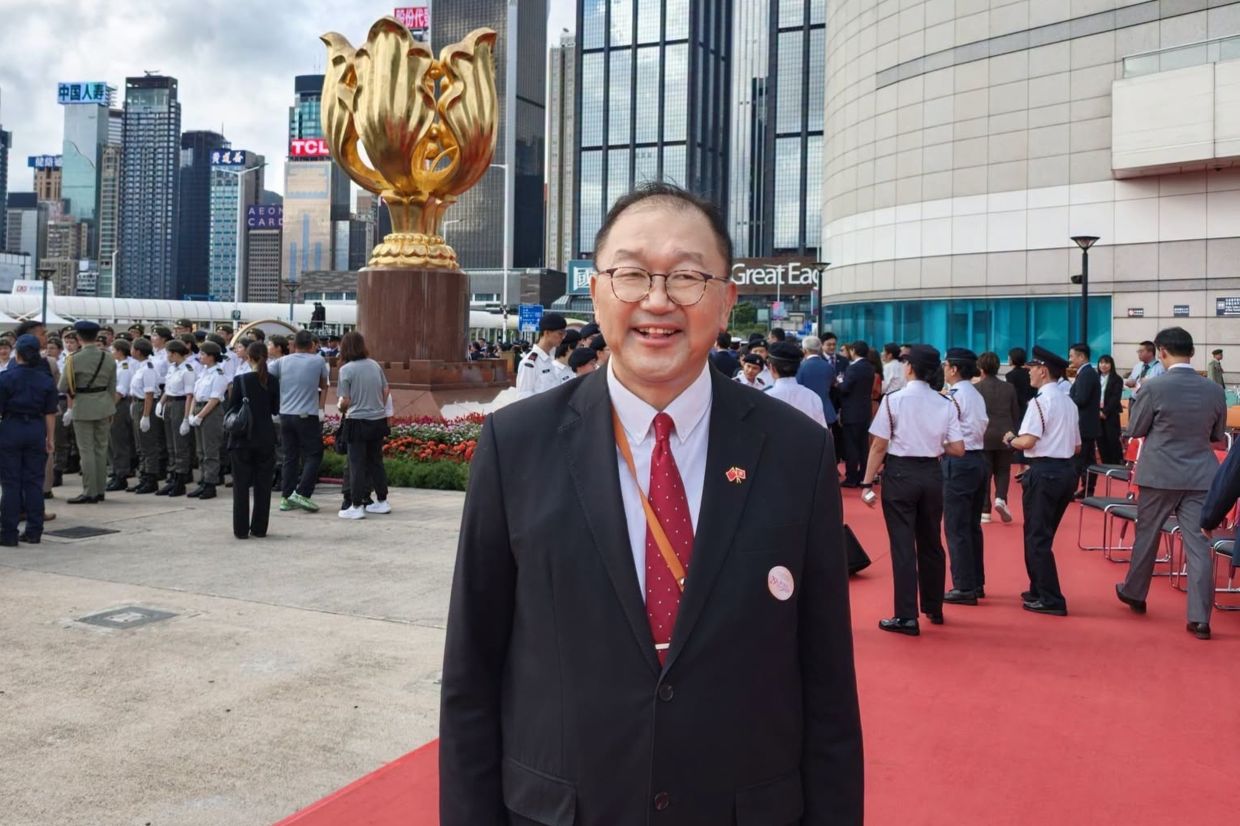
William Wong Kam-fai, a Hong Kong legislator, has stepped down from the Legislative Council in the aftermath of his arrest on suspicion of drink-driving and involvement in a hit-and-run incident. The 66-year-old's resignation on Friday represents a watershed moment in Hong Kong politics—the first time a lawmaker has quit over a scandal since Gary Cheng Kai-nam's departure in 2000, a gap of more than two decades. Wong's swift decision to relinquish his position stands in stark contrast to political cultures in many democracies, where legislators often cling to office while legal proceedings unfold, making his exit particularly noteworthy for the region.
Wong announced his decision just hours after the details of the incident became public. In a carefully worded statement, he expressed remorse for the disruption caused to society and the legislature, while emphasising his desire to shield the institution from further reputational damage. He requested public understanding regarding his inability to elaborate given the ongoing police investigation, signalling a measured approach to crisis management. His announcement came days after Monday night's collision near a staff residence on campus, when he lost control of his vehicle at 10.46pm and struck two parked cars in succession. The incident immediately triggered both criminal investigation and internal institutional scrutiny.
Legislative Council President Starry Lee Wai-king swiftly acknowledged Wong's resignation letter, commending his contributions to the legislature and expressing respect for his decision. The institutional response reflected the gravity with which Hong Kong's political establishment views the reputational implications of such misconduct. Wong's fall from grace extends beyond his legislative role; he also serves as a member of the Chinese People's Political Consultative Conference, the mainland's premier political advisory body. This dual status rendered his continued tenure particularly untenable, as maintaining his positions could have invited broader criticism of governance standards across multiple tiers of the political hierarchy.
Political analysts swiftly validated Wong's resignation decision as prudent damage control. Lau Siu-kai, a consultant with the Chinese Association of Hong Kong and Macau Studies think tank, characterised the move as the "best move" to minimise cascading reputational harm to both the individual and the institution. He articulated a distinctive perspective rooted in Hong Kong's political ecosystem, noting that prolonged tenure amid scandal could have invited attacks on the "patriots administering Hong Kong" principle—a foundational concept in the post-2020 political order. Lau anticipated that Wong would also relinquish his CPPCC membership, suggesting central authorities would likely accept such resignation given the severity of the transgression, though expelling a member would constitute an extraordinarily rare occurrence.
Tam Yiu-chung, Hong Kong's former sole representative to the National People's Congress Standing Committee, similarly endorsed resignation as the appropriate course. He framed Wong's action through the lens of elevated behavioural expectations for legislators, treating the decision as consonant with contemporary standards of political accountability in Hong Kong. This consensus among establishment figures underscores a significant cultural shift in how Hong Kong politics addresses misconduct at senior levels. The rapid agreement that resignation represented the optimal outcome suggests institutional mechanisms and political expectations have coalesced around a framework demanding swift accountability from legislators facing serious allegations.
The procedural implications of Wong's departure remain partially unresolved. Unlike parliamentary systems with automatic by-election provisions, Hong Kong's Legislative Council operates under discretionary frameworks regarding seat succession. Wong represented the Election Committee constituency, which encompasses corporate and sectoral representatives rather than the population at large. Tam noted that his departure would carry minimal operational consequences for legislative functioning compared to a loss within a functional constituency sector. The government retains authority over whether to trigger a by-election, a decision contingent upon multiple factors including remaining time until the term's conclusion and financial considerations.
Historical precedent illustrates the government's flexibility regarding vacant seats. When Stephen Wong Yuen-shan, another Election Committee constituency legislator, departed in late 2022 to lead the government's think tank, his seat remained unfilled for approximately three years without triggering a by-election. Then-constitutional affairs minister Erick Tsang Kwok-wai subsequently informed the legislature that fiscal prudence would inform future by-election decisions, establishing a framework permitting cost-based calculations to govern succession choices. This precedent suggests the government may adopt a similarly economical approach to William Wong's vacant seat, potentially allowing it to remain unfilled until the current term concludes.
Wong's resignation also triggers administrative consequences at his workplace. The Chinese University of Hong Kong issued a statement indicating deep concern regarding the incident and announcing the immediate suspension of the staff member from administrative duties. The university emphasised its commitment to professional ethics and conduct standards while appropriately declining substantive commentary during active police investigation. This institutional response reflects the broadening consequences of the scandal beyond Wong's political portfolio, extending into his academic career and potentially affecting his long-term professional prospects.
The contrast between Wong's case and that of his predecessor Gary Cheng Kai-nam illuminates the evolution of Hong Kong's political accountability culture. Cheng, who departed shortly after winning his seat in September 2000, faced serious charges including undisclosed business ties, improper handling of confidential government documents, and extramarital affair revelations. He subsequently received an 18-month prison sentence following conviction on bribery, misconduct in public office, false accounting, and theft charges. While Cheng's misconduct encompassed corruption and abuse of office, Wong's transgression centres on personal conduct endangering public safety—a categorically different form of impropriety that nonetheless merited identical institutional response.
Wong's resignation carries broader implications for Southeast Asian governance discourse. As Hong Kong navigates post-2020 political recalibration, the speed with which political leaders exit following scandal signals institutional prioritisation of reputation management and systemic integrity over individual political survival. For Malaysian observers monitoring regional governance trends, Wong's case demonstrates how jurisdictions reconcile personal accountability with institutional preservation, even within constrained political environments. The consensus among establishment figures endorsing his departure suggests that Hong Kong's political class has internalised expectations around conduct standards that transcend conventional partisan competition.
The incident also underscores persistent vulnerabilities within political accountability frameworks. While Wong's swift resignation demonstrates responsiveness to scandal, the underlying factors enabling a legislator to reach such senior positions while allegedly engaging in dangerous driving behaviour merit consideration. The absence of proactive ethical vetting or periodic conduct reviews represents a common governance lacuna across East Asian democracies and semi-democracies. Wong's case thus furnishes a cautionary example regarding the limitations of reactive accountability mechanisms that activate only following public scandal rather than prospective systems emphasising continuous ethical maintenance.
Looking forward, the primary outstanding question concerns seat succession. The government's decision whether to hold a by-election will likely reflect broader fiscal and political considerations rather than technical legislative requirements. Should the government follow the Stephen Wong precedent, the seat may remain vacant indefinitely, transforming a personal scandal into a quasi-institutional reform by reducing Legislative Council membership. This trajectory would invert conventional narratives of scandal response, whereby individual misconduct inadvertently reshapes institutional architecture. For Hong Kong's legislature and the broader political system, William Wong's departure marks a significant moment of reckoning with contemporary standards of accountability, establishing precedent for how future transgressions will be managed.

