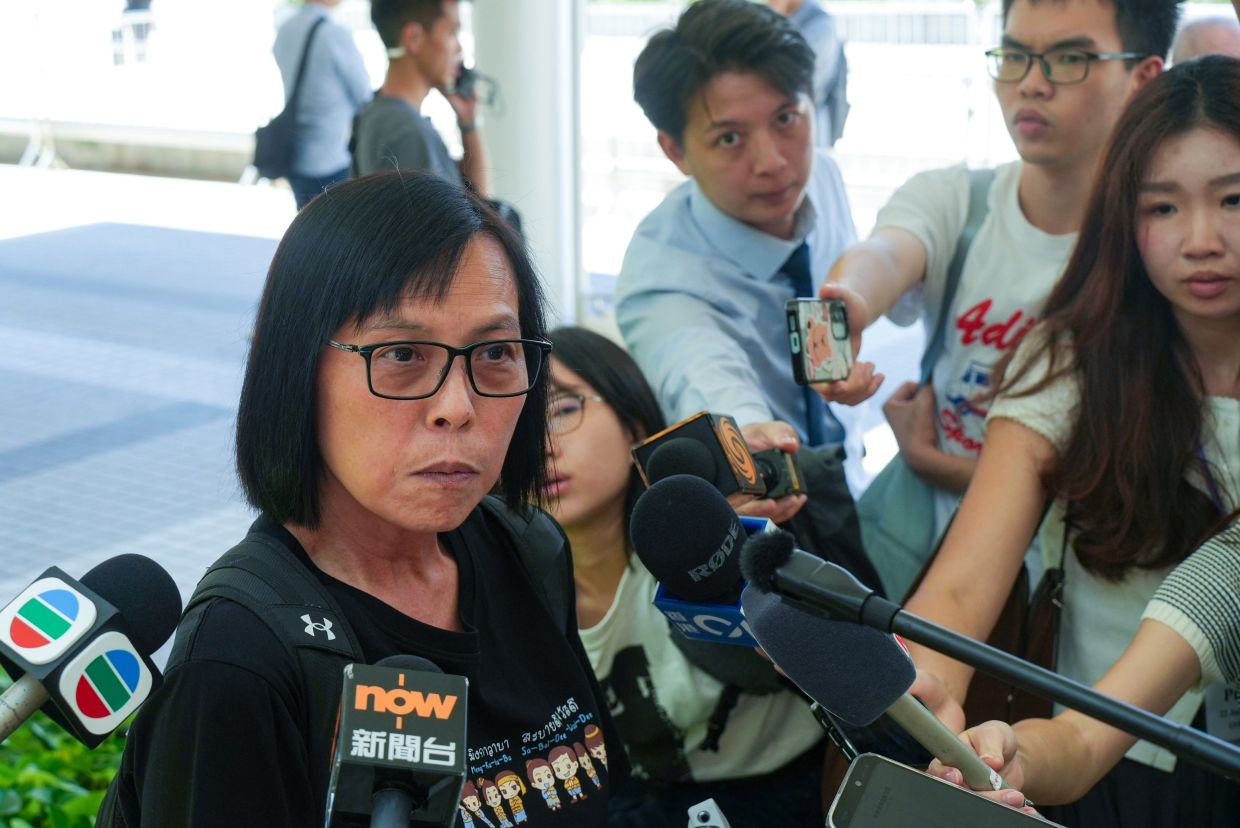
The independent committee tasked with examining Hong Kong's Wang Fuk Court apartment fire has decided against pursuing statutory commission status, a decision that has drawn sharp criticism from fire survivors who worry about the limitations this choice may impose on the investigation's reach and effectiveness. Committee chairman Justice David Lok Kai-hong announced that the panel would not petition the chief executive to convert it into a statutory commission of inquiry, allowing the ongoing investigation into the blaze to proceed instead under its current non-statutory framework. The declaration came as proceedings resumed on Monday following a six-week adjournment, signalling both continuity and constraint in how the incident will be examined.
The distinction between statutory and non-statutory inquiries carries substantial practical implications for Hong Kong's investigative processes. A statutory commission of inquiry would grant the panel enhanced powers to compel testimony, access documents, and enforce compliance with investigative demands. The committee's decision to remain non-statutory means it must rely on voluntary cooperation from witnesses and organisations, a limitation that could prove consequential when examining complex institutional failures or uncovering information that parties may be reluctant to disclose. For survivors and their representatives, this represents a tangible weakening of the investigative apparatus at a moment when thorough accountability is essential.
The Wang Fuk Court fire stands as one of Hong Kong's most significant residential incidents in recent memory, making the investigative framework a matter of considerable public importance. The circumstances surrounding the blaze—including questions about building maintenance, fire safety compliance, and emergency response procedures—demand exhaustive examination. Survivors have expressed legitimate concerns that a non-statutory inquiry might struggle to pierce through institutional resistance or incomplete cooperation, potentially leaving critical questions inadequately answered. Their worries reflect broader anxieties about whether the investigation can fulfil its mandate to establish a comprehensive account of what transpired and why.
The decision to forgo statutory status also raises questions about resource allocation and investigative persistence. Non-statutory committees typically operate under different constraints than formally established commissions, including potential limitations on budget, timeline flexibility, and authority to pursue investigative threads wherever evidence leads. In building fire cases, where responsibility often spans multiple parties—government agencies, property management companies, contractors, and regulatory bodies—the ability to compel cooperation can be decisive. Justice Lok's determination that the current arrangement is adequate may underestimate the practical obstacles that emerge when examining how systemic failures accumulate and who bears accountability.
Hong Kong's fire safety regulatory environment has long been subject to criticism from residential advocates and building experts who argue that enforcement remains inconsistent and that penalties for non-compliance lack sufficient deterrent force. The Wang Fuk Court incident occurred within this context of acknowledged vulnerabilities in the system. An investigation conducted with full statutory authority would have positioned the inquiry to examine not merely what happened in this specific fire, but also to diagnose deeper structural weaknesses in how the territory oversees residential fire prevention. The committee's choice to operate without such powers implicitly constrains its ability to recommend systemic reforms grounded in evidence of institutional failure.
The investigation's six-week pause itself warrants consideration, as it raises questions about pacing and momentum. Extended adjournments in major inquiries can complicate witness recall, disperse investigative focus, and provide time for institutional narratives to harden. When combined with the absence of statutory enforcement authority, such breaks become more consequential. Survivors and their legal representatives face prolonged uncertainty about whether the facts they need to establish liability and secure accountability will emerge through the inquiry process or whether they must pursue separate civil litigation, a more burdensome and expensive avenue.
Comparable fire investigations in other jurisdictions have increasingly adopted statutory frameworks precisely because of evidence that non-statutory processes can inadequately address institutional accountability. Malaysia's own experience with major building incidents underscores the value of robust investigative authority when examining failures in safety compliance, design standards, and regulatory oversight. Hong Kong's decision thus carries relevance across Southeast Asia, where building safety remains a persistent challenge and communities frequently grapple with questions about whether inquiries into tragedies possess sufficient teeth to drive systemic improvement.
The committee's position may reflect pragmatic calculations about the timeline required to obtain statutory status and the desire to maintain investigative momentum without bureaucratic delay. However, survivors and observers counter that proceeding without such authority amounts to an unwarranted sacrifice of investigative comprehensiveness in pursuit of speed. The choice represents a fundamental judgment call about whether the immediate convenience of operating non-statutorily outweighs the long-term value of establishing findings grounded in compelled evidence rather than voluntary disclosure.
Looking forward, the success of the non-statutory inquiry will likely depend heavily on the cooperation it receives and the quality of evidence that parties voluntarily furnish. Should gaps emerge in testimony or documentation, or should institutions prove reluctant to acknowledge systemic problems, the committee will lack the coercive tools necessary to bridge those gaps. For survivors already traumatised by the fire itself, the prospect of an investigation that may conclude without having fully resolved key questions represents an additional burden—one that could have been substantially reduced through the adoption of stronger statutory authority from the outset.