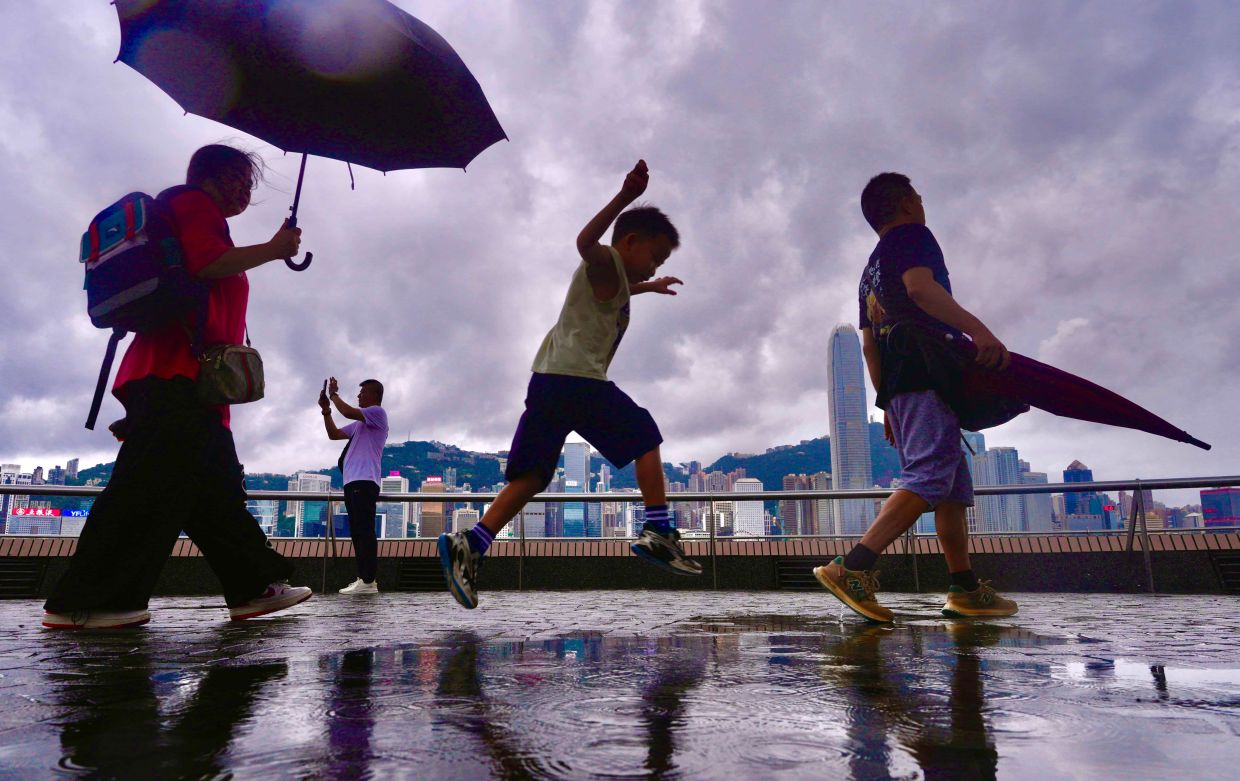
Hong Kong's prolonged battle against unseasonable heat came to an end on Friday morning when substantial rainfall brought temporary respite to residents and authorities grappling with a severe weather crisis. The Hong Kong Observatory activated an amber rainstorm warning at 8:40 am, maintaining the alert for three hours as showers and violent thunderstorms swept across the densely populated territory. Though the warning was soon cancelled, meteorological forecasters indicated that intermittent precipitation would persist throughout the remainder of the day, offering accumulated relief to a populace exhausted by days of oppressive conditions.
The break in weather represented a dramatic shift following seven consecutive days during which the city endured temperatures consistently exceeding 34 degrees Celsius across multiple residential and commercial districts. Meteorological patterns driving the extreme conditions stemmed from upper-atmospheric disturbances interacting with a southwesterly airstream, creating ideal conditions for heat entrapment and stagnant air masses that prevented normal cooling cycles. This meteorological configuration proved particularly stubborn, resisting the normal weather systems that typically moderate Hong Kong's summer environment.
The intensity of the recent heat episode established a significant climatic benchmark for the region. Hong Kong Observatory data revealed that maximum temperatures remained at or above 33 degrees Celsius for nine successive days, shattering the previous record for the lengthiest consecutive hot spell during August. This extended duration of elevated temperatures distinguishes the current event as exceptionally severe within Hong Kong's meteorological records, reflecting broader patterns of climate stress affecting East Asian urban centres.
The most alarming statistic emerged on Sunday, when the observatory recorded a peak temperature of 36.9 degrees Celsius—the highest reading since systematic temperature records commenced in 1884. This measurement surpassed 140 years of historical data, underscoring the unprecedented nature of current atmospheric conditions. For a city accustomed to tropical and subtropical climate variations, such an extreme represents a significant departure from established norms and raises questions about whether this represents a temporary anomaly or signals longer-term climatic trends affecting the territory.
The weekend forecast offered qualified optimism mixed with preparedness advisories. Saturday was expected to bring additional precipitation, particularly thunderstorms concentrated in morning hours, with clearing skies and sunny intervals developing as the day progressed. This pattern of alternating wet and clear periods provided opportunities for temporary relief while maintaining enough cloud cover to moderate peak temperatures. However, meteorologists cautioned that this improvement would prove temporary, as the underlying weather systems driving the heat crisis remained substantially intact.
Looking ahead to the early part of the following week, forecasters warned of a resurgence in intensely hot conditions that would restore the previous pattern of extreme temperatures. The return of very hot weather carried implications for energy consumption, public health resources, and infrastructure management across the heavily urbanised territory. Even scattered showers predicted for that period were not expected to provide substantial or lasting cooling, suggesting that residents would face renewed challenges in the coming days.
The implications of this extended heat episode extend beyond immediate discomfort, affecting broader regional patterns and Southeast Asian climate dynamics. Hong Kong's experience reflects meteorological conditions that frequently develop across the western Pacific region during summer months, influenced by positioning of the Pacific High, monsoon systems, and tropical atmospheric circulation patterns. The record temperatures observed in Hong Kong often herald similar conditions spreading to neighbouring jurisdictions across Southern China, Taiwan, and parts of Southeast Asia, making the territory's experience a potential harbinger of regional climate stress.
From a public health perspective, sustained heat of this magnitude strains medical infrastructure, increases demand for emergency services, and disproportionately impacts vulnerable populations including elderly residents, those with chronic conditions, and outdoor workers. The seven-day stretch of extreme temperatures elevated risks of heat-related illness significantly, a concern that remained relevant even as the initial relief system passed through. Healthcare authorities typically implement enhanced protocols during such episodes, ranging from expanded cooling centre availability to targeted outreach to at-risk populations.
The economic and operational dimensions of extended heat waves in densely developed urban environments merit consideration. Air conditioning systems strain under sustained demand, potentially triggering power grid instability if demand concentrates during peak afternoon hours. Water consumption surges, public transportation systems experience reduced efficiency and passenger comfort, and outdoor commercial operations face reduced productivity. Construction and infrastructure maintenance activities typically require curtailment or restructuring to protect worker safety during extreme temperature episodes, creating scheduling complications for development projects across the territory.

