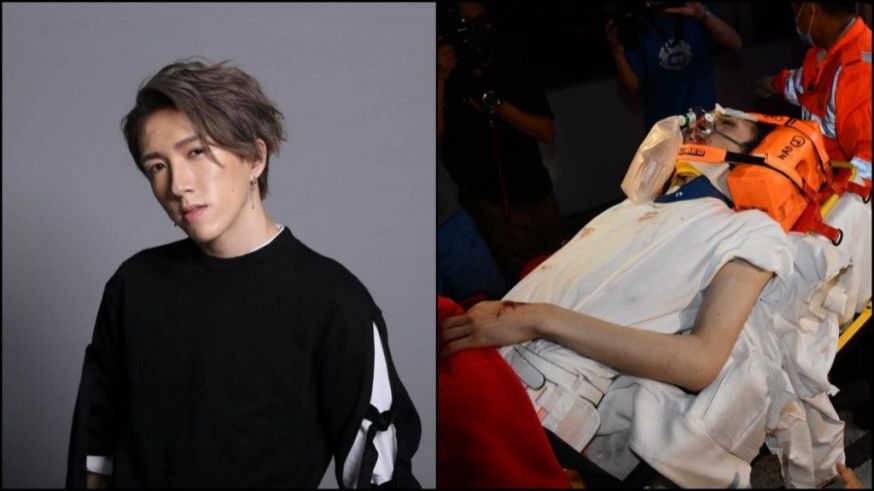
A Hong Kong District Court has awarded dancer Mo Li Kai-yin HK$6.29 million (approximately RM3.32 million) in damages after he suffered catastrophic injuries when a four-by-four-metre LED screen collapsed on him during a Cantopop boy band Mirror concert in July 2022. The June 15 judgment represents a significant legal victory for the 31-year-old performer, whose life was irrevocably altered in the accident at Hong Kong Coliseum, with the court determining his employer Studiodanz bore responsibility for the incident.
The court's ruling underscores the severity of Mo's condition, describing his injuries as "catastrophic" and awarding him the maximum compensation available across several critical categories. These encompass permanent total incapacity, which recognises his inability to ever return to work in any capacity; comprehensive caregiving costs; periodic payments to cover ongoing expenses; and medical treatment bills. The scale of the award reflects the court's assessment that Mo has sustained injuries of the most serious nature, affecting every aspect of his physical and social existence.
Mo's medical situation demands intensive, constant supervision. The judgment noted that he now depends on three full-time caregivers to assist with all personal care activities and daily tasks, from basic hygiene to mobility assistance. The court's language was unambiguous in describing the scope of his disability: he remains "incapable of ever leading or appreciating an independent adult life." This permanent reliance on others represents not merely a loss of employment and income, but a fundamental loss of autonomy and the ordinary rhythms of adult existence that most people take for granted.
The accident itself occurred during the fourth performance of Mirror's planned twelve-concert series at the iconic venue. During the show, the suspended LED panel fell from above, striking Mo with devastating force. The impact caused a cervical spine dislocation that severed neural pathways, resulting in paralysis from the neck downwards. Mo was rushed to Queen Elizabeth Hospital for emergency surgery and intensive critical care, beginning a medical odyssey that would extend far beyond his initial hospitalisation.
Following his stabilisation in Hong Kong's public health system, Mo was transferred to private medical institutions both within Hong Kong and internationally as his family pursued advanced treatment options. His rehabilitation journey has involved cutting-edge technologies, including regenerative medicine approaches and an implantable microstimulator designed to restore neural function. While still significantly disabled, Mo has achieved some measurable progress during his recovery process. He has regained partial movement in his right arm and has experienced restoration of sensation in bladder and bowel functions, suggesting that nerve regeneration is occurring in certain areas.
Recent evidence of Mo's progress became visible when an Instagram video posted in March documented him successfully operating an electric wheelchair using only his right hand, a demonstration of recovered motor function that offers a glimmer of hope despite his overall condition. These incremental gains underscore both the limitations of his recovery and the intensive effort required to achieve even modest improvements. Each small recovery has demanded extraordinary medical intervention and rehabilitation persistence.
Mo's path to becoming a professional dancer was relatively recent. He developed his passion for dance while completing his university studies between 2015 and 2019, transitioning to full-time professional work only in 2019. During his brief three-year career, he built an active profile, performing in concerts, television productions, advertisements and music videos across Hong Kong's entertainment industry. Beyond his stage work, he maintained a parallel role as a dance instructor at four different studios, including Studiodanz, combining teaching with his performance schedule.
The burden of Mo's care fell heavily on his family, particularly his father, Reverend Derek Li Shing-lam, who held pastoral duties. Recognising the gravity of his son's situation, the reverend made the profound personal sacrifice of resigning from his religious position and returning from Canada, where he had been based, to become Mo's full-time caregiver. This arrangement continued until the reverend's death on April 25, underscoring the immense physical and emotional toll that such accidents impose not only on victims but on entire families.
Studiodanz, the production company responsible for the concert staging, did not participate in the trial proceedings but was nonetheless ordered to pay the full compensation award plus interest and legal costs. Beyond the civil judgment, the company had previously received a fine of HK$132,000 from occupational safety authorities for violations of workplace safety regulations related to the incident. This regulatory penalty, while substantial, appears modest compared to the actual human cost of the accident and the compensation now mandated.
The case carries significant implications for event safety standards across Asia's entertainment industry. The accident exposed critical gaps in how large-scale productions manage suspended equipment and crowd safety at major venues. For Malaysia and other Southeast Asian nations with growing concert and entertainment industries, the judgment serves as a cautionary reminder of the legal and financial consequences that flow from inadequate safety protocols. Entertainment companies across the region must reassess their risk management practices, particularly regarding the secure installation and monitoring of heavy equipment positioned above performers and audiences.
Mo's case also highlights broader questions about worker protections in the entertainment sector, where freelance and contract performers often have limited safety oversight compared to workers in other industries. The magnitude of the compensation awarded—while providing essential resources for Mo's lifetime care—cannot restore his independence or his career. His situation illustrates why preventive safety measures and strict adherence to occupational safety standards represent not merely regulatory compliance, but fundamental obligations to protect human wellbeing in workplaces where the margin for error can be measured in life-altering consequences.