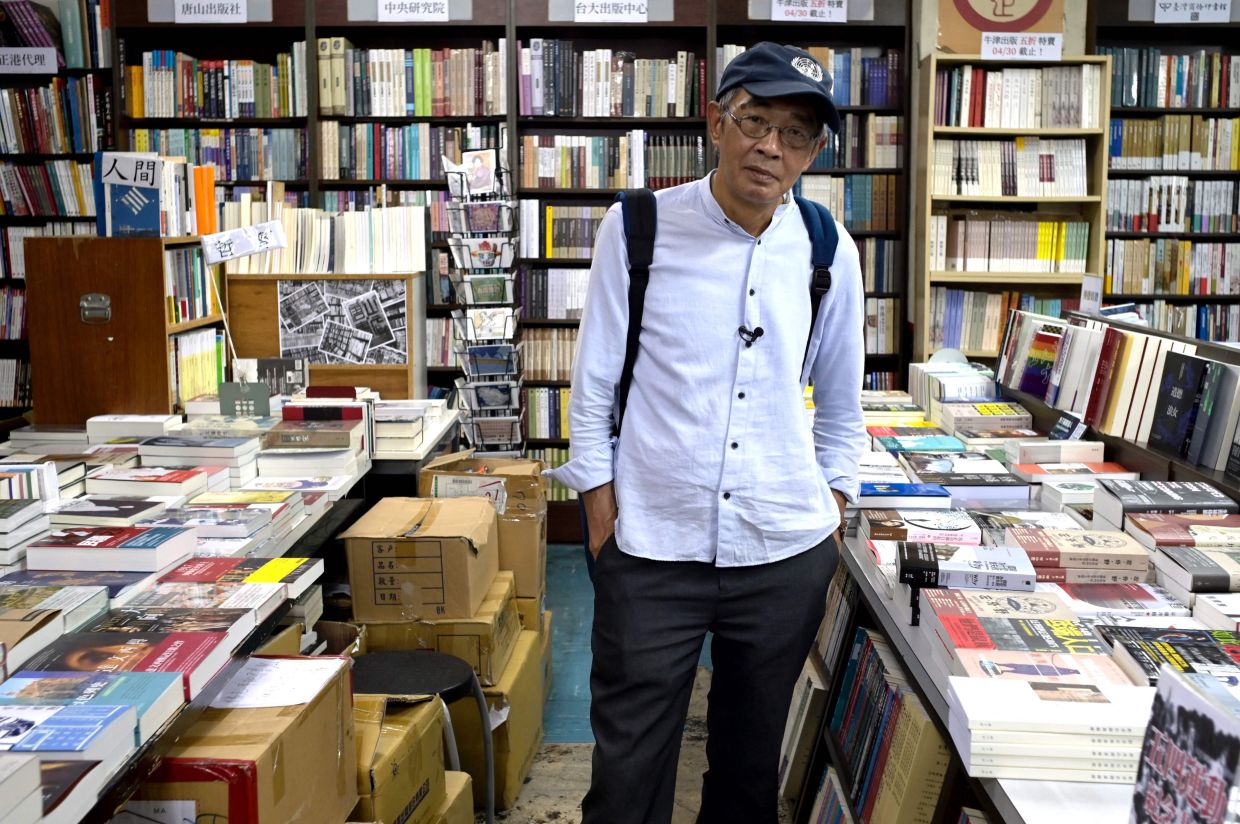
Lam Wing-kee, the Hong Kong bookseller whose dramatic disappearance and subsequent escape galvanised international concern over Beijing's grip on the city, has died in Taiwan at the age of 70. The former manager of Causeway Bay Books passed away Thursday evening at MacKay Memorial Hospital in Taipei, according to Taiwan's Central News Agency, after entering a coma the previous day. He had been admitted to the hospital following a cancer relapse that first emerged last year.
Lam's death marks the end of an extraordinary life that transformed him into one of the most recognisable faces of Hong Kong's struggle for press freedom. His story began in late 2015 when he vanished along with four colleagues from their bookstore, which specialised in publications unavailable on mainland China—titles purporting to expose secrets about Chinese leaders and exposing scandals within elite circles. The near-simultaneous disappearances of five people connected to a single establishment sparked immediate alarm about the reach of Chinese state power into Hong Kong's supposedly autonomous legal system, raising questions that reverberated across the world.
What distinguished Lam's case from others affected by the crackdown was his subsequent decision to speak publicly about his ordeal. In October 2015, he crossed into Shenzhen on the mainland and was immediately seized by authorities. What followed was a harrowing ordeal that would define his public advocacy: a 13-hour train journey while blindfolded to Ningbo in eastern China, followed by five months of detention under constant guard by rotating teams of security personnel in a single room. The experience was designed to break him, yet Lam later recounted these details with unflinching clarity at a packed Hong Kong news conference in 2016, directly contradicting official Chinese accounts of the booksellers' fates. He also disclosed that Chinese authorities had forced him to appear on state television confessing to fabricated crimes—a chilling tactic often deployed against political prisoners.
The fate of his colleagues illustrates the varying trajectories of those caught in Beijing's security apparatus. Gui Minhai, a publisher and part-owner of Causeway Bay Books, disappeared from his holiday home in Thailand and was subsequently sentenced to a decade in prison in China in 2020 on charges of illegally providing intelligence to foreign entities. The case underscored how the reach of Chinese law enforcement extended well beyond Hong Kong's borders, into Southeast Asian nations, creating a climate of anxiety among dissidents and rights advocates across the region.
Facing mounting legal threats in Hong Kong, Lam made the difficult choice to relocate to Taiwan in 2019, where he found refuge under the island's robust protections for political speech and assembly. In 2020, he reopened Causeway Bay Books in Taipei, effectively transplanting his act of defiance to another location. The bookstore became more than a commercial venture; it functioned as a living monument to the freedoms Hong Kong residents were losing. However, as his health deteriorated, the shop's operations became increasingly sporadic. Last month, Lam disclosed to the Central News Agency that he had temporarily shuttered the business and was uncertain when it could resume operations, a poignant acknowledgment of the physical toll his ordeal had inflicted.
Taiwan's President Lai Ching-te took to social media to honour Lam's memory, recognising the philosophical weight his life and choices carried. Lai's statement emphasised how Lam had embodied a simple yet profound lesson: the fragility and preciousness of freedom, and the perpetual vigilance democracy requires. The remarks positioned Lam not merely as a victim of oppression but as an educator whose life demonstrated viscerally what was at stake in the struggle between authoritarian control and open society. For Taiwanese audiences, Lam's experience served as a cautionary tale about the consequences of allowing Beijing's legal and security apparatus to operate unchecked.
The broader context of Lam's death underscores the accelerating erosion of Hong Kong's autonomy. The 2019 anti-government protests, which shook the city with unprecedented scale and intensity, prompted Beijing and Hong Kong authorities to implement increasingly draconian measures. The 2024 national security law has effectively criminalised categories of speech and association so broadly defined that even owning certain publications can invite arrest. In June of this year, Hong Kong police arrested two individuals operating a bookstore, alleging they sold seditious publications and received funding from foreign political organisations. This incident demonstrates that Lam's experience, once viewed as an isolated trauma, has become normalised into the machinery of governance.
For Malaysian observers, Lam's trajectory raises uncomfortable questions about the regional trajectory toward authoritarianism. Malaysia itself has grappled with press freedom restrictions and sedition laws that constrain political expression. Lam's life and death serve as a benchmark against which other Southeast Asian societies might measure their own commitment to protecting dissent, journalism, and the circulation of ideas. His death in Taiwan, rather than in Hong Kong or mainland China, speaks to the shifting geography of political refuge in the region, with Taiwan increasingly serving as a haven for those fleeing restrictions elsewhere.
The placing of a white rose outside the Taipei bookstore on Monday by an unnamed Hong Kong visitor crystallised the symbolic dimensions of Lam's passing. The gesture acknowledged not just personal loss but the broader tragedy of a society's transformation. For many Hong Kongers, Lam represented the possibility of resistance and the capacity to speak truth under duress. His death closes a chapter but also underscores the continuing struggle of those inside Hong Kong seeking to maintain spaces for independent thought and expression. As regional governments continue testing the boundaries of acceptable political discourse, Lam Wing-kee's legacy as a defender of freedom will likely endure longer than the institutions that drove him into exile.

