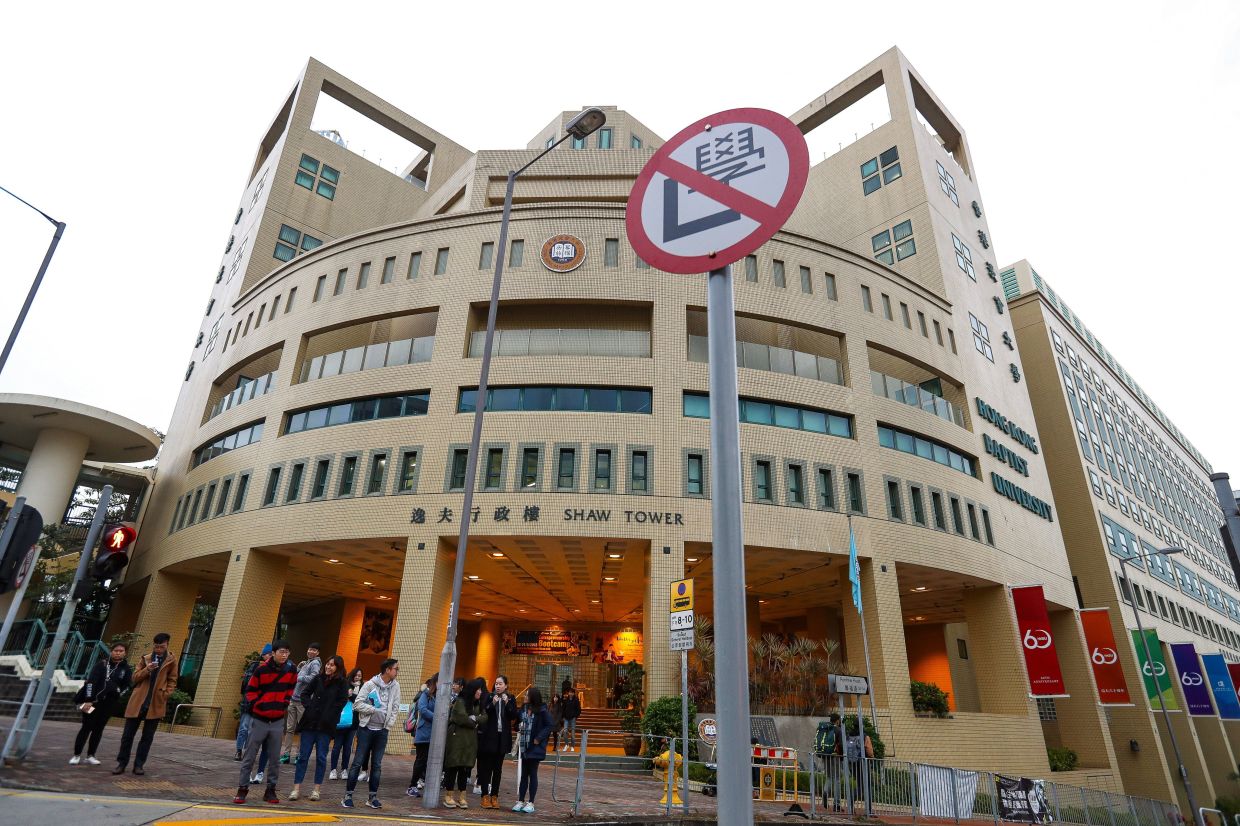
Hong Kong Baptist University has launched a comprehensive review of its information technology infrastructure following public allegations by The Gentlemen, a sophisticated ransomware operation, that the institution's systems were breached and sensitive data extracted without authorisation. The university acknowledged the breach claim on Tuesday evening and indicated it would cooperate fully with regulatory authorities and law enforcement agencies in investigating the incident.
The Gentlemen emerged as a significant threat actor in the global cybercriminal ecosystem roughly eighteen months ago and has since distinguished itself through an unconventional business model that departs from traditional ransomware operations. Rather than deploying malicious software directly against targets, the group functions as a technology platform provider, leasing its extortion capabilities to other criminal actors operating across international networks. This rental-based approach has enabled The Gentlemen to scale its influence remarkably quickly, establishing a sprawling presence throughout digital infrastructure worldwide without necessarily executing every attack personally.
According to cybersecurity monitoring services tracking the breach, the compromised data encompasses approximately 1,900 user credentials across multiple categories. The breach appears to have exposed roughly 130 staff member login details, approximately 1,770 general user accounts belonging to other individuals connected to the institution, and around 260 credentials associated with third-party employees or contractors engaged by the university. The precise sensitivity of these accounts and their potential for causing institutional damage remains under investigation, though access to staff credentials typically poses considerable risk for further infiltration into core systems.
The Hong Kong privacy regulator moved swiftly to address the situation after learning of the breach allegation. The Office of the Privacy Commissioner for Personal Data confirmed it had not received any official notification from Baptist University as of the time of reporting, but stated that it had proactively reached out to the institution to gather details about the incident and assess its scope. This regulatory engagement underscores the serious implications of the breach and the importance of institutional transparency with oversight bodies during cybersecurity emergencies.
Francis Fong Po-kiu, serving as honorary president of the Hong Kong Information Technology Federation, provided detailed guidance on appropriate incident response measures during this critical period. Fong emphasised that Baptist University must immediately escalate the breach notification to the privacy commissioner's office through official channels rather than allowing the regulator to learn of developments piecemeal. He advocated for the university to simultaneously engage independent forensic specialists who can conduct thorough technical analyses of compromised systems and determine the full extent of unauthorised access.
Beyond immediate forensic investigation, Fong outlined essential remediation steps that should proceed urgently across the entire campus network. He recommended implementing a mandatory password reset for all users whose credentials appear in the compromised dataset, with particular urgency given that attackers may already possess these authentication details. Complementing this measure, Fong urged the institution to mandate multi-factor authentication protocols institution-wide, an increasingly standard security practice that requires users to provide multiple forms of verification before accessing sensitive systems, thereby dramatically reducing the practical utility of stolen passwords to potential intruders.
Communication and transparency represent critical components of the institution's recovery strategy, according to industry guidance. Fong stressed that Baptist University must maintain open dialogue with staff members, students, and other affected parties throughout the investigation and remediation process, providing regular updates on findings and explaining the protective measures being implemented. This transparent approach serves multiple purposes: it demonstrates institutional accountability, helps affected individuals understand their exposure and take personal protective measures, and crucially reduces the likelihood that employees might be manipulated through social engineering attacks exploiting uncertainty about the breach's status.
The incident highlights broader cybersecurity vulnerabilities affecting educational institutions throughout Asia-Pacific, which increasingly function as high-value targets for ransomware operations. Universities maintain extensive databases of personal information belonging to students, staff, and research collaborators, operate complex IT networks connecting numerous systems and user populations, and frequently operate under resource constraints that limit security investments. The Gentlemen's targeting of Hong Kong Baptist University reflects these institutional characteristics and signals that no major research or teaching institution can assume immunity from advanced cybercriminal operations.
For Malaysian educational institutions observing this incident, the breach offers instructive lessons about the sophistication of contemporary threats and the importance of proactive security investment. Many regional universities operate under similar structural constraints and maintain comparable data assets, suggesting they face comparable vulnerability profiles. The incident demonstrates that ransomware operations have evolved beyond simple extortion based on system encryption; modern criminal groups employ targeted credential harvesting and data theft as primary attack mechanisms, making robust access controls and continuous security monitoring essential defensive priorities.
Baptist University's incident response will likely establish important precedents for how Hong Kong institutions manage major cybersecurity emergencies, particularly regarding communication with regulators, transparency with affected parties, and coordination with law enforcement. The university indicated it would operate through established mechanisms for managing such situations, suggesting institutional protocols may have been activated immediately. Whether these existing frameworks prove adequate to the sophistication of The Gentlemen's operation will provide valuable assessment data for other institutions developing or upgrading their incident response capabilities.

