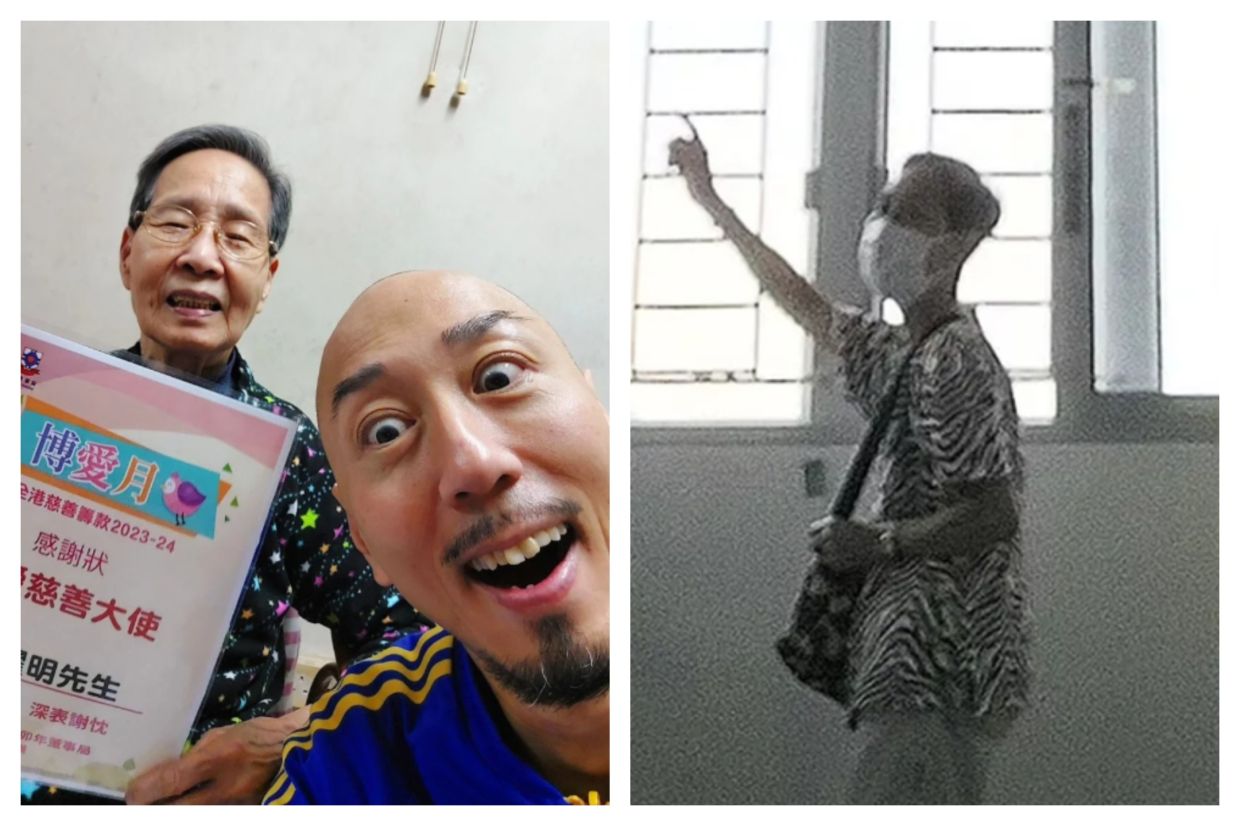
Hong Kong television actor Dai Yiu Ming has realised a cherished ambition by acquiring his first residential property specifically for his mother, marking the culmination of decades spent working steadily in the entertainment industry while maintaining frugal personal habits. The 54-year-old TVB performer recently announced the milestone publicly through social media, sharing photographs of the new residence alongside candid reflections on the emotional and financial significance of the purchase. Though Dai acknowledged the substantial cost involved, he expressed no regret about the investment, framing it as a profound expression of gratitude toward a parent who has endured considerable hardship throughout her lifetime.
Dai's accompanying message to his mother, now in her eighties, carried considerable poignancy, touching on the transient nature of family relationships and the urgency of demonstrating filial devotion while time permits. He wrote that they share only one lifetime together and that even spiritual beliefs about reincarnation offer no guarantee of reunion in future existences, therefore making the present moment invaluable. This philosophical reflection resonated deeply with audiences across Hong Kong and the broader Chinese diaspora, where the concept of filial piety holds profound cultural significance that extends far beyond simple duty into the realm of personal identity and moral character.
The actor's mother endured extraordinary deprivation across her formative decades, spending the majority of her adult life inhabiting makeshift shelters and decaying public housing units that characterised Hong Kong's post-war housing crisis. Dai recounted with admiration his mother's recollection of wartime survival, describing how she subsisted in air-raid shelters during military conflict by foraging for sweet potato leaves and other foraged vegetation to sustain herself. Such narratives underscore the generational gap between those who experienced Hong Kong's most turbulent historical periods and their descendants who came of age during periods of relative prosperity, a distinction that informed Dai's sense of obligation toward providing his mother with dignity in her final years.
In his social media caption, Dai demonstrated realistic self-assessment regarding his professional earnings, describing himself as lacking the capacity to accumulate extraordinary wealth through his entertainment work. He credited his ability to afford the property entirely to disciplined financial management, austere personal spending habits, and sustained effort across his entire career rather than to any sudden windfall or career breakthrough. This candid acknowledgement of modest means paradoxically strengthened public admiration for his achievement, as observers recognised that the purchase represented genuine sacrifice and priority-setting rather than casual expenditure by a wealthy individual.
Public reaction to Dai's announcement was overwhelmingly positive, with online commenters celebrating his demonstrated devotion to his parent and offering their own blessings for his and his mother's continued wellbeing. Social media users employed traditional Chinese expressions of praise for filial piety, employing language that elevated Dai's actions beyond mere material provision to the level of moral exemplar. The emotional tone of responses indicated that audiences viewed the home purchase as symbolic of deeper values regarding family obligation and intergenerational respect that remain meaningful despite rapid modernisation across Hong Kong and the broader region.
Dai's career trajectory, while not marked by superstar status, reflects the experiences of countless supporting performers who build sustainable livelihoods through consistent, unglamorous work across multiple decades. He initially pursued formal training through ATV's artiste programme in 1991 and subsequently made his professional debut in television dramas during 1993, but departed that broadcaster after experiencing insufficient recognition and appreciation for his efforts. Rather than pursuing entertainment exclusively, he pragmatically transitioned to technical employment as a computer repair specialist for approximately six months, a decision that demonstrated adaptability and willingness to diversify his income sources during uncertain career periods.
His subsequent engagement with TVB from 1994 onward established him as a reliable supporting performer rather than a leading actor, a distinction that proved stable if unspectacular. Dai developed a professional reputation built on dependability and craftsmanship across numerous television dramas, establishing himself as the type of actor whom producers could trust to deliver consistent performances in secondary roles that required competence without demanding extraordinary star power. This career positioning, while less lucrative than leading roles, offered relative security and steady employment across the decades when the television industry experienced significant structural changes and declining viewership.
The actor's personal life has been shaped substantially by family responsibility and the absence of his father, who passed away more than a decade before the property purchase. The loss left Dai and his mother as each other's primary family unit, intensifying their interdependence and creating mutual obligations that transcended typical parent-adult child relationships. When Dai briefly explored expanded career opportunities in mainland China during 2017, seeking to capitalise on that region's larger entertainment market and potentially higher remuneration, he discovered that separation from his mother caused sufficient emotional distress to outweigh professional advantages.
His decision to return to Hong Kong after a relatively brief period on the mainland demonstrated the priority he assigned to his mother's wellbeing and companionship over career advancement and income maximisation. This choice, which some observers might view as economically suboptimal, revealed the fundamental values that shaped Dai's decision-making across his entire adult life. The eventual property purchase can therefore be understood not as a sudden aberration but as a culmination of consistent life priorities maintained across decades, finally made possible by accumulated savings and the financial stability achieved through sustained employment.
For Malaysian and Southeast Asian audiences, Dai's story carries particular resonance given the region's strong cultural emphasis on filial obligation and multi-generational family support systems. The narrative also speaks to broader questions about career security and social advancement within the entertainment industry across East and Southeast Asia, where individual performers often experience precarious employment, inconsistent earnings, and pressure to maximise income during unpredictable career windows. Dai's example, while individually inspirational, also implicitly raises questions about whether supporting performers receive adequate compensation and recognition across regional media industries, and whether such dedicated professionals should require decades of austere living to secure basic housing for themselves and their families.

