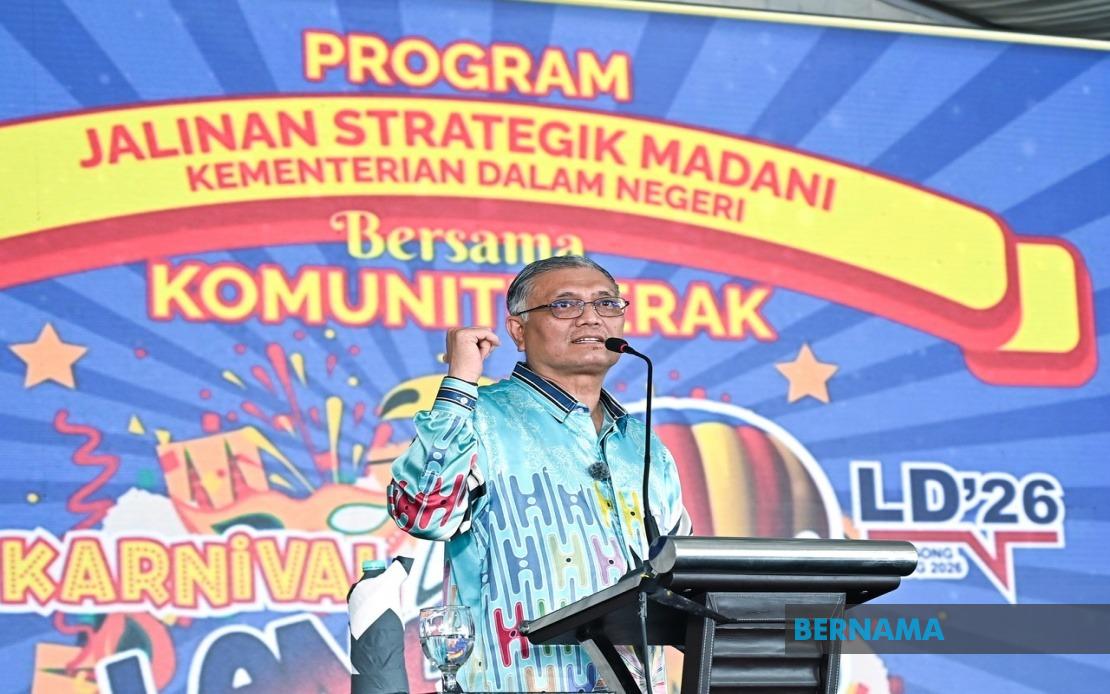
The Home Ministry (KDN) has expanded its commitment to bringing government services closer to Malaysian communities through the MADANI Strategic Partnership Programme, a comprehensive two-day initiative that concluded in Lenggong, Perak. Held at Dataran Lenggong, the programme represented a significant effort to streamline public access to essential services while simultaneously building stronger relationships between ministry agencies and grassroots communities. The event demonstrated the government's recognition that effective service delivery requires not merely making services available, but actively engaging residents in dialogue about their needs and concerns.
Deputy Home Minister Datuk Seri Dr Shamsul Anuar Nasarah, who also serves as Lenggong Member of Parliament, underscored the programme's dual purpose during the official launch. Beyond the logistical convenience of establishing temporary service counters, he framed the MADANI initiative as a platform for genuine two-way communication between security agencies and the communities they serve. This emphasis on dialogue signals a shift from traditional top-down service delivery toward more participatory governance models that invite public input on matters affecting neighbourhood safety and community wellbeing.
The programme featured interactive exhibitions showcasing the work of major security agencies including the Royal Malaysia Police (PDRM), the Immigration Department of Malaysia (JIM), and the National Anti-Drugs Agency (AADK). These exhibitions served dual functions: they educated the public about available services while allowing residents to better understand the operational scope and priorities of institutions that directly impact their daily lives. For many participants, particularly in smaller communities like Lenggong, such opportunities to engage directly with senior officials and examine agency capabilities remain relatively infrequent.
Practical service access formed the programme's foundation. Temporary counters operated by KDN agencies welcomed residents seeking to update personal records, obtain advice on administrative matters, or lodge complaints directly with relevant departments. Dr Shamsul Anuar specifically encouraged visitors to utilise these services, effectively reducing bureaucratic barriers that often inhibit rural and semi-rural residents from engaging with government institutions located in distant urban centres. This decentralised approach particularly benefits individuals with mobility challenges or those lacking ready access to transportation.
Community engagement extended beyond administrative services. The programme incorporated cultural and recreational elements including religious talks, children's colouring competitions, and creative performances that attracted families across the demographic spectrum. These activities transformed what could have been purely transactional government presence into a genuine community gathering, enhancing attendance and creating a more welcoming atmosphere around official agencies. Such inclusive programming recognises that public trust in government institutions builds through positive, non-formal interactions as much as through efficient service delivery.
Approximately 1,190 participants joined a Fun Ride and Fun Run organised collaboratively by the People's Volunteer Corps (RELA) and the National Anti-Drugs Agency. This active component served multiple objectives simultaneously: promoting public health awareness, showcasing the natural attractions of Lenggong Valley, and creating informal networking opportunities between community members and government representatives. The choice to incorporate the activity route through surrounding villages ensured visibility throughout the broader Lenggong area, extending the programme's reach beyond those who attended the main event venue.
Lenggong Valley's designation as a UNESCO World Heritage Site added cultural significance to the location selection. By hosting the MADANI programme in this historically important area, the government simultaneously highlighted regional heritage assets while demonstrating commitment to supporting economic development in communities rich with tourism potential. This strategic positioning of government services within broader regional development narratives helps frame the Home Ministry not merely as a security apparatus but as a stakeholder in community prosperity and cultural preservation.
The programme's emphasis on addressing interconnected social challenges—specifically crime, drug abuse, and grassroots security issues—reflects evolving understanding of public safety as fundamentally dependent on strong community-government relationships. Research from other countries has consistently demonstrated that security outcomes improve when law enforcement and social agencies actively listen to community concerns rather than imposing solutions unilaterally. By framing the MADANI initiative as a platform for identifying and addressing locally-specific challenges, the Home Ministry acknowledges that residents themselves possess crucial intelligence about neighbourhood dynamics that external agencies might miss.
For Malaysian communities in rural and semi-urban areas, programmes like MADANI address a persistent governance challenge: ensuring that residents in less densely populated regions receive equivalent service quality and engagement opportunities as urban populations. Lenggong's geographic position in northern Perak, while close to developed centres, still represents the kind of community that often experiences delayed service innovation and reduced frequency of direct governmental engagement. This initiative suggests recognition that such disparities require proactive, deliberate intervention rather than passive expectation that services will automatically reach all communities equally.
The collaborative structure involving RELA, PDRM, JIM, AADK, and local administration demonstrates horizontal coordination across government agencies often compartmentalised through separate ministries and jurisdictions. Such integrated approaches potentially model how Malaysia's government machinery might function more effectively when institutional silos are temporarily dissolved around shared community engagement objectives. The practical experience of coordinating multiple agencies around a single community event generates institutional learning that may inform more efficient service delivery structures going forward.
Dr Shamsul Anuar's dual role as Deputy Home Minister and local Member of Parliament positioned him to champion this initiative at both national policy and constituency levels. This personal investment by an elected representative in concrete service delivery programming demonstrates how political leadership can meaningfully advance government modernisation goals. The MADANI programme thus operates simultaneously as a tangible service improvement for Lenggong residents and as a potential model for replication in other constituencies seeking to strengthen community-government relationships while maintaining security agency effectiveness and accessibility.

