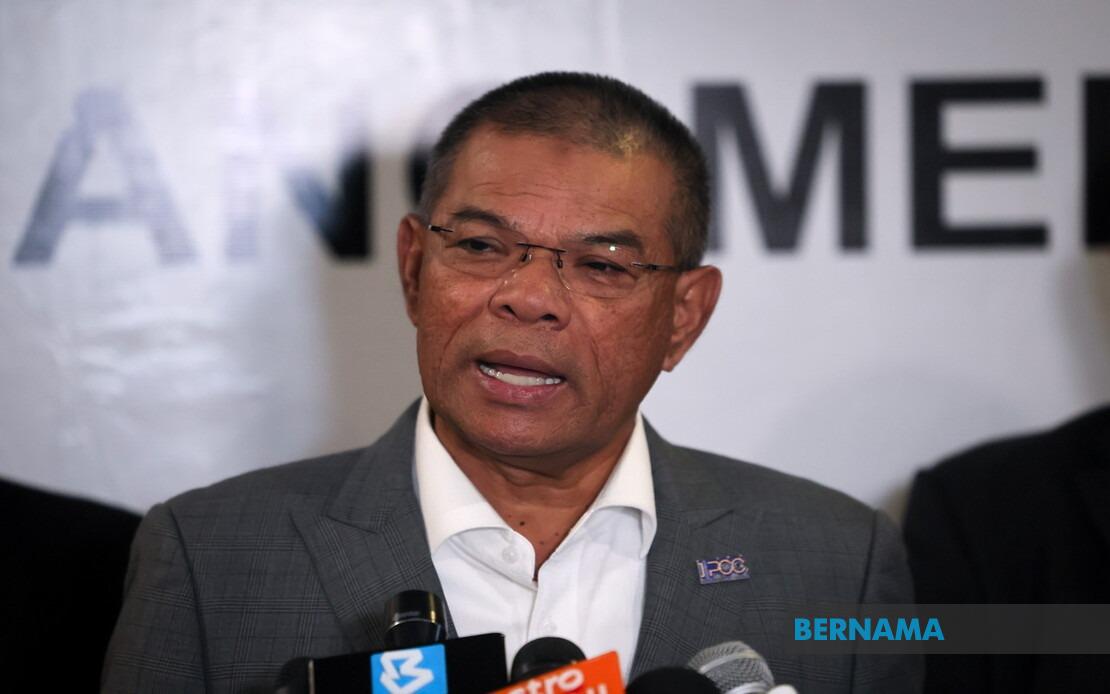
Home Minister Datuk Seri Saifuddin Nasution Ismail has issued a directive requiring the Malaysian Immigration Department to provide complete cooperation with authorities investigating a catastrophic vehicle accident that claimed the lives of three family members in the early hours of Monday morning. The minister made this declaration through a Facebook statement, underscoring the government's commitment to establishing accountability should the investigation uncover any dereliction of duty, improper conduct, or legal violations. Saifuddin Nasution accompanied his mandate with expressions of sympathy toward the bereaved family, with the entire Ministry of Home Affairs and the Immigration Department offering prayers for the victims' relatives during this period of profound grief.
The collision occurred around 1 am on Jalan Sultan Ismail when a Malaysian Immigration Department lorry—commonly known as a Black Maria and empty of any detainees—struck multiple pedestrians and vehicles at the Maju Junction intersection. According to media accounts, four individuals on foot were struck, with three confirmed dead and another sustaining critical injuries. The impact also involved a Proton Saga sedan and an Inokom Matrix multi-purpose vehicle, though details regarding injuries to occupants of these vehicles remain limited. The three fatal casualties belonged to the same family unit, adding a layer of tragedy to an already devastating incident that has sent shockwaves through the capital.
Circumstances surrounding the crash suggest potential operational irregularities on the part of the Immigration lorry. The vehicle was reportedly traversing the intersection while its traffic signal displayed red, notwithstanding the activation of its beacon lights and emergency siren. The Proton Saga, traveling perpendicular to the lorry and on a green traffic signal, had insufficient time to prevent the collision. Following impact, the lorry skidded violently out of control, subsequently striking the pedestrians and the Inokom Matrix. These details point to possible violations of traffic protocols and raise questions about whether the lorry's emergency warning systems adequately compensated for running a red light.
The Immigration vehicle had been en route to the Chow Kit area with a specific operational objective—to conduct a coordinated enforcement action targeting undocumented migrants in the vicinity. Such raids represent routine operations conducted by the Immigration Department as part of border control and illegal entry prevention efforts. However, this particular mission resulted in an unintended tragedy that has now triggered official scrutiny into the department's operational procedures, vehicle maintenance standards, and driver conduct during emergency responses. The incident underscores the inherent risks involved when government enforcement agencies operate specialized vehicles under time-sensitive conditions with activated sirens and lights.
The police and traffic authorities have registered the case under Section 41(1) of the Road Transport Act 1987, a provision typically invoked in serious motor vehicle incidents that result in fatalities or severe injury. This classification indicates that investigators will examine multiple dimensions of the accident—from mechanical functionality of the lorry to driver behavior, adherence to traffic regulations, and departmental protocols governing high-speed operations. The Home Minister's statement signals that the government intends to pursue the investigation with rigor rather than shielding the institution from accountability, a stance that carries significance given that one of Malaysia's security agencies stands implicated in the incident.
For Malaysian readers and the broader Southeast Asian region, this tragedy raises pertinent questions about the intersection of public safety and law enforcement operations. Immigration enforcement, while necessary for national security, must balance operational effectiveness with the protection of civilian lives. The incident demonstrates that even routine administrative operations conducted by uniformed services can result in catastrophic consequences when procedural safeguards are inadequate or operational decisions prioritize speed over caution. The fact that the lorry entered an intersection against the traffic signal, despite emergency lighting and sirens, suggests a potential organizational culture that may tolerate risk-taking behavior in the name of operational urgency.
The Home Minister's explicit commitment to disciplinary measures should negligence be substantiated reflects evolving standards of governmental accountability in Malaysia. His public statement creates a political commitment to transparency and consequence management, effectively placing the Immigration Department under heightened scrutiny and establishing expectations that any findings of wrongdoing will result in concrete action. This approach distinguishes the current response from historical patterns where similar incidents involving state agencies sometimes resulted in limited accountability or protracted internal inquiries that yielded inconclusive results. The ministerial directive thus sends a message to both the public and departmental personnel that institutional privilege will not shield individuals or systems from legitimate investigation.
The collision also touches upon broader infrastructure and urban planning considerations relevant to Kuala Lumpur and other Malaysian cities. The Maju Junction intersection, apparently a high-traffic interchange, has now become the site of a fatal accident involving a government vehicle operating under emergency conditions. Transportation planners and traffic management authorities may need to evaluate whether certain intersections require additional safety measures, improved lighting, or modified traffic signal protocols to prevent similar incidents. The involvement of multiple civilian vehicles and pedestrians suggests that the junction handles substantial volumes of mixed traffic and foot traffic, necessitating robust safety infrastructure.
For the Immigration Department specifically, this incident will likely trigger a comprehensive review of operational procedures governing vehicle deployment during enforcement activities. The department may face pressure to implement enhanced driver training requirements, establish clearer protocols regarding traffic signal compliance even when emergency lights are activated, and potentially modify procedures for deploying personnel during night-time operations. Such institutional responses, while potentially burdensome, reflect the government's stated commitment to preventing recurrence and protecting public safety. The tragedy serves as a sobering reminder that enforcement activities, however well-intentioned, carry inherent risks that must be systematically managed through robust procedures and oversight mechanisms.
The extended condolences and prayers expressed by the Home Minister and the broader Ministry of Home Affairs, while appropriate to the gravity of the loss, must be coupled with substantive institutional reform to achieve meaningful closure and prevent future tragedies. The families affected by this collision deserve not only sympathy but also evidence that their loss has prompted the government to implement systemic improvements. As the investigation progresses, Malaysian observers and international observers will monitor whether the government's stated commitment to accountability translates into concrete findings, transparent disclosure of results, and demonstrable changes to departmental practices. The outcome of this investigation will likely establish precedents for how Malaysia handles future incidents involving government vehicles and public safety.

