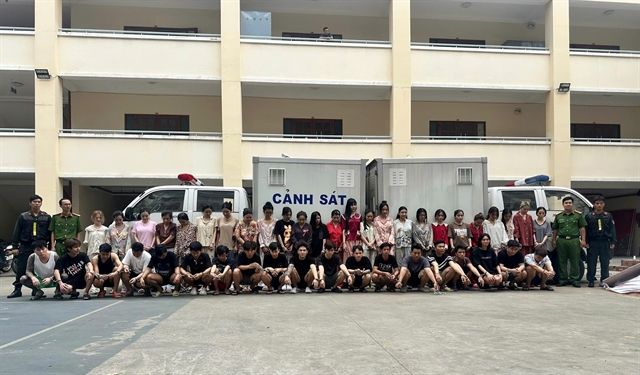
Law enforcement in Ho Chi Minh City has dismantled a sophisticated criminal operation distributing drug-laced electronic cigarettes, resulting in the arrest of 49 suspects including four foreign nationals. The city's drug crime investigation division announced the breakthrough on Wednesday, revealing the extent of a network that had been covertly marketing chemically-enhanced vape pods to young people across entertainment venues and residential areas.
The contraband seized during the operation paints a picture of substantial criminal enterprise. Police recovered 1,670 vape pods along with hundreds of grams of ketamine and methamphetamine. The primary active ingredient disguised within these devices is etomidate, a pharmaceutical-grade short-acting sedative designed exclusively for surgical anaesthesia under strict medical supervision. Vietnamese authorities added this substance to their controlled drugs list in January, making its manufacture, distribution, and sale serious criminal offences with severe penalties.
What made this operation particularly insidious was the marketing strategy employed by the syndicates. The etomidate-infused pods were repackaged and sold under deceptive commercial names such as "chill pod," "relaxation pod," "sleep-well pod," and "fly pod," deliberately concealing their pharmaceutical nature while appealing to recreational users. The pricing strategy targeted affluent consumers, with the products sold at premium rates to establish an aura of exclusivity and desirability among young professionals and nightlife participants.
The investigation originated from intelligence about a street-level distributor operating under the alias Ba Giá along An Duong Vuong Street in An Lac Ward. This individual was subsequently identified as Nguyen Huu Huan, a 28-year-old from Dong Thap province in southern Vietnam. On June 25, Huan and his spouse, Ngo Thi Kim Chi, aged 30, were taken into custody for trafficking the adulterated vapes to a 31-year-old Ho Chi Minh City resident named Tran Phuc. This initial arrest proved to be merely the entry point into a far larger criminal ecosystem.
Detailed follow-up investigations revealed two distinct supply networks channelling products to Huan's retail operation. The first network operated under the direction of Huynh Ngoc Thuy Nhu, 26, with assistance from Hua Tuong Vy, 20, both based in Ho Chi Minh City. The second and more geographically extensive operation was headed by Le Quoc Duy, a 40-year-old from An Giang province, who orchestrated the smuggling of contaminated vapes across the Vietnamese-Cambodian border through remote crossing points before consolidating shipments for distribution in the metropolis. Police confiscated 37 vape pods from Duy's premises alongside 200 grams each of ketamine and methamphetamine.
A third criminal group composed of Han Kiat, a Cambodian national, and three additional foreign suspects operated a parallel distribution channel specifically targeting foreign residents in Ho Chi Minh City. The involvement of multiple foreign nationals in both upstream supply and downstream retail operations underscores how transnational criminal networks have become embedded in Southeast Asian drug trafficking. The nationalities represented include South Korean, Chinese, and Cambodian individuals, suggesting regional coordination and sophisticated logistics across borders.
The pharmacological dangers posed by etomidate consumption represent a critical public health dimension that extends beyond typical drug policy concerns. Unlike nicotine, when etomidate is inhaled through vaping devices, it bypasses the respiratory system's natural defences and travels directly from the lungs into the bloodstream, reaching the brain within seconds. Initial user experiences may involve mild euphoria and light-headedness with minor hallucinogenic properties, but acute exposure can trigger serious neurological complications including neurotoxicity, profound drowsiness, involuntary muscle contractions, and complete loss of consciousness. Particularly alarming is the risk that high doses combined with alcohol or other sedative substances can precipitate sudden respiratory failure and death.
The deliberate targeting of young people represents another troubling dimension of this criminal enterprise. Police observations indicate that the trendy aesthetic of vaping devices combined with sophisticated marketing narratives makes these products appealing to youth demographics seeking novel experiences. Criminals have perpetuated the false claim that etomidate-enhanced vapes are "undetectable" or "100 per cent negative" when subjected to rapid drug testing kits available for consumer purchase. This deception exploits a genuine detection gap: standard market-available test kits are calibrated for conventional substances such as heroin, cannabis, and methamphetamine, but etomidate's distinct chemical structure renders it invisible to these screening tools. Only specialized forensic laboratory equipment operated by law enforcement agencies possesses the analytical capability to definitively identify this substance.
For Malaysian readers and regional policymakers, this case study carries considerable significance. The operational methods employed by these Vietnamese syndicates—cross-border smuggling, repackaging for deceptive marketing, targeting affluent youth demographics, and exploiting detection gaps—mirror tactics that could feasibly migrate to Southeast Asian markets including Malaysia. The transnational nature of the criminal groups, featuring Chinese, Cambodian, and South Korean participants, suggests that similar networks may already be positioning themselves in other regional hubs.
The Ho Chi Minh City police operation highlights institutional gaps in drug enforcement across the region. The fact that etomidate remained exploitable for nearly six months following its January addition to controlled substance lists suggests that regulatory frameworks may lag behind criminal innovation. Law enforcement capacity to detect novel psychoactive substances remains inadequate in most Southeast Asian jurisdictions, where forensic laboratory infrastructure remains underfunded and technologically limited compared to developed nations.
Vietnam's response offers both lessons and cautionary notes. While the scale of arrests and asset seizures demonstrates effective investigative work and cooperation between different police divisions, the operation's success in identifying distribution networks may have come only after the product had penetrated market channels and reached consumers. The public health messaging from Ho Chi Minh City police appropriately emphasizes the dangers of unknown-origin e-cigarettes and the risks of adulterants, recognizing that enforcement alone cannot stem demand among youth populations.
Malaysian authorities monitoring this case should consider parallel vulnerabilities within domestic markets. The prevalence of vaping culture among Malaysian youth, combined with porous enforcement of regulations governing electronic cigarette imports and retail, creates conditions where similar synthetic drug-laced products could circulate. Regional cooperation mechanisms, enhanced laboratory capacity, and public education campaigns specifically targeting the dangers of adulterated vaping products warrant urgent attention from health and law enforcement agencies across Southeast Asia.

