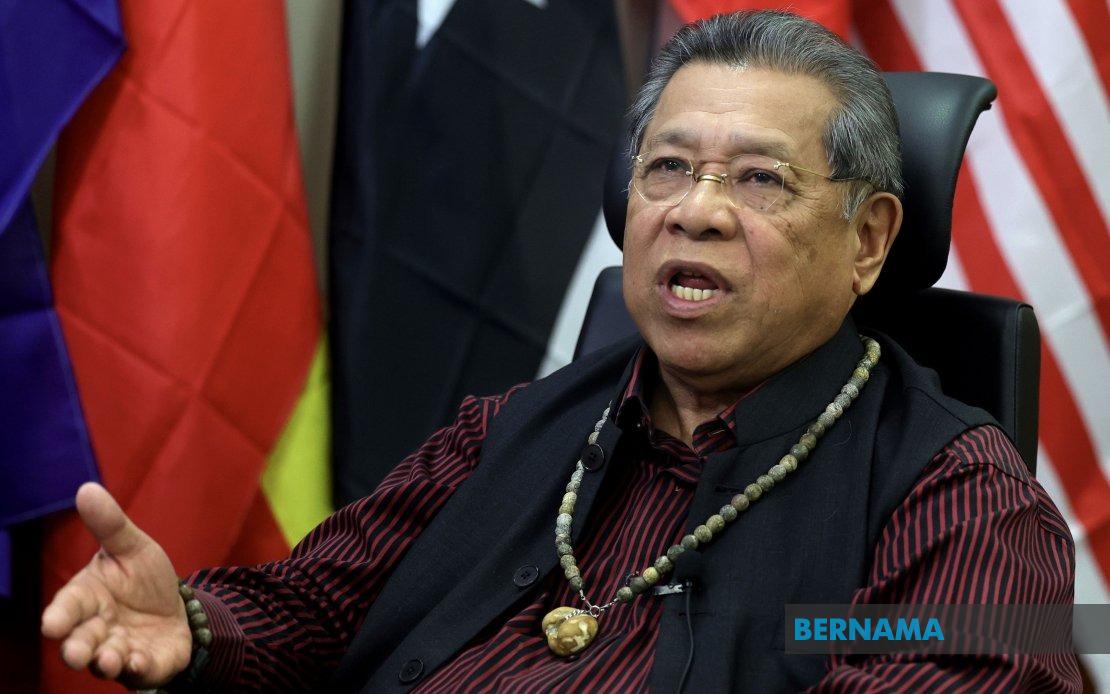
Federal allocations to Sabah have surged significantly under the current administration, with the total budget rising 35 per cent from RM13 billion in 2022 to RM17.6 billion by 2026. The substantial increase promises to unlock substantial development opportunities across the East Malaysian state, according to United Sabah National Organisation (USNO) president Tan Sri Pandikar Amin Mulia, who underscored the transformative potential of this financial commitment during the 2026 PKR National Congress in Melaka.
The USNO leader's endorsement of the funding allocation comes as Prime Minister Datuk Seri Anwar Ibrahim announced the figures during his presidential policy address at the party congress held at the Melaka International Trade Centre (MITC) in Ayer Keroh. Speaking to journalists on the sidelines of the gathering, Pandikar Amin projected that the expanded federal investment would facilitate the launch of numerous infrastructure and development initiatives designed to improve living standards and economic opportunities for Sabahans across the state.
For Sabah, a state historically advocating for greater federal support to address its development gap with peninsular regions, the 35 per cent increase represents a meaningful expansion of resources. The jump from RM13 billion to RM17.6 billion reflects a nominal increase of RM4.6 billion in annual federal spending, a significant figure in the context of state-level development planning. Such allocations typically fund critical infrastructure including roads, ports, telecommunications networks, healthcare facilities, and educational institutions that remain priorities for regional development.
Pandikar Amin's remarks also extended to a broader endorsement of Prime Minister Anwar Ibrahim's leadership capacity, particularly regarding Malaysia's positioning on both the international and domestic policy fronts. The USNO president indicated that, from his perspective, the incumbent administration remains essential to navigating current geopolitical complexities and maintaining internal political stability. This sentiment reflects the delicate balance of coalition politics in Malaysia's federalist system, where state-level parties like USNO play pivotal roles in supporting federal governance arrangements.
The Prime Minister seized the occasion to directly address persistent criticisms that the MADANI Government has unequally favoured certain states over others in its budgetary allocations. Anwar's defence emphasised that variations in state funding reflect different developmental priorities and needs rather than political favouritism, a familiar refrain in Malaysia's contentious fiscal federalism debates. He stressed that resource distribution across the 13 states and federal territories has genuinely increased under his administration, though the growth rates and absolute figures naturally differ depending on each jurisdiction's circumstances and strategic requirements.
Sabah's geographical position as an offshore state with significant land area but dispersed population centres creates unique budgetary challenges distinct from those facing other Malaysian states. Infrastructure development costs in Sabah tend to be comparatively higher due to terrain difficulties, logistical complexities, and the necessity to service remote communities. The 35 per cent budget expansion thus carries practical significance for addressing connectivity deficits, economic diversification initiatives, and human capital development across the state's diverse districts and divisions.
The timing of this allocation announcement during the PKR National Congress carries political weight within Malaysia's coalition dynamics. The Pakatan Harapan alliance has increasingly depended upon securing support from Sabah-based political parties and constituencies, particularly following the 2022 general election outcomes. Demonstrating tangible fiscal benefits to East Malaysian states serves both symbolic and practical purposes in maintaining coalition cohesion and reinforcing the electoral appeal of the federal government among Sabah voters.
Pandikar Amin's characterisation of the funding increase as benefiting not merely Sabah but Malaysia's collective advancement reflects a nationalist framing common in Malaysian political discourse. He contended that accelerated development in one state contributes to national economic dynamism, suggesting an interconnected prosperity model rather than zero-sum competition between regions. This perspective aligns with federal government rhetoric emphasising inclusive growth across the Malaysian federation.
The RM17.6 billion projected allocation for 2026 requires careful deployment across competing priorities including transportation infrastructure, industrial development zones, tourism facilities, agricultural modernisation, and social services expansion. How effectively the Sabah state administration channels these resources will significantly influence whether the funding boost translates into genuine improvements in livelihood standards, employment opportunities, and public service quality for residents. Implementation capacity and project execution transparency thus become critical factors determining the true impact of this budgetary commitment.
For Malaysian observers tracking federal-state fiscal relations, Sabah's increased allocation offers a case study in how coalition politics shape resource distribution patterns. The state's strategic importance to national stability and electoral mathematics has historically secured it substantial federal consideration, yet questions persist regarding whether funding reaches intended beneficiaries and whether developmental outcomes justify investment levels. The coming years will reveal whether the 35 per cent boost genuinely catalyses transformative change in Sabah's economic and social landscape.

