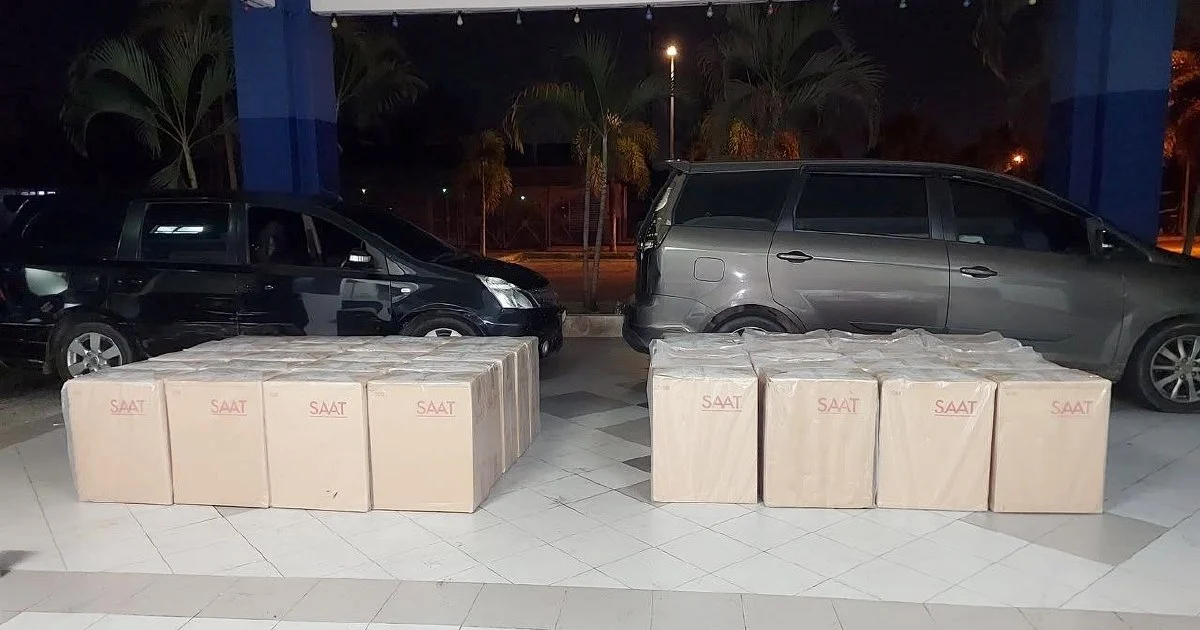
Kelantan's authorities have dismantled another significant smuggling operation, apprehending a 29-year-old suspect following an intense pursuit in the Kota Baru district. The chase, which took place at Kampung Pulau Panjang, culminated in the discovery of 400,000 sticks of suspected smuggled cigarettes with an estimated street value of RM813,000. The arrest represents a substantial blow to the underground tobacco trade operating within the state and underscores the persistent challenge posed by cigarette smuggling networks across Malaysia's northern regions.
The interdiction of such large quantities of contraband tobacco products demonstrates the continued vigilance of enforcement personnel who patrol vulnerable entry points and distribution hubs. Kampung Pulau Panjang, situated in the Kota Baru locality, has become an increasingly significant flashpoint for goods smuggling due to its proximity to supply routes and distribution networks. The recovery of this consignment reflects coordinated efforts by authorities to disrupt the supply chain at crucial junctures before illicit products reach broader retail networks throughout the peninsula.
Smugglers in the region have developed increasingly sophisticated methods to transport contraband goods, often utilising fast vehicles and maintaining networks of lookouts to avoid detection. The chase itself underscores the operational risks that enforcement officers face when pursuing suspects who prioritise evasion over safety considerations. Such pursuits frequently occur under challenging conditions, yet authorities have maintained commitment to intercepting smuggling operations regardless of the risks involved or the resources required to sustain these enforcement efforts.
The RM813,000 valuation attached to the seized cigarettes reflects the substantial profit margins that drive the smuggling economy. Illicit tobacco products typically enter Malaysia through porous borders and coastal entry points, bypassing excise taxation that legitimate imports incur. This price differential creates powerful financial incentives for criminal syndicates to maintain smuggling operations, even as enforcement pressure intensifies. The elimination of taxes and regulatory compliance costs allows smugglers to undercut legitimate market pricing significantly, making contraband cigarettes attractive to price-conscious consumers and retailers seeking margin improvements.
Kelantan's strategic location bordering Thailand and its extensive coastline have rendered the state particularly vulnerable to smuggling operations across multiple commodity categories. Cigarette smuggling specifically has persisted as a chronic challenge for Malaysian authorities, who battle determined criminal enterprises with substantial capital reserves and established distribution networks. These organisations frequently employ diversification strategies, smuggling alongside other contraband goods to optimise transportation efficiency and spread enforcement attention across multiple investigation streams.
The broader implications of cigarette smuggling extend beyond simple customs violations or tax evasion concerns. Illicit tobacco markets undermine government revenue streams that fund essential public services, including healthcare infrastructure and social programmes. Furthermore, the absence of regulatory oversight and quality assurance mechanisms means that smuggled cigarettes often fail to meet safety and manufacturing standards, potentially exposing consumers to inferior or counterfeit products manufactured without proper quality controls or health compliance requirements.
Criminal syndicates organised around cigarette smuggling frequently generate secondary harms within communities where they operate. Money laundering activities, gangland violence over territorial disputes, and corruption of public officials represent ancillary consequences of the illicit tobacco trade. The enforcement sector recognises that disrupting supply chains through high-profile seizures serves both direct interdiction purposes and broader deterrent functions, signalling to potential participants that the risks associated with smuggling operations may outweigh financial rewards.
The suspect's apprehension will likely trigger downstream investigations seeking to identify accomplices, financiers, and downstream distribution networks. Malaysian authorities have progressively enhanced their intelligence-gathering capabilities regarding smuggling operations, utilising financial tracking, surveillance technologies, and informant networks to construct comprehensive pictures of criminal enterprises. The arrest at Kampung Pulau Panjang may represent merely the visible component of extensive investigative work conducted over preceding weeks or months.
Government revenue protection represents an increasingly critical policy priority as Malaysia navigates economic pressures and maintains expenditure commitments across competing budgetary priorities. Excise taxation on tobacco products generates substantial annual revenue, and smuggling operations correspondingly represent significant fiscal losses. Consequently, enforcement intensity surrounding cigarette smuggling operations reflects not merely customs administration concerns but rather macroeconomic considerations affecting national budget sustainability and government capacity to deliver public services.
Moving forward, authorities will likely leverage this successful interdiction to refine enforcement strategies and enhance intelligence regarding smuggling networks operating throughout the region. The Kelantan operation contributes to broader regional security architectures encompassing cross-border cooperation frameworks with Thai authorities and coordination mechanisms with other Malaysian states confronting comparable challenges. Such collaborative approaches recognise that compartmentalised enforcement efforts prove insufficient against smuggling enterprises utilising sophisticated logistics and operational coordination across multiple jurisdictions.
The case also highlights the ongoing necessity for consumer education initiatives emphasising the risks associated with purchasing contraband tobacco products. Public awareness campaigns addressing counterfeit goods, health hazards, and the broader social consequences of smuggling operations can gradually erode market demand for illicit cigarettes. Combined with sustained enforcement pressure and strategic prosecution of major operators, such multifaceted approaches offer the most promising pathway toward meaningfully reducing the prevalence of smuggling operations throughout Malaysia.

