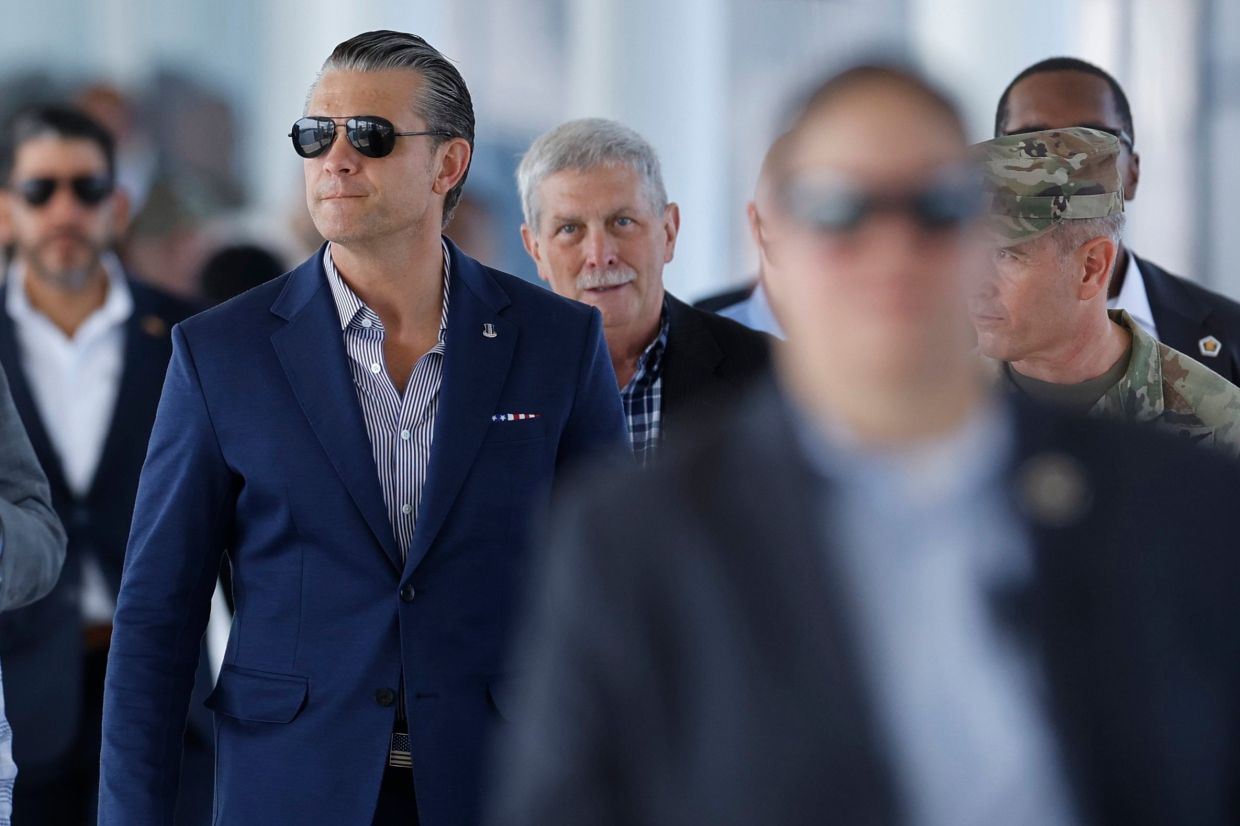
Unnamed officials have indicated that US Defence Secretary Pete Hegseth is approaching a critical juncture in his role, with sources suggesting his position has become increasingly precarious. The mounting pressure stems from prolonged disagreements over Iran strategy combined with a barrage of unfavourable media coverage, creating what insiders characterise as an untenable situation for the Pentagon's civilian leadership. This institutional turbulence arrives at a particularly delicate moment for defence ties between Washington and Beijing, which have demonstrated measurable improvement following the May meeting between President Trump and Chinese leader Xi Jinping in the Chinese capital.
The timing of Hegseth's potential departure raises significant concerns among analysts and defence observers tracking the evolving US-China military relationship. According to those monitoring bilateral defence engagement, communication channels have been activated at virtually every organisational tier during Trump's current administration. Military-to-military relations have reportedly reached their healthiest state in more than a decade, marking a dramatic reversal from years of tension and suspicion that characterised the previous period. This thaw represents a substantial achievement in stabilising one of the world's most consequential geopolitical relationships, one that carries profound implications for regional stability throughout the Indo-Pacific and beyond.
Hegseth himself has publicly characterised the improving defence relationship during his tenure. Speaking at a defence conference several weeks after the Beijing summit, he noted that military ties between the two countries had reached levels unseen "in many years", underscoring how Trump and Xi's bilateral understanding extended into the defence sector and operational cooperation. This messaging aimed to signal continuity and confidence in the emerging partnership. When senior American defence officials, including Alvaro Smith serving as deputy assistant secretary for China, Taiwan and Mongolia, subsequently met with Chinese vice-minister for foreign affairs Ma Zhaoxu in Washington last month, Pentagon statements emphasised the systematic nature of the effort. Smith specifically credited Hegseth's leadership in what the Pentagon framed as an active reconstruction of military channels that had previously been severely damaged.
Chinese analysts offer divergent perspectives on how Hegseth's departure might reshape the defence equation. Zhao Minghao, professor at Fudan University's Institute of International Studies, suggested that Trump might seek a cabinet member to shoulder responsibility for the Iran conflict, noting that such reshuffles often precede major US elections. Zhao acknowledged that losing Hegseth would impose friction on defence communication, particularly given his established working relationship with Chinese Defence Minister Dong Jun, including prior meetings conducted in Malaysia and during Trump's Beijing state visit. He stressed that introducing a new defence secretary would necessitate rebuilding rapport and reestablishing trust mechanisms that have taken considerable time to construct. However, Zhao balanced this concern by noting that military exchanges at operational levels enjoy sufficient institutional momentum to survive personnel changes.
Yet several American defence sources expressed measured optimism about continuity regardless of Hegseth's fate. These officials contended that his possible exit need not fundamentally derail the carefully constructed military relationship, particularly if his replacement maintains ideological alignment with Trump's strategic approach. Chinese officials have reportedly formed favourable impressions of other Pentagon personnel involved in recent negotiations, specifically Stephen Colby, who participated in the Ma meeting that the Chinese foreign ministry characterised as an "in-depth" substantive exchange. One source indicated that Beijing has noted Colby's statements regarding Taiwan, particularly his assertion that the self-governed island does not constitute a vital existential interest for the United States. This positioning aligns more closely with Beijing's diplomatic preferences than traditional American rhetoric on the issue.
The Taiwan question remains the most combustible element within US-China relations, despite recent improvements in military-to-military ties. Beijing continues to view Taiwan as an integral part of Chinese territory and has explicitly retained the option of military force to achieve reunification. The United States maintains its long-standing diplomatic position of not formally recognising Taiwan's independence while simultaneously opposing any coercive unification attempt. American law similarly obligates Washington to maintain Taiwan's defensive capabilities, creating inherent tension within the framework of improving defence relations with China. How new Pentagon leadership would navigate this enduring contradiction remains uncertain, though defence analysts suggest that commitment to "strategic stability" agreements between Trump and Xi provides some protective foundation.
One observer familiar with ongoing military engagement described current US-China defence contacts as "very good right now", suggesting that the relationship possesses sufficient robustness to weather moderate institutional disruption. A third source indicated that replacing Hegseth would likely produce minimal practical consequences for military-to-military engagement unless his successor represented a strong China-hawk ideological persuasion. Such a successor might fundamentally reorient strategic approach away from the rapprochement framework that both administrations have invested considerable effort constructing. The distinction between continuity and disruption therefore hinges substantially on the ideological orientation and personal relationships of whatever replacement Trump might select.
Zhao emphasised that keeping Stephen Colby positioned within Pentagon structure would supply important continuity in military exchange trajectory. He noted that military contacts at working and operational levels have already resumed, substantially enabled by Trump and Xi's foundational agreement to build relationships premised on strategic stability. This phraseology carries profound implications for defence cooperation expansion, creating space for meaningful military exchanges that previous administrations had foreclosed. The anticipated state visit by Xi to Washington within the coming month potentially offers another opportunity to cement military cooperation as part of broader bilateral agenda items. Zhao assessed that strengthening defence relationships will feature prominently in such high-level discussions, reflecting Trump's apparent prioritisation of substantive strategic engagement with Beijing.
For Southeast Asian nations and regional observers, Hegseth's potential departure introduces unpredictability into calculations about great power competition trajectory. The region has experienced decades of relative stability partly underpinned by American military presence and strategic commitments. Any disruption to American-Chinese defence dialogue mechanisms could alter regional security dynamics in ways both subtle and profound. Malaysia and neighbouring countries maintain their own defence relationships with both major powers, making them sensitive to shifts in Washington-Beijing relations. The improvement in US-China military ties has generally been welcomed regionally as a stabilising force that reduces miscalculation risks. Conversely, cabinet turmoil in Washington that might interrupt this trajectory generates anxiety about whether recent positive momentum can be sustained or whether entrenched strategic competition will reassert itself.

