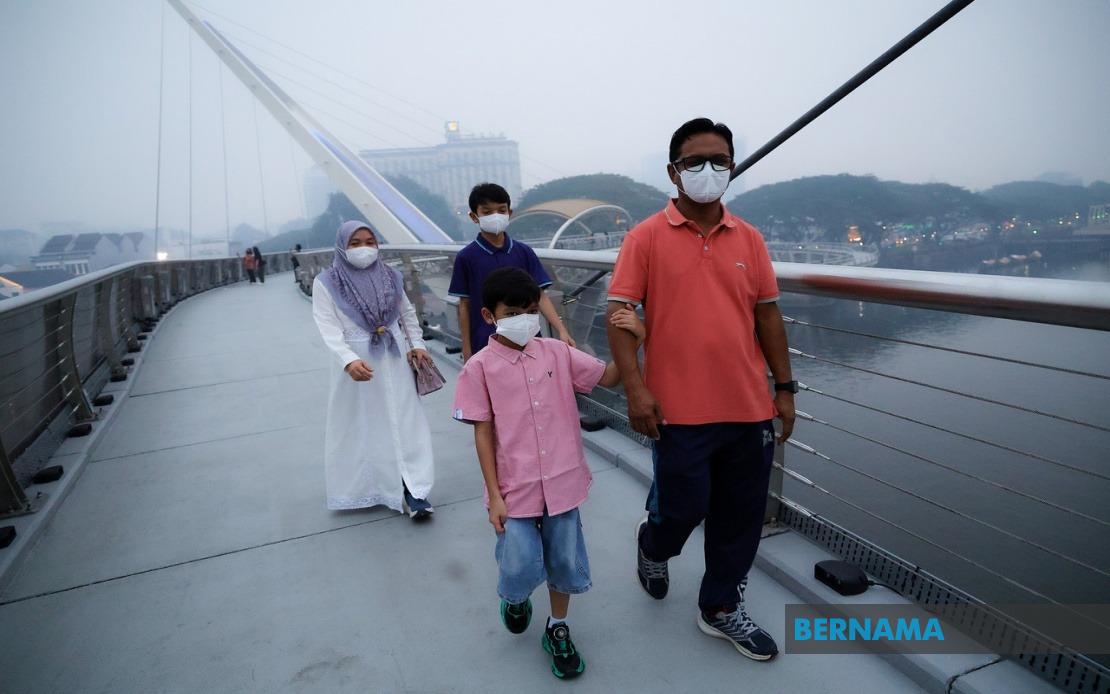
As Malaysia grapples with persistent haze conditions, health specialists are urging residents to take daily Air Pollutant Index readings seriously and implement appropriate safeguards to mitigate respiratory and other health complications. The advisory comes as medical facilities report a significant surge in haze-related illnesses, signalling the severity of air quality deterioration affecting the country.
Dr Anas Ahmad Jamhari, a lecturer at Universiti Sultan Zainal Abidin Faculty of Health Sciences, emphasises that checking Department of Environment API readings before venturing outdoors should become routine practice, particularly when levels breach the 100 threshold. For individuals who must leave their homes for essential activities, he recommends wearing an N95 mask with meticulous attention to fit and seal integrity, as these devices are specifically designed to filter fine particulate matter measuring 2.5 micrometres or smaller—commonly referred to as PM2.5. The critical distinction, he notes, lies not merely in owning a mask but in using it correctly, as improper application, frequent removal, moisture damage, or facial hair compromising the seal can substantially diminish its protective capacity.
Children present a particular vulnerability in haze episodes, as standard adult mask sizes often fail to create adequate seals on smaller faces, reducing their effectiveness significantly. Dr Anas also highlights a behavioural concern: despite API readings indicating unhealthy air quality categories, many people continue engaging in strenuous outdoor pursuits such as jogging, cycling and competitive sports. This persistence in physical exertion during poor air quality periods amplifies health risks, as elevated breathing rates during exercise cause deeper inhalation of contaminated air and allow pollutants to penetrate further into the respiratory system. The resulting exposure can trigger both immediate acute responses and longer-term chronic health consequences.
From a biochemical standpoint, understanding haze composition proves essential for public awareness. Dr Anas explains that haze represents far more than reduced visibility from smoke; it is a complex mixture of particulates and chemical compounds that warrant serious health consideration. The PM2.5 particles are particularly insidious due to their microscopic size, enabling deep lung penetration that larger particles cannot achieve. Once deposited in respiratory tissues, these particles generate oxidative stress—a cellular condition that initiates inflammatory cascades, damages lung tissue, and impairs normal respiratory function. This mechanism explains why haze exposure correlates with respiratory complaints and why vulnerable populations experience more severe manifestations.
Beyond outdoor precautions, environmental controls within residences merit equal attention. Dr Anas advises keeping doors and windows sealed during haze episodes while eliminating indoor pollution contributors: cigarette and vape aerosols, incense and candle smoke, and cooking activities generating substantial smoke. Vehicle air-conditioning systems should operate in recirculation mode, drawing interior air rather than drawing contaminated outside air into passenger compartments. These domestic modifications create refuge spaces where respiratory systems can recover from outdoor exposure.
Public health medicine specialist Datuk Dr Zainal Ariffin Omar introduces an often-overlooked dimension to haze management: the interaction between air quality and meteorological conditions. He stresses that concurrent assessment of temperature and humidity alongside API readings provides a more complete picture of health risk. During periods when haze coincides with elevated temperatures—conditions increasingly common during El Niño phenomena—the population faces compounded physiological stress from both air pollutants and thermal burden. This dual threat scenario escalates dehydration and heatstroke risks, particularly among outdoor workers and vulnerable groups. Consequently, maintaining adequate fluid intake becomes as important as respiratory protection during such episodes.
Dr Zainal's perspective challenges a widespread mental pattern: treating haze as a temporary seasonal phenomenon that permits resumption of normal behaviours once air clears. This normalisation may diminish public preparedness for recurring episodes and delay preventive action-taking until air quality deteriorates substantially. He advocates for continuous public health messaging through accessible, uncomplicated information channels that encourage proactive responses rather than reactive measures implemented only when conditions become severely degraded. Such sustained awareness can shift population behaviour toward earlier intervention and sustained protection.
The urgency of expert recommendations gained weight from recent epidemiological surveillance data. The Health Ministry reported that asthma presentations at sentinel health facilities surged more than eightfold during Epidemiological Week 34, reaching 1,811 cases compared to 219 cases the previous week. Simultaneously, conjunctivitis cases escalated from 146 to 720 during the identical period. These figures represent not statistical abstractions but actual patients seeking medical care, suggesting that haze exposure is generating measurable population-level health impacts across multiple organ systems. The respiratory and ocular manifestations indicate that air pollutants are reaching vulnerable body surfaces and triggering inflammatory responses.
For Malaysian readers, these expert warnings carry particular relevance given the nation's geographical position and seasonal haze cycles. The recommendations represent practical, implementable strategies accessible to most households and individuals. Checking API readings requires only internet access; acquiring and correctly using N95 masks involves modest expense; modifying household ventilation and activity patterns demands behavioural adjustment rather than financial outlay. Understanding the biochemical mechanisms underlying PM2.5 toxicity reinforces why these precautions matter beyond abstract health statistics—they represent tangible protection against cellular-level damage.
The convergence of medical expert advice and epidemiological evidence creates a compelling case for population-level behaviour change. Whether through personal choice or institutional guidance, monitoring air quality indices and adopting corresponding protective measures can substantially reduce both immediate illness risk and potential long-term respiratory complications. As haze episodes appear increasingly frequent across Southeast Asia, building these precautionary practices into routine decision-making represents a prudent investment in individual and community health security.

