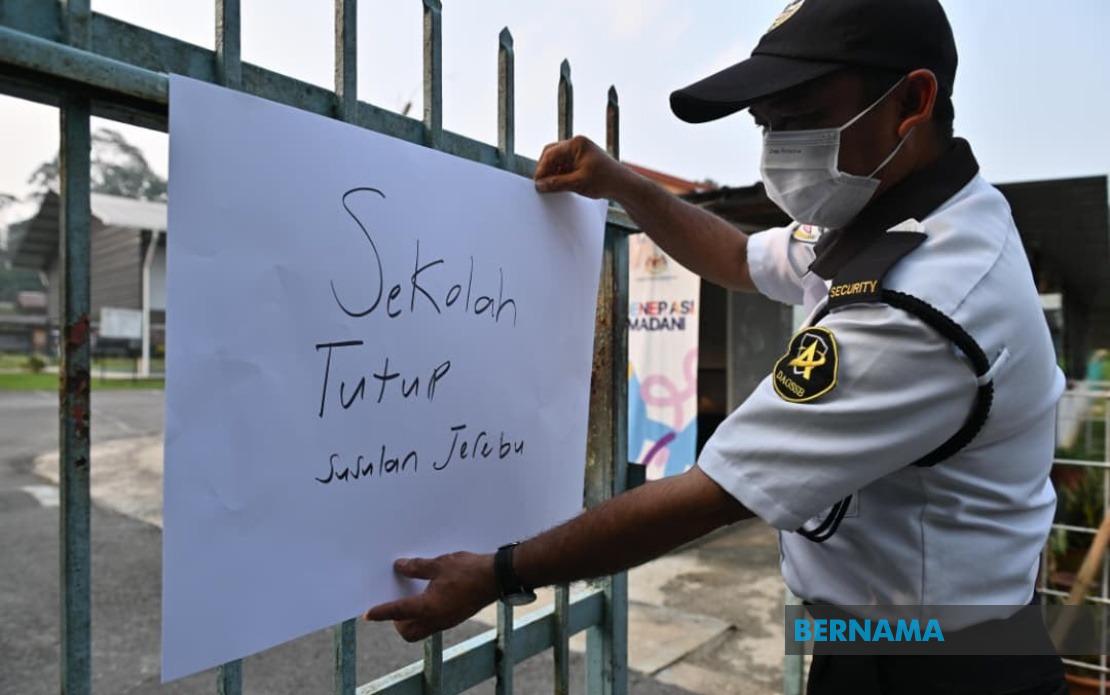
A widespread school closure across the Serian district in Sarawak has affected over 108 educational institutions as hazardous air quality readings triggered emergency protocols established under the nation's haze management framework. The suspension of in-classroom learning follows Air Pollutant Index (API) measurements that breached the critical 200-point threshold, prompting swift intervention by the Sarawak State Disaster Management Committee (JPBN) to safeguard the health of students and education personnel.
The decision to shutter classrooms reflects the severity of the atmospheric deterioration now affecting eastern Malaysia, a region that periodically grapples with transboundary haze originating from agricultural burning in neighbouring Indonesian provinces. The closures in Serian represent the most visible consequence of a broader air quality degradation that has swept across Sarawak since early August, with multiple monitoring stations reporting concerning escalations in pollutant concentrations. Officials characterised the action as a precautionary measure grounded in scientific evidence of health risks posed by prolonged exposure to particulate matter when API readings enter the very unhealthy category.
To minimise disruption to the academic calendar, authorities have activated Home-Based Teaching and Learning (PdPR) protocols, enabling pedagogical continuity through remote instruction during the closure period. This adaptive arrangement aims to prevent the haze crisis from translating into substantive learning losses, leveraging digital platforms that Malaysian schools have developed over recent years. The JPBN clarified that this deployment of alternative teaching mechanisms aligns with the National Haze Action Plan, which confers authority upon the Sarawak State Education Department director to order immediate closures whenever API readings attain the 200-mark threshold.
Understanding the API scale provides crucial context for evaluating the gravity of Sarawak's current situation. Readings between zero and 50 classify air as good, whilst the 51-to-100 band indicates moderate conditions. The unhealthy classification spans 101 to 200, very unhealthy covers 201 to 300, and anything exceeding 300 constitutes hazardous air. The fact that Serian and Tebedu had registered 202 and 212 respectively underscores that the state has crossed into the very unhealthy bracket, a threshold at which respiratory complications accelerate among vulnerable populations.
The trajectory of air quality deterioration across Sarawak reveals a troubling pattern since the first of August, when API readings commenced their upward climb. As of the afternoon closure announcement, the state presented a fragmented pollution landscape: two districts—Tebedu and Serian—occupied the very unhealthy category, whilst eleven others including major urban centres like Kuching and Sibu remained classified as unhealthy. This geographical spread indicates that the haze phenomenon transcends localised pockets of poor air quality, instead representing a systemic atmospheric challenge affecting both coastal and interior regions of the state.
The health ramifications of sustained exposure to such elevated pollutant concentrations are particularly acute for demographic groups lacking full physiological resilience. Young children, whose respiratory systems remain developmentally immature, face heightened vulnerability to inflammatory responses triggered by inhaled particulates. Similarly, elderly residents experience compromised immune responses that render them susceptible to infection when air quality deteriorates, whilst pregnant women face potential complications affecting foetal development. Individuals harbouring pre-existing cardiovascular or pulmonary conditions encounter amplified risk of acute episodes when engaging in outdoor exertion during poor air quality windows.
The JPBN issued explicit guidance instructing the general public to curtail outdoor recreational and professional activities, particularly during periods when API readings breach unhealthy thresholds. This counsel extends beyond mere advisory status, reflecting epidemiological evidence that cumulative exposure during high-pollution episodes correlates with hospitalisation surges and excess mortality across affected populations. For high-risk demographic segments, the advisory transcends general activity reduction, instead recommending near-total avoidance of outdoor exposure and, where feasible, reliance upon air purification technologies within domestic and institutional environments.
Sarawak's health authorities have simultaneously launched a campaign countering misinformation regarding haze circumstances and causation. The JPBN explicitly cautioned against public speculation and circulation of unverified claims concerning the haze situation, emphasising that citizens should obtain current information exclusively through official governmental communication channels. This emphasis reflects past instances wherein sensationalised or inaccurate narratives regarding transboundary haze have generated public anxiety disproportionate to actual risk and, conversely, undermined credibility of legitimate warnings when factually grounded advisories circulate alongside false claims.
The broader implications of Sarawak's school closures extend beyond immediate educational disruption, signalling the persistent vulnerability of Malaysian regions to atmospheric pollution events driven by regional agricultural practices. Unlike developed economies that have substantially reduced burning as a land-clearing methodology, Indonesian provinces continue widespread deployment of this approach, generating seasonal haze that penetrates Malaysian airspace. The school closures serve as tangible manifestations of economic and public health costs imposed upon Malaysia through transboundary environmental degradation, costs that diplomatic engagement and regional environmental protocols have yet to substantially mitigate.
From a governance standpoint, the execution of established haze protocols in Sarawak demonstrates functional capacity within Malaysia's disaster management architecture, with predetermined triggers and response mechanisms activating without apparent delay or bureaucratic obstruction. The activation of PdPR systems indicates educational infrastructure capable of transitioning to remote delivery modalities, a capability refined during the COVID-19 pandemic. However, the recurrent necessity of invoking these protocols underscores that crisis management approaches represent reactive adaptations rather than solutions addressing underlying drivers of haze formation and transboundary transport.
Looking forward, the sustainability of educational delivery during extended haze episodes remains contingent upon continued investment in digital infrastructure and educator training in remote pedagogical methodologies. Sarawak's response framework, whilst operationally competent for near-term management of acute pollution events, ultimately cannot substitute for regional cooperation addressing agricultural burning practices that generate haze at its source. Malaysian policymakers and regional partners must recognise that school closures, health advisories, and remote learning protocols constitute necessary but insufficient responses to a phenomenon requiring systemic intervention in Indonesian land management practices and cross-border environmental governance mechanisms.

