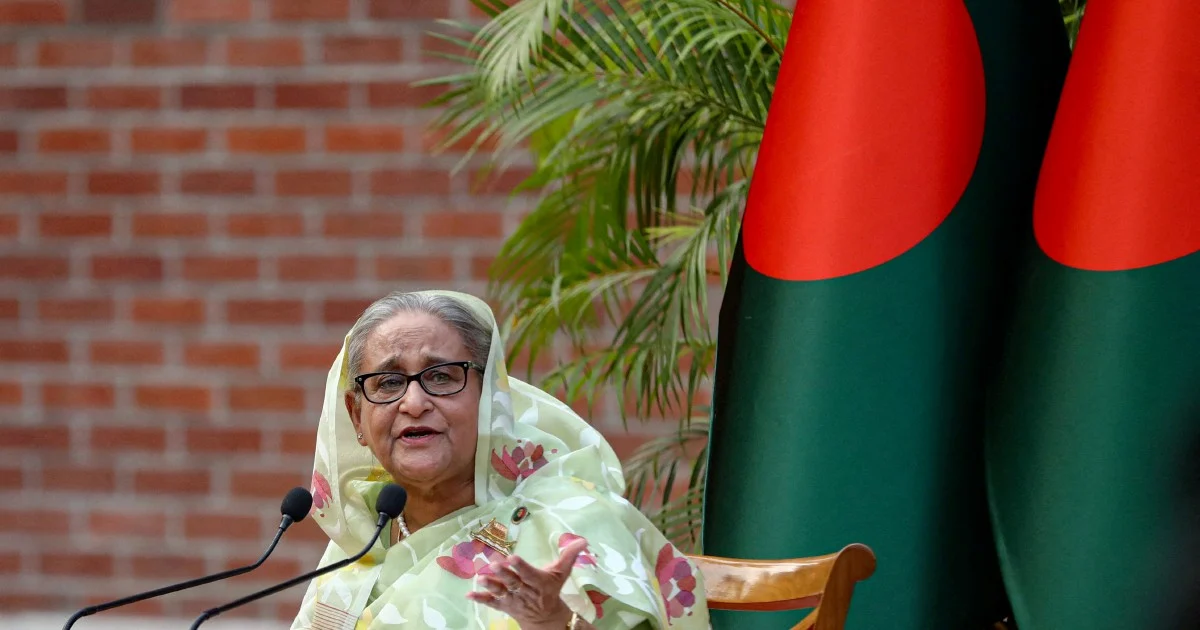
Sheikh Hasina, Bangladesh's ousted Prime Minister, faces incarceration upon her return from self-imposed exile in India, according to a senior government minister in Dhaka. The warning came on Monday, just days after Hasina revealed to Reuters that she intended to travel back to Bangladesh in December and voluntarily appear before a court, signalling what many observers interpreted as a readiness to face legal proceedings.
The stark divergence between Hasina's stated intentions and the government's warning reflects the deepening political turbulence gripping Bangladesh following her dramatic exit from office earlier this year. The situation underscores how dramatically circumstances have shifted for the veteran politician, who once wielded substantial control over the nation's political machinery and served multiple terms as premier. Her current predicament represents a historic reversal of fortune for one of South Asia's most prominent female political figures.
The prospect of Hasina's imprisonment marks a significant escalation in the accountability measures that the current interim government has pledged to pursue. Multiple cases have been filed against the former premier, encompassing accusations spanning from administrative failures to more serious allegations that carry potential lengthy sentences. The depth and breadth of the legal challenges awaiting her suggest that her return would trigger immediate custodial procedures rather than permitting her freedom pending trial.
Hashina's decision to seek refuge in India has itself become a flashpoint in regional relations and domestic politics. Her Indian residence, while technically safe, has positioned her as a figure of growing international concern. The neighbouring country's government has maintained studied silence on the matter, neither confirming her presence nor making public statements about her future, thereby leaving her in a state of limbo that may have prompted her recent public declaration of intent.
The timing of Hasina's announcement appears strategically significant within Bangladesh's evolving political context. By declaring her willingness to return and face justice, she may have been attempting to reclaim narrative control and portray herself as someone willing to answer charges rather than a fugitive evading accountability. However, the government's immediate public rebuke suggests that officials are determined to prevent such a repositioning of her public image and to maintain pressure on the former leader regardless of her actions.
For Malaysian observers and Southeast Asian readers, Hasina's predicament offers crucial lessons about political instability in the region and the consequences of rapid governmental transitions. Bangladesh's experiences parallel anxieties that many ASEAN nations harbour regarding the fragility of political institutions and the potential for swift reversals of fortune among powerful figures. The situation demonstrates how a leader's protection by state machinery can evaporate entirely once political power shifts decisively.
The unfolding crisis also illuminates the complicated relationship between law and politics in South Asia. While officials invoke justice and accountability as justifications for pursuing Hasina, observers have noted the selective application of legal processes and the instrumentalisation of courts for political purposes—dynamics that resonate across the region. Such patterns raise questions about whether rule of law operates independently or becomes intertwined with factional struggles for dominance.
International dimensions add further complexity to the situation. Bangladesh's interim government, operating without Hasina's presence, has been navigating reconstruction of state institutions and attempting to establish legitimacy among both domestic constituents and the international community. Foreign governments, including major economic partners, have expressed concern about political stability and the treatment of detained figures, creating diplomatic pressures that may influence how officials handle Hasina's eventual return.
Hashina's family members and political associates in Bangladesh face their own legal exposures, which may embolden either her supporters or her opponents depending on political calculations. The network of consequences spreading outward from her fall creates ongoing uncertainty about whether reconciliation becomes possible or whether legal vendettas will continue dominating Bangladesh's political agenda for extended periods.
The December timeline that Hasina mentioned remains approximately two months away, providing a critical period during which both she and Bangladesh's governing authorities may recalibrate their positions. Whether she actually makes good on her stated intention to return, or whether she reassesses the risks and delays indefinitely, will significantly influence Bangladesh's trajectory. For the region watching developments, Hasina's case exemplifies the precarious position faced by deposed leaders across South Asia and the consequences of losing institutional protection.

