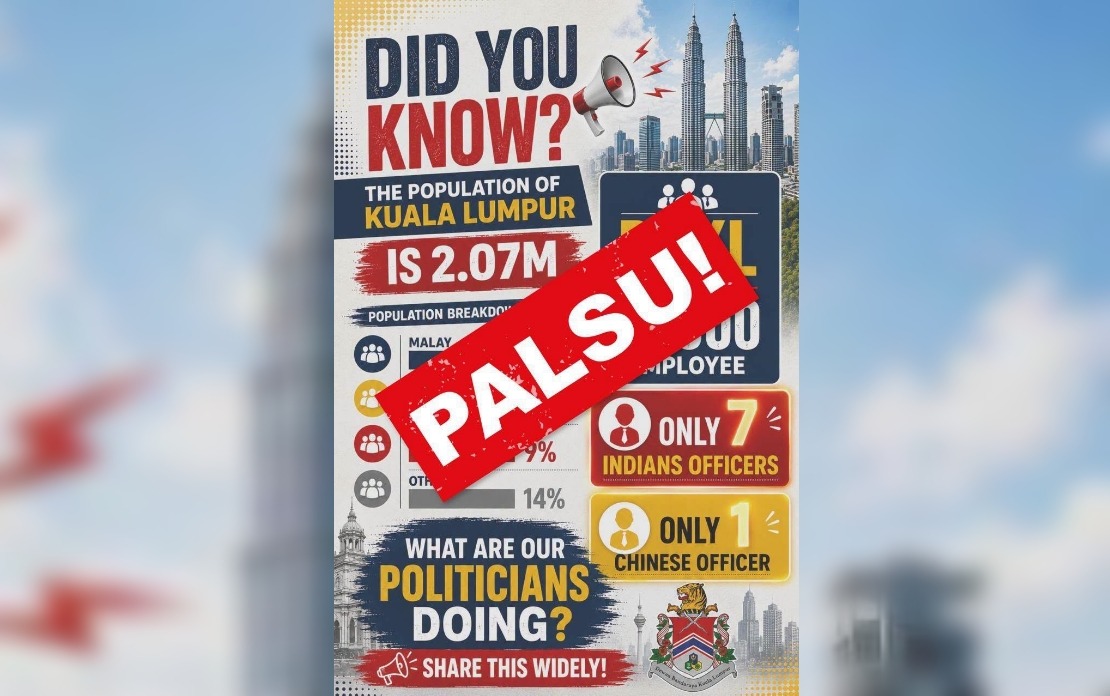
Federal Territories Minister Hannah Yeoh has moved to counter misleading social media posts making unfounded assertions about the ethnic composition of Kuala Lumpur City Hall's workforce, an issue that has emerged amid ongoing electoral activity. A WhatsApp poster making the rounds falsely suggested that the local authority employed just seven Indian and one Chinese staff member, a claim that does not align with the organisation's actual personnel records. Yeoh's intervention underscores the challenge authorities face in combating viral misinformation that touches on sensitive matters of representation and employment fairness in the civil service.
According to verified data provided by the minister, DBKL's actual headcount as of July 1, 2026 stands at 9,131 employees. Within this figure, the local authority has 490 Indian staff members and 22 Chinese staff members on its payroll. The discrepancy between these figures and those circulating online illustrates how distorted claims can gain traction through informal communication channels, potentially inflaming tensions around workplace diversity at a time when public institutions face heightened scrutiny. The deliberate misrepresentation of such statistics raises concerns about the intentions behind spreading such information, particularly during politically sensitive periods when narratives about fairness and representation carry outsized weight.
When examining professional and managerial positions specifically, the picture becomes somewhat more nuanced. Within DBKL's Management and Professional Group, there are 10 Indian officers and two Chinese officers, figures that suggest higher-level representation among these communities exists but remains comparatively modest. This breakdown indicates that while both ethnic groups are present across different organisational strata, their presence in decision-making roles requires closer attention. Yeoh's acknowledgment that representation within DBKL could be strengthened suggests official recognition that diversity at senior levels does not yet match the diversity present in the broader workforce, a candid admission that carries implications for how Malaysian federal agencies approach talent development and succession planning.
Beyond simply correcting the record, Yeoh has announced a comprehensive review of DBKL's employment practices. The minister has instructed the local authority to scrutinise its recruitment methodologies, hiring protocols, promotion pathways and the channels through which job vacancies are publicised. This multi-faceted approach acknowledges that isolated statistics tell only part of the story; the mechanisms by which people enter the organisation, advance their careers and access information about opportunities all shape workforce composition over time. By examining these structural elements, DBKL can identify whether systemic barriers exist that inadvertently limit access for particular communities, even when no explicit discriminatory intent is present. Such reviews are particularly relevant in Malaysia's civil service context, where transparency in promotion and recruitment has long been an area of public concern.
Yeoh's emphasis that any improvements must be grounded in transparency, fairness and merit represents a deliberate framing designed to address legitimate concerns about diversity while avoiding suggestions that hiring decisions should be made on bases other than qualifications and suitability. This approach seeks to reconcile the twin imperatives of expanding opportunity and maintaining institutional integrity, a balance that matters both for public trust and for the morale of existing staff. By explicitly tying improvements to merit-based assessment, the government signals that expanded representation for underrepresented communities need not come at the cost of professional standards, a message directed at multiple audiences simultaneously.
The minister has also appealed to all stakeholders to resist weaponising workplace diversity issues for political gain or to foment ethnic tensions. This call for responsible conduct reflects broader concerns about how data on representation can be distorted to serve narrow political agendas, particularly in multiethnic societies where employment practices carry symbolic weight beyond their immediate workplace implications. The plea implicitly acknowledges that some actors may be deliberately circulating false claims, not from genuine concern about fairness but to sow discord during an election campaign. Such appeals to responsibility face the challenge that those engaging in bad-faith argumentation are unlikely to heed them, suggesting that long-term solutions lie in building institutional credibility through demonstrated commitment to fair practices rather than in rhetorical appeals.
The timing of this controversy during an election campaign is noteworthy. Electoral periods often see intensified scrutiny of government institutions, with candidates and activists spotlighting perceived shortcomings to mobilise support. However, the circulation of demonstrably false claims represents a distinctly pernicious form of this political engagement, one that exploits genuine public interest in representation to spread disinformation. For Malaysian voters trying to evaluate their government's performance on matters of fairness and diversity, distinguishing between legitimate criticism based on accurate data and politically motivated falsehoods becomes increasingly difficult. The burden therefore falls on government agencies and ministers like Yeoh to establish clear factual records and demonstrate commitment to improvement, thereby maintaining public trust even as legitimate debate continues about what adequate representation looks like.
The implications of this episode extend beyond DBKL to the broader Malaysian civil service. As federal and state authorities face mounting pressure to demonstrate inclusive hiring practices, how they respond to challenges—whether by providing transparent data, conducting genuine reviews, or taking defensive postures—will influence public confidence in their commitment to fair employment. The fact that a senior minister felt compelled to respond publicly to social media claims suggests that questions about diversity in government institutions resonate significantly with the public and carry electoral consequences. This dynamic may incentivise other agencies to proactively review their own employment practices before false claims emerge, creating a competitive dynamic around diversity and inclusion at the institutional level.
Looking forward, DBKL's forthcoming review will face the challenge of distinguishing between genuine barriers to entry and advancement for underrepresented communities and the natural variation one might expect in any large organisation. The local authority employs over nine thousand people across multiple functions and grades; perfect proportionality between DBKL's workforce and Kuala Lumpur's broader population would be neither realistic nor necessarily indicative of fair practices. However, persistent underrepresentation in particular job categories or grades, especially if accompanied by evidence that recruitment channels or promotion processes systematically disadvantage certain groups, would warrant corrective action. The review's credibility will depend on its transparency and its willingness to identify and address real issues where they exist.

