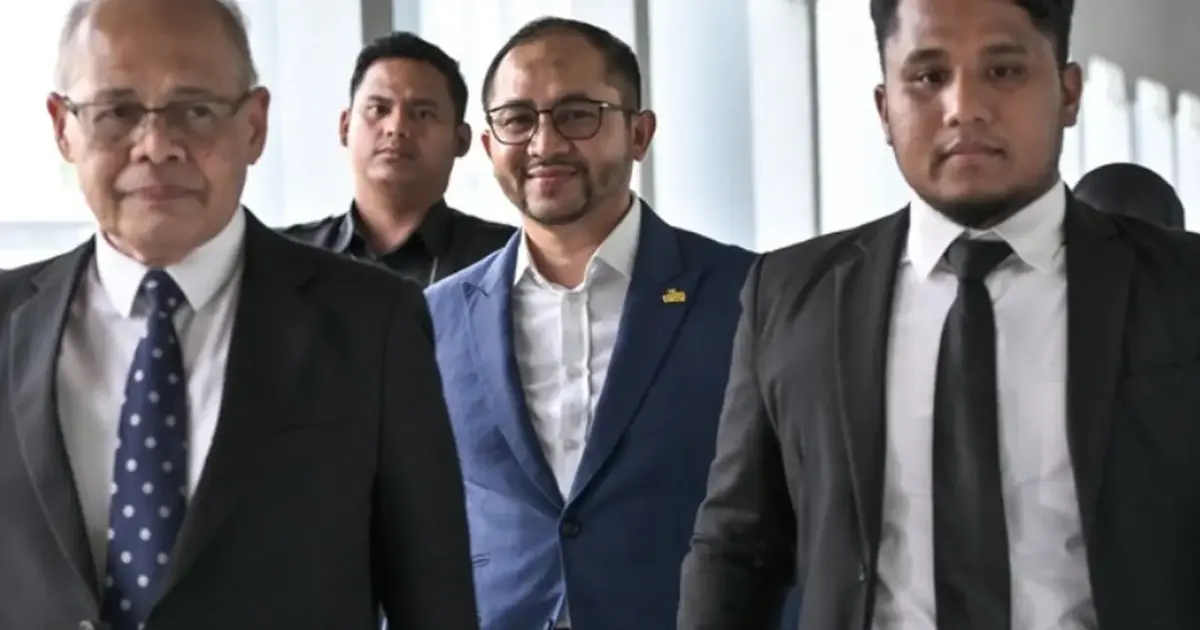
A managing director has accused the former political secretary of a prominent government figure of demanding a substantial financial share after securing a lucrative consultancy contract tied to a police department tender. Khairi Mat Jahya's testimony, delivered in court proceedings, provides fresh details into how political connections may have influenced commercial arrangements involving public sector spending.
According to Khairi's account, Sayed Amir Muzzakkir Al Sayed Mohamad sought approximately RM9 million—roughly half of the RM19 million consultancy fee in question. The payment was allegedly demanded after Sayed Amir's involvement facilitated the securing of the contract, which was formally related to a police procurement process. The case shines a spotlight on the often murky intersection between political patronage and business dealings in Malaysia's corporate landscape.
The details emerging from court proceedings suggest a pattern where political leverage was converted into financial gain. Khairi's testimony indicates that the arrangement was neither straightforward nor transparent, with pressure applied to share the proceeds from what appears to have been a government-related contract. Such dynamics raise broader questions about how public sector spending is allocated and whether competitive bidding processes are genuinely merit-based or influenced by political considerations.
Sayed Amir's position as political secretary to Hamzah—whose ministry or portfolio details remain significant to understanding his influence—placed him in a position to facilitate or influence business opportunities. Political secretaries typically serve as key conduits between political leaders and private sector interests, managing relationships and often brokering arrangements that benefit both political patrons and business associates. The allegations suggest this role was leveraged in ways that extended beyond conventional advisory functions.
The RM19 million consultancy fee represents a substantial public investment, and questions naturally arise about the services rendered and whether competitive procurement processes were properly followed. Government tenders related to police operations are particularly sensitive, as they directly impact law enforcement capacity and public security spending. Any deviation from transparent, merit-based selection processes undermines public confidence in institutional integrity and raises concerns about resource allocation.
The pressure exerted on Khairi for the RM9 million share underscores the potential coercive nature of such arrangements. When individuals wielding political authority demand financial participation in commercial deals facilitated by their position, it crosses into territory that most jurisdictions would classify as corrupt practice or misuse of official power. The fact that this matter reached the courts indicates that authorities took the allegations seriously enough to pursue legal action.
For Malaysian business executives navigating the corporate environment, such cases highlight the uncomfortable reality that political connections can carry expectations and obligations. Entrepreneurs must often make difficult decisions about whether to accommodate demands from politically connected individuals or risk damaging relationships with influential figures. This structural dynamic, repeated across various sectors and contracts, can distort resource allocation across the economy and create inefficiencies that ultimately harm competitiveness and growth.
The timing and nature of Khairi's testimony—providing specific figures and details about the alleged pressure—suggests this may form part of a broader investigation into the conduct of individuals within the former government administration. The police tender connection is particularly noteworthy, as law enforcement procurement integrity is fundamental to public safety and institutional credibility. When political figures exploit their access to such contracts, it raises questions about whether other similar arrangements exist within other government agencies.
The case also reflects Malaysia's ongoing efforts to address corruption and strengthen institutional accountability. While high-profile prosecutions and court cases represent important steps in signalling that such conduct will not be tolerated, observers note that systemic change requires broader reforms in procurement transparency, conflict-of-interest regulations, and political funding disclosure. The court proceedings will likely generate significant public and media attention as additional witnesses testify and evidence unfolds.
Sayed Amir's alleged actions, if proven, would represent a particularly brazen misuse of political position for personal financial gain. The scale of the alleged demand—RM9 million from a RM19 million contract—suggests confidence that the arrangement would be honoured without formal documentation or legal redress, relying instead on the implicit understanding that political influence creates enforceable obligations. Such thinking reveals how deeply embedded these practices may have become in certain political and business circles.
For policymakers and anti-corruption agencies, the testimony underscores the need for strengthened oversight mechanisms around government tenders, particularly those involving consultancy services where value delivery can be difficult to quantify objectively. Enhanced transparency requirements, mandatory competitive bidding processes, and regular audits of contract execution can help deter future abuses. The case will likely become a reference point in discussions about institutional reform and the separation between political office and personal financial gain.
As the legal proceedings continue, they will provide a detailed public record of how such arrangements operated and the mechanisms through which political power was converted into wealth. Beyond the immediate legal outcomes, the case serves as a cautionary example of the costs associated with institutional weakness and may galvanise renewed commitment to governance reforms that protect public resources and ensure equitable treatment of all businesses regardless of political connections.

