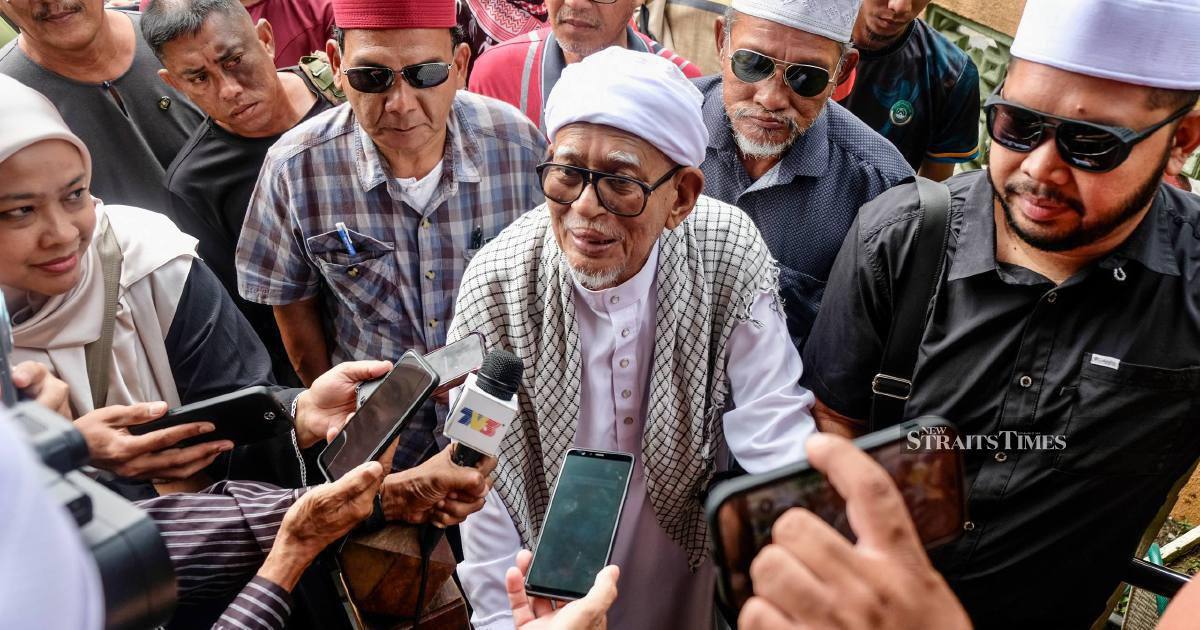
In remarks made at Marang, PAS president Tan Sri Abdul Hadi Awang has questioned why Prime Minister Datuk Seri Anwar Ibrahim chose not to attend the special parliamentary sitting devoted to examining the Royal Commission of Inquiry findings regarding Lembaga Tabung Haji, Malaysia's religious endowment fund manager. The absence of the nation's chief executive from such a significant proceeding—particularly one addressing governance failures at a major financial institution affecting millions of Malaysian Muslims—represents a notable departure from conventional parliamentary protocol and has drawn scrutiny from religious-oriented political figures.
The Lembaga Tabung Haji, established to facilitate the hajj aspirations of Malaysian Muslims while managing their savings through Islamic financial instruments, has faced mounting controversy in recent years stemming from allegations of mismanagement and investment losses. The establishment of the Royal Commission of Inquiry itself underscores the gravity of concerns surrounding the institution's operations, prompting Parliament to convene specially to deliberate on the commission's recommendations and findings. Such parliamentary sessions typically command the highest levels of executive engagement, particularly when they address institutional failures that have compromised public trust and individual savings.
Hadi's criticism reflects broader political anxieties within conservative Islamic circles regarding governmental responsiveness to matters affecting the Muslim community. PAS, as Malaysia's largest Islamist party and a component of the current federal coalition, maintains particular sensitivity to how the government addresses issues pertaining to Islamic institutions and the interests of Muslim constituents. The party's vocal displeasure with the Prime Minister's absence signals potential tension within the ruling coalition's cohesion around policy implementation and parliamentary obligations.
The timing and substance of Hadi's statement carry implications for the government's broader legislative agenda, particularly regarding coalition stability. PAS secured significant parliamentary representation through the 2022 general election and has become indispensable to Anwar Ibrahim's administration achieving working majorities on contested measures. Visible dissatisfaction from senior PAS leadership over high-profile parliamentary proceedings suggests growing friction that could complicate future legislative cooperation on contentious bills requiring coalition unity.
From a regulatory perspective, parliamentary examination of the RCI report represents a critical juncture for institutional accountability. Tabung Haji's difficulties—which have included substantial investment losses and operational inefficiencies—have exposed vulnerabilities in governance structures overseeing religiously-constituted financial entities in Malaysia. The special sitting provides opportunity for lawmakers to interrogate recommendations for structural reforms, enhanced oversight mechanisms, and measures to restore depositor confidence. Premier-level engagement in such proceedings typically signals executive commitment to implementing findings and demonstrates political will for institutional remediation.
The absence also carries symbolic weight beyond parliamentary formality. For millions of Malaysians whose hajj savings rest within Tabung Haji's management, executive participation in parliamentary scrutiny of institutional performance carries reassurance value. It signals that leadership takes seriously the stewardship of funds accumulated through religious obligation and personal sacrifice. Conversely, non-attendance may be interpreted by affected depositors as insufficient governmental priority accorded their interests, thereby compounding reputational damage already sustained by the institution.
Anwar Ibrahim's administration faces multiple competing parliamentary demands and scheduling constraints, potentially accounting for the absence from this particular sitting. However, Hadi's public objection indicates that pragmatic explanations—however valid internally—do not neutralise political costs when senior coalition partners perceive deliberate deprioritisation of religiously-inflected governance matters. The statement suggests that managing coalition expectations requires not merely legislative support but demonstrable executive engagement on issues central to coalition partners' political constituencies.
The Lembaga Tabung Haji situation exemplifies broader challenges confronting Malaysian governance around financial institution oversight and accountability mechanisms. As religious and community-oriented entities frequently occupy complex regulatory spaces—neither entirely conventional commercial enterprises nor purely charitable organisations—their management requires particularly attentive governance frameworks. Parliamentary proceedings examining institutional failures consequently merit highest-level executive participation to signal commitment to rectification and future prevention of comparable governance lapses.
Looking forward, Hadi's comments may influence how the government calibrates its engagement with future parliamentary proceedings touching on Islamic institutions or matters of particular concern to PAS-supporting constituents. Coalition governance in Malaysia's multiparty environment requires careful management of coalition partners' legislative and symbolic expectations. The controversy surrounding the TH RCI parliamentary sitting underscores that institutional accountability mechanisms operate within a political environment where visible executive commitment to outcomes substantially affects institutional legitimacy and coalition stability alike.

