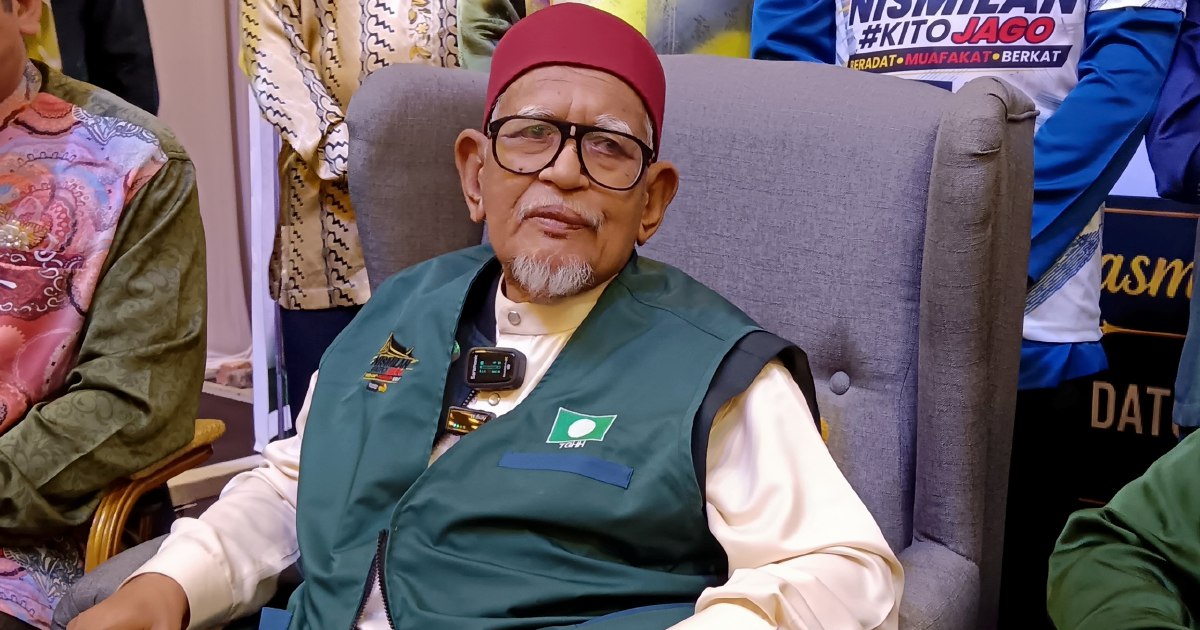
At a gathering in Jempol, Pas president Tan Sri Abdul Hadi Awang firmly rejected suggestions from Tan Sri Muhyiddin Yassin that Perikatan Nasional has deteriorated into a toxic political entity during the party's tenure at the helm. The dispute between two prominent figures within the opposition coalition underscores deepening fractures within PN as it navigates an increasingly competitive political landscape heading toward the next general election.
Hadi's dismissal of the toxicity claim represents more than a simple disagreement between two senior politicians; it highlights the underlying tensions that have long simmered within Perikatan Nasional since its formation. The coalition, which emerged as a significant political force following the collapse of the Mahathir administration in 2020, has struggled to maintain internal cohesion and present a unified front to voters. These latest remarks suggest that personal grievances and policy disagreements have begun surfacing publicly, potentially damaging the coalition's prospects in future electoral contests.
Instead of accepting responsibility for any deterioration in PN's public standing, Hadi pivoted his response to focus on Bersatu, the party led by Muhyiddin. By shifting blame to his coalition partner, the PAS president essentially argued that any negative perception of the broader alliance stems not from PAS governance or leadership but rather from Bersatu's conduct and internal dynamics. This tactical move allows Hadi to insulate his own party from criticism while simultaneously pressuring Bersatu to address whatever issues Muhyiddin himself has identified within the coalition.
For Malaysian political observers, the sparring between these two figures reflects a broader pattern of coalition instability that has plagued opposition politics in recent years. Unlike the dominant Barisan Nasional during its decades of rule, or indeed Pakatan Harapan during its brief period in government, Perikatan Nasional has never achieved the level of organisational unity and disciplined political messaging necessary to present itself as a credible governing alternative. The public disagreement between Hadi and Muhyiddin, despite their shared interest in mounting a strong challenge to the current administration, demonstrates how personal ambitions and party-level politics continue to override coalition-level considerations.
The timing of these remarks also carries significance for the broader opposition landscape in Malaysia. As Perikatan Nasional attempts to consolidate support among voters dissatisfied with the current government, internal bickering threatens to undermine its credibility as a serious alternative. Voters increasingly sceptical of all major political coalitions may view such public disputes as evidence that opposition parties remain more interested in jockeying for position than in presenting coherent policy alternatives or viable governance plans. This perception could prove particularly damaging in marginal constituencies where election outcomes remain genuinely competitive.
From Muhyiddin's perspective, his characterisation of PN as toxic may reflect frustration with the coalition's trajectory under PAS leadership. Since the 2022 general election, which delivered a hung parliament and reshaped Malaysian politics, the various opposition coalitions have struggled to translate their combined support into meaningful political progress. Bersatu's own position within the coalition has been complicated by its divisive history and the perception among some voters that it remains a vehicle for Muhyiddin's personal political ambitions rather than a principled political force.
Hadi's counter-accusation, by directing blame specifically at Bersatu, suggests that PAS believes it can advance its own standing by differentiating itself from its coalition partner. The Islamist party has historically possessed a more durable grassroots organisation and voter base compared to Bersatu, which has struggled to expand beyond its core support in certain regions. By publicly distancing PAS from negative perceptions of the coalition, Hadi may be attempting to position his party as the more viable and stable option within the opposition bloc.
The dispute also raises questions about the future viability of Perikatan Nasional as constituted. If its two largest components cannot maintain basic unity and mutual respect, particularly when voicing concerns about the coalition's public standing, the likelihood of serious electoral cooperation diminishes. For supporters of Perikatan Nasional, particularly those who hoped the coalition might offer a credible path to restoring competitive two-coalition politics in Malaysia, such public recriminations suggest that PN may struggle to translate its potential support base into actual electoral victories.
Looking ahead, the remarks from both Hadi and Muhyiddin indicate that significant work remains before Perikatan Nasional can function as a truly cohesive political force. The next general election will ultimately determine whether the coalition's internal divisions prove fatal to its electoral prospects or whether its various components can nonetheless mobilise enough voter support across enough constituencies to improve its parliamentary representation. For now, the very public nature of their disagreement suggests that both the coalition and the Malaysian political system more broadly continue to grapple with fundamental questions about how opposition politics should be organised and prosecuted in the post-2020 era.

