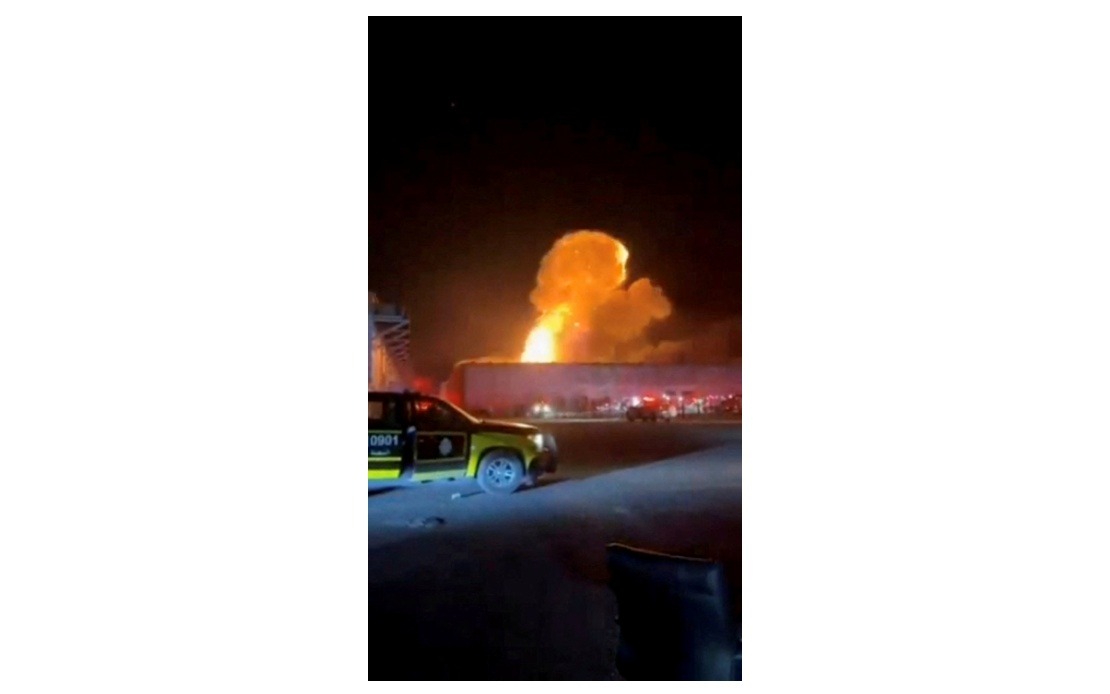
The Persian Gulf descended into heightened alert status on Friday as three major Arab states simultaneously activated civil defence measures in response to what their militaries described as coordinated aerial attacks. The synchronized emergency response across Bahrain, Qatar, and Kuwait underscores the region's vulnerability to a widening spiral of military confrontation between Iran and the United States, a dynamic that increasingly threatens civilian populations and regional stability across one of the world's most economically critical shipping corridors.
Bahrain's Interior Ministry issued the first public warning, activating air raid sirens across the kingdom while instructing residents to proceed immediately to designated shelter locations. The directive, disseminated through official channels early Friday morning, reflected assessments within Bahrain's security apparatus that the threat level warranted immediate protective measures. Qatar's Interior Ministry followed with a comparable emergency declaration, ordering the public to remain indoors and move to fortified safe areas, explicitly labelling the security situation as elevated. Kuwait's response proved similarly comprehensive, with the Defence Ministry activating warning systems nationwide and instructing the population to seek immediate shelter while adhering to official guidance.
Kuwait's military provided the most explicit explanation for these measures, confirming that the country's integrated air defence network was actively engaging incoming hostile aircraft and missiles. The Kuwaiti army statement, while sparse on operational specifics, indicated that multiple aerial threats had penetrated regional airspace simultaneously, requiring active interception attempts across multiple sectors. The brevity of military announcements typically reflects operational security concerns, yet the very fact that three separate governments felt compelled to mobilize civilian protection systems simultaneously signals an assessment of genuine, immediate danger rather than precautionary posturing.
The immediate trigger for Friday's emergency cascade emerged from Iranian military statements claiming responsibility for drone strikes against a United States military facility based in Bahrain. The Iranian armed forces framed the operation within their broader strategic posture regarding American military presence throughout the Gulf region, territory Iran views as its sphere of primary security concern. This disclosure transformed what might have remained a localized military incident into a clear signal that escalation dynamics had fundamentally shifted, with major powers now conducting open offensive operations rather than relying on proxy forces or covert measures.
The current confrontation represents a dramatic deterioration from diplomatic progress achieved merely weeks earlier. In June, Iran and the United States, with Pakistani mediation playing a crucial role, had negotiated a framework agreement explicitly designed to terminate their mutual hostilities and establish pathways toward a comprehensive peace settlement. These diplomatic channels appeared to have genuinely narrowed the gap between the two adversaries, suggesting that despite decades of animosity, pragmatic compromises remained possible. Yet the subsequent escalation demonstrates how fragile such understandings can prove when underlying strategic interests remain fundamentally misaligned and when regional actors possess the military capability to act unilaterally.
The proximate cause of recent escalation centres on control and security arrangements governing the Strait of Hormuz, through which approximately one-third of globally traded maritime petroleum passes daily. Iran has employed various tactics to assert dominance over these waters, from naval harassment to restrictions on commercial shipping, while the United States maintains a permanent naval presence designed to guarantee freedom of navigation. Both sides have traded military strikes in recent weeks, establishing a dangerous pattern whereby one party's escalatory action triggers reciprocal responses, each marginally more severe than its predecessor, creating conditions for accidental or unintended conflict expansion.
The February 28 joint US-Israeli military campaign against Iranian targets established the precedent for this current cycle of mutual strikes. That operation, launched in response to Iranian missile attacks on Israel, demonstrated that the two countries possessed both the capability and apparent willingness to conduct significant military operations without advance diplomatic warning. Iran's retaliatory drone strikes that followed showed comparable intent to respond forcefully to American and Israeli actions. This pattern of action-reaction-escalation has persisted through subsequent months, with the Hormuz Strait disputes providing consistent flashpoints for renewed confrontation.
For Malaysia and other Southeast Asian trading nations, these developments carry substantial economic implications. Malaysian shipping companies operating tanker vessels and general cargo ships depend critically on reliable passage through the Strait of Hormuz, where insurance costs and security protocols escalate whenever regional tensions intensify. Any disruption to shipping flows through these waters reverberates through global energy markets and supply chains, affecting Malaysian petrochemical refineries, manufacturing sectors, and overall economic growth. The region's vulnerability to these distant conflicts remains largely outside Malaysian policy influence, creating asymmetric risks to regional prosperity.
The simultaneous activation of protective measures across three separate nations also signals that international concern about conflict escalation has deepened substantially. Bahrain, which hosts the United States Fifth Fleet, faces particular exposure should major hostilities resume. Qatar, despite its diplomatic ties spanning both Eastern and Western camps, equally recognizes that its geographic position and economic importance make it a potential target during broader regional conflicts. Kuwait's experience during the 1990-91 Gulf War has created lasting institutional memories about civil vulnerability during major military confrontations, likely explaining the government's swift protective response.
The diplomatic framework negotiated in June now appears increasingly precarious. While Pakistani mediation initially produced concrete results, the subsequent military escalations suggest that hard-liners within both the Iranian and American governments may view such agreements as constraints on their strategic freedom rather than as beneficial stabilizing measures. The absence of direct communication channels between Washington and Tehran means that military incidents can rapidly spiral into broader confrontations without adequate mechanisms for rapid de-escalation or clarification of intent.
Regional governments throughout the Middle East and Gulf face intensifying pressure to respond to this deteriorating security environment. Saudi Arabia, the United Arab Emirates, and other states must balance their economic interests in maintaining stable relationships with both Western and Iranian actors against their security concerns about becoming collateral damage in a renewed superpower confrontation. These smaller states lack the military capacity to defend themselves against sophisticated aerial threats and must rely on the protective umbrellas of larger powers, a dependency that constrains their diplomatic flexibility.
The Friday emergency response, while demonstrating governmental preparedness and public warning systems, ultimately reflects a troubling reality: that three functioning states with developed institutions felt compelled to treat their civilian populations as potential targets requiring immediate shelter from military strikes. This normalization of military threats to civilian areas marks a qualitative shift in regional security dynamics, suggesting that actors now view attacks on civilian infrastructure or populated areas as legitimate military objectives rather than violations of international humanitarian principles.

