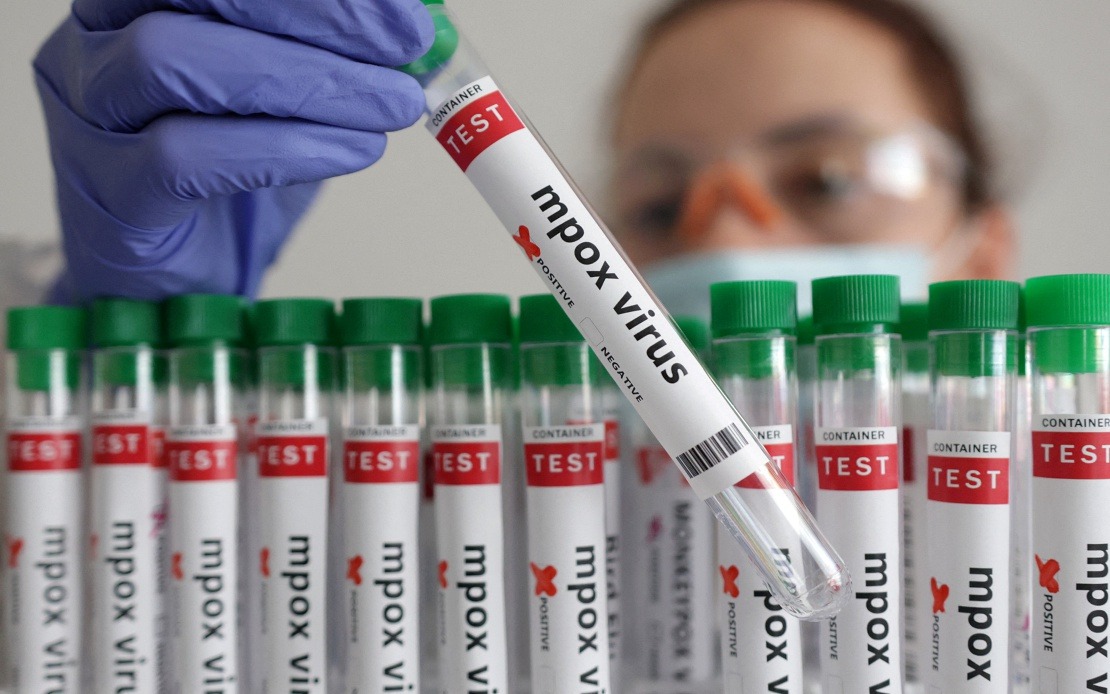
Guinea-Bissau has detected and confirmed its first case of mpox, marking a significant development in the West African nation's public health landscape. Public Health Minister Quinhin Nantote made the announcement on Saturday evening, revealing that a 27-year-old woman had tested positive for the virus following laboratory analysis and confirmation by the Institut Pasteur in Dakar, Senegal.
The confirmed patient initially presented for medical treatment on June 24, displaying characteristic skin lesions that prompted healthcare workers to collect diagnostic samples. These samples underwent initial testing at Guinea-Bissau's National Institute of Public Health before being forwarded to the Institut Pasteur, a regional reference laboratory, where the mpox virus presence was definitively confirmed. The procedural approach demonstrates the country's reliance on neighbouring Senegal's laboratory infrastructure for advanced diagnostic verification, a common arrangement in resource-constrained healthcare systems across West Africa.
In response to the confirmation, Guinea-Bissau's health authorities have immediately implemented comprehensive national response mechanisms aligned with the International Health Regulations framework and guidance issued by the World Health Organisation. This activation reflects the formal protocols that countries must follow when novel or re-emerging infectious diseases are detected within their borders. The swift mobilisation indicates that the nation's health apparatus recognises the potential significance of mpox circulation and the necessity for coordinated, systematic action.
Epidemiological investigations have commenced to trace and monitor individuals who came into contact with the confirmed patient. Contact tracing remains a critical component of infectious disease control, particularly for diseases that spread through direct contact or respiratory droplets. Identifying and monitoring these individuals within the appropriate incubation period helps prevent secondary transmission and provides epidemiologists with essential data about transmission patterns and disease progression within the local population.
Minister Nantote has emphasised that surveillance systems throughout Guinea-Bissau have been reinforced, with particular attention directed toward border entry points. This geographical focus reflects the reality that infectious diseases transcend national boundaries, and border areas represent potential corridors for transmission. Enhanced monitoring at these strategic locations aims to detect any additional cases arriving from neighbouring countries and prevent importation of the virus from other regions experiencing outbreak situations.
Public health messaging has been distributed to encourage citizens to adopt preventive behaviours. The minister's guidance emphasised fundamental infection control measures: regular handwashing with soap and water, maintaining physical distance from individuals presenting with fever or skin manifestations consistent with mpox, and heightened general awareness. These recommendations align with standard public health communication strategies that empower populations to participate actively in disease prevention rather than relying solely on healthcare provider interventions.
Mpox, caused by the monkeypox virus, spreads through multiple transmission routes that collectively explain its epidemiological significance. Direct contact with bodily fluids or skin lesions of infected individuals represents the primary transmission mechanism, but the virus can also spread via respiratory droplets during prolonged face-to-face exposure and through contaminated materials such as bedding or clothing. Understanding these transmission pathways informs both individual protective behaviour and broader infection control protocols in healthcare and community settings.
Clinical manifestations of mpox typically include fever, myalgia, skin eruptions progressing through characteristic stages, and lymphadenopathy. The disease's symptomatology, while often self-limiting, can occasionally progress to severe complications, particularly in immunocompromised individuals or young children. The constellation of symptoms means that healthcare workers must maintain clinical suspicion when patients present with compatible presentations, particularly in the context of confirmed community transmission.
For Malaysia and Southeast Asian nations, Guinea-Bissau's detection carries implications for regional disease surveillance and biosecurity planning. The emergence of mpox cases in West Africa—a region with existing connections to Southeast Asian trade and travel networks—underscores the transnational character of infectious disease threats in an interconnected world. While mpox transmission chains remain largely manageable through established infection control practices, the continued identification of cases across multiple African nations warrants vigilance from regional health agencies and maintenance of robust border health screening protocols.
Guinea-Bissau's institutional response demonstrates the functional capacity of health systems in lower-income countries to recognise, investigate, and report novel cases through established international frameworks. The country's engagement with regional laboratory resources and alignment with WHO guidelines reflects successful integration into global disease surveillance architecture, even as it highlights the practical challenges of disease detection and management in resource-constrained environments. Sustained support for diagnostic capacity and epidemiological surveillance in Guinea-Bissau and similar contexts remains crucial for early identification of health threats with potential for cross-border spread.
The situation remains fluid, with health authorities continuing epidemiological investigations to establish the transmission chain and identify any additional cases that may have emerged from the patient's infectious period. Public health officials will be scrutinising available data to determine whether the case represents an isolated importation or evidence of community transmission requiring intensified response measures. Continued transparency in reporting and adherence to international surveillance obligations will be essential as the situation develops.

