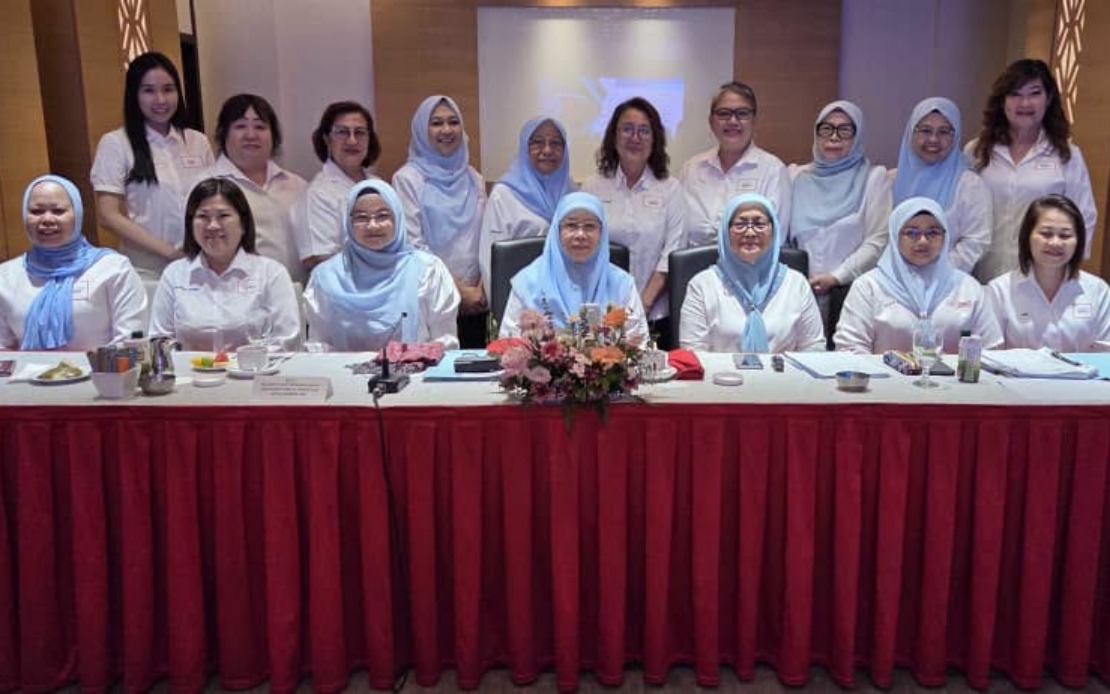
The Gabungan Rakyat Sabah (GRS) Women's wing has taken a significant organisational step by establishing five dedicated strategic units designed to fortify the coalition's ground presence and operational capacity in preparation for the forthcoming general election. The structural reorganisation, formally approved during a meeting in Kota Kinabalu on July 21, represents a deliberate attempt to move beyond traditional party structures and embed targeted, issue-focused initiatives throughout the coalition's network of female supporters and activists.
According to Datuk Seri Azizah Mohd Dun, who leads the GRS Women's wing, the new framework addresses the need for a more coordinated and responsive operational environment. The five units—Policy and Strategy, Economic Affairs, Health, Information Management, and Welfare Services—each carry distinct mandates that collectively address the breadth of concerns affecting voters across Sabah's diverse constituencies. Rather than functioning as standalone entities, these units are positioned to work synergistically, allowing the coalition to deploy comprehensive, multidimensional responses to community issues and electoral challenges.
The Policy and Strategy Unit, which Azizah herself directs, represents the organisational nerve centre. This unit will establish the intellectual framework and long-term positioning for the coalition's outreach efforts, ensuring that messaging and policy announcements align with broader strategic objectives. Complementing this, the Economic Unit under Datuk Surinam Sadikun will focus on translating economic policies into tangible benefits for constituencies, particularly in articulating how coalition governance creates livelihood opportunities. This distinction between high-level strategy and economic engagement underscores recognition that voters increasingly demand clarity on how political platforms translate into household-level prosperity.
The Health Unit, headed by Simi Linggom, arrives at a particularly resonant moment in Malaysian politics. Healthcare accessibility and affordability have emerged as flashpoint issues across the region, with voters scrutinising both federal and state-level medical infrastructure, pharmaceutical pricing, and preventive health programmes. A dedicated women-led unit focusing on health can leverage the traditional trust women often hold in community discussions about family wellness while providing GRS with direct channels to communicate healthcare achievements and future commitments.
Datin Atin Belynda Buntot's Information Unit shoulders responsibility for a critical function in contemporary politics: managing narratives and ensuring rapid dissemination of coalition messaging across digital and traditional platforms. In an environment where misinformation circulates swiftly and opposition narratives can dominate news cycles within hours, a structured information apparatus allows GRS to maintain message consistency and speed of response. This unit's effectiveness will substantially influence how the coalition controls its public profile during the intensive campaigning period leading up to polling day.
The Welfare Unit, directed by Datin Wong Siow Lee @ Mary Wong, addresses the grassroots dimension of electoral politics. This unit will coordinate assistance programmes, community support initiatives, and constituency-level welfare schemes that directly demonstrate GRS's commitment to vulnerable populations. In Malaysian electoral contexts, welfare delivery mechanisms often determine electoral margins in competitive constituencies, as voters reward parties perceived as responsive to genuine hardship.
Azizah's emphasis on avoiding complacency reflects strategic thinking about electoral competition in Sabah. The state's political terrain has proven volatile, with coalitions rising and falling based on shifting inter-communal dynamics, economic performance perceptions, and leadership credibility. By formalising these five units and assigning specific leadership, GRS signals to internal stakeholders that the coalition treats the next electoral cycle with appropriate seriousness. The structural formality also creates accountability mechanisms—unit heads possess defined responsibilities and measurable performance expectations.
The broader implication of this reorganisation extends beyond GRS itself. The move demonstrates how Malaysian political coalitions are increasingly professionalising their operational structures, adopting corporate-style functional divisions and management hierarchies. This professionalisation reflects recognition that contemporary electoral politics demands sophisticated coordination across multiple domains simultaneously. Winning elections no longer depends solely on leadership personality or traditional patronage networks; coalitions must demonstrate systematic capacity to address policy complexity, communicate effectively, and deliver targeted benefits across geographically dispersed and demographically diverse constituencies.
For the GRS Women's wing specifically, this restructuring represents organisational coming-of-age. Women's wings in Malaysian political parties have historically functioned as mobilisation appendages and social welfare coordinators, often marginalised from strategic decision-making. By establishing these units with clear mandates and visible leadership responsibility, the GRS Women's wing asserts a more central role in coalition operations. Female party members now have defined pathways for policy influence and operational authority, potentially broadening the demographic appeal of women's political participation within GRS.
The emphasis on regular coordination meetings and readiness to respond to evolving circumstances suggests recognition that pre-election planning cycles must remain fluid rather than rigid. Malaysian politics moves at unpredictable pace; shifting alliances, defections, and unexpected policy announcements can rapidly alter electoral calculus. A coalition structured around five functional units with regular communication protocols can adapt more dynamically than hierarchies dependent on top-down directives and slower decision-making chains.
Regionally, GRS's organisational approach offers a model that other coalitions may examine closely. As Sabah and Sarawak emerge as increasingly consequential states in national coalition mathematics, their internal organisational capacity becomes relevant to broader Malaysian political calculation. A well-structured, responsive coalition apparatus in Sabah strengthens GRS's competitive position and potentially enhances the state's negotiating leverage within broader national political alignments.
The strategic units also enable GRS to disaggregate electoral appeals by issue domain. Rather than communicating monolithic coalition messaging, different units can develop tailored content addressing specific voter concerns—economic messaging for trade-dependent constituencies, health infrastructure emphasis for rural districts, information strategies targeting specific demographic groups. This multi-channel approach maximises electoral efficiency by allowing customised persuasion rather than one-size-fits-all campaigning.
Ultimately, the GRS Women's wing reorganisation reflects wider patterns in Malaysian politics where electoral competition increasingly drives internal coalition structuring. As the coalition prepares for electoral combat, formalising these five units with assigned leadership represents not merely administrative reform but a substantive declaration that GRS intends to compete with intensity and systematic focus across all dimensions of electoral politics that determine electoral outcomes.

