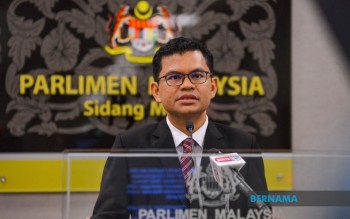
The National Economic Action Council has signalled its commitment to tackling structural challenges facing Malaysia's plastics manufacturing sector by directing two key ministries to evaluate a series of proposals submitted by industry representatives. Economy Minister Akmal Nasrullah Mohd Nasir disclosed that the Ministry of Investment, Trade and Industry and the Economy Ministry will conduct a thorough examination of the recommendations presented by the Malaysian Plastics Manufacturers Association, underscoring government recognition of the sector's mounting difficulties in the current global economic environment.
The plastics industry represents a substantial component of Malaysia's industrial ecosystem, with 2025 sales valued at RM62.69 billion, a marginal decline from RM64.78 billion in 2024. The sector's significance extends beyond headline figures—packaging applications alone constitute 45 per cent of the market, while electrical and electronics components account for 29 per cent, demonstrating the industry's critical role as a supplier to numerous downstream manufacturing segments. This structural importance means that difficulties faced by plastics manufacturers ripple through the broader economy, affecting everything from consumer goods packaging to high-technology electronics assembly.
The MPMA presentation highlighted cost structure disparities that have emerged between Malaysian producers and their international competitors, with particular emphasis on raw material pricing disadvantages. These cost pressures have intensified as global supply chains remain turbulent and commodity prices fluctuate, placing downstream manufacturers in a precarious position where they struggle to maintain profitability without passing excessive costs to customers. Akmal Nasrullah indicated that government deliberations will necessarily balance the interests of all stakeholders across the industrial chain while considering broader fiscal implications and long-term economic competitiveness.
Among the proposals requiring scrutiny is the voluntary implementation framework for Extended Producer Responsibility, a mechanism designed to incentivize manufacturers to manage product lifecycles more sustainably. The government recognises that any EPR scheme must account for the financial burdens it imposes on enterprises, the capacity constraints of smaller players within the sector, and the existing state of Malaysia's recycling infrastructure. A poorly designed or prematurely implemented programme could disadvantage Malaysian manufacturers relative to competitors operating under more lenient environmental regimes, yet inaction risks competitive disadvantage in markets increasingly demanding circular economy credentials.
Adopting circular economy principles offers significant strategic advantages for Malaysia's plastics sector if executed thoughtfully. By facilitating greater utilization of recycled materials and developing domestic supply chains, the country could reduce dependency on virgin raw material imports and build greater resilience against geopolitical shocks that disrupt international commodity markets. This approach aligns with global trends toward resource efficiency while potentially creating new economic opportunities in collection, sorting, and reprocessing operations, particularly in emerging markets where labour costs remain competitive.
The government's review occurs within a context of generally robust macroeconomic performance. Malaysia's economy expanded by 5.4 per cent in the first quarter of 2026, with growth underpinned by domestic consumption, the services and manufacturing sectors, and resilient electrical and electronics exports. These figures suggest underlying economic health, though the quarter-on-quarter moderation from the fourth quarter indicates growth momentum warrants careful monitoring. The forthcoming announcement of second-quarter GDP figures on July 17, with final data published August 14, will provide critical insight into whether first-quarter performance represents a sustainable trajectory or a temporary acceleration.
Inflationary pressures remain subdued, with May 2026 inflation holding steady at 2.0 per cent, marginally above April's 1.9 per cent and well within comfortable parameters for policymakers. This benign inflation environment provides room for government initiatives supporting industrial development without triggering broader price pressures throughout the economy. Trade performance has accelerated significantly, with total trade reaching almost RM1.5 trillion from January to May 2026, representing an 18.3 per cent year-on-year increase that reflects strengthened global demand for Malaysian products.
Export growth of 24.3 per cent to RM793.8 billion demonstrates robust international demand, though imports expanded at a slower pace of 11.8 per cent to RM661.1 billion, generating a healthy trade surplus of RM132.8 billion. This export-led growth pattern suggests Malaysia's manufacturing sectors maintain competitive advantages in global markets, providing a buffer against the structural challenges facing plastics manufacturers. However, the divergence between export and import growth rates may reflect some softening in domestic demand or investment patterns that warrant monitoring as the year progresses.
The government remains confident that annual economic growth will remain within the 4.0 to 5.0 per cent target range, with current performance trajectory supporting this outlook. This confidence appears grounded in genuine macroeconomic fundamentals rather than wishful thinking, given inflation control, trade surplus accumulation, and sectoral diversity in growth drivers. The plastics industry review therefore occurs against a backdrop of relative economic stability, though vulnerabilities persist in specific sectors experiencing structural headwinds from globalisation and changing input cost structures.
For Malaysian manufacturers, the government's engagement with MPMA proposals signals openness to sector-specific support mechanisms, though outcomes will depend on how policymakers balance industrial advocacy against fiscal constraints and international trade obligations. The emphasis on examining EPR implementation frameworks suggests recognition that environmental commitments need not automatically disadvantage domestic producers if designed with competitiveness considerations. How thoroughly MITI and the Economy Ministry examine these proposals, and whether resulting recommendations translate into tangible policy adjustments, will ultimately determine whether the plastics sector receives meaningful relief from current pressures or merely token acknowledgement of their difficulties.

