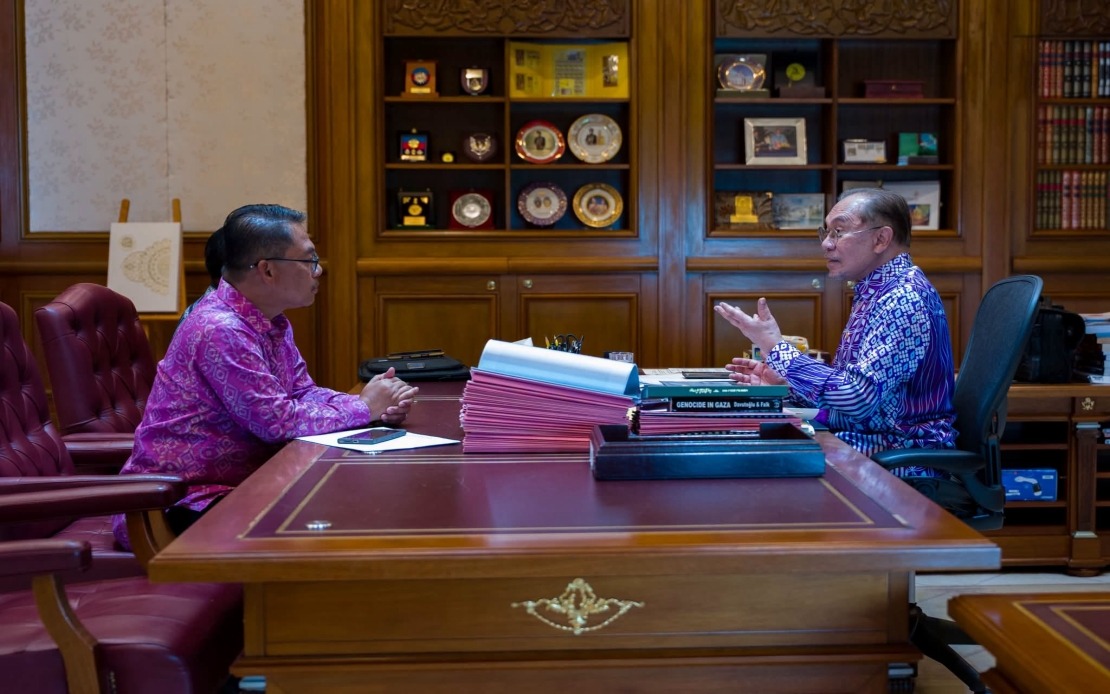
The government has pledged to strengthen its approach to targeted fuel subsidies across Sabah and Sarawak, signalling a willingness to adapt the policy based on ground-level responses and community concerns. Datuk Mustapha Sakmud, the Minister in the Prime Minister's Department overseeing both East Malaysian states, announced that ongoing consultations with key stakeholders and representatives from state and federal authorities would shape the evolution of the BUDI Diesel initiative, ensuring its rollout safeguards living standards particularly for residents in remote and rural localities.
The commitment reflects a broader shift within the MADANI administration toward participatory governance, with officials emphasising that public sentiment—drawn from both urban and village communities—will inform policy adjustments moving forward. Mustapha's statement underscores the government's acknowledgement that implementation challenges have emerged since the scheme's nationwide launch, warranting a careful recalibration to address real-world obstacles that communities face when accessing the subsidised fuel programme.
Prime Minister Datuk Seri Anwar Ibrahim personally engaged with residents in Sabah to understand the practical difficulties surrounding BUDI Diesel's execution. This hands-on approach signals high-level attention to the scheme's performance and demonstrates a departure from top-down policy management, instead prioritising direct dialogue with affected populations. The Prime Minister's willingness to allocate time to these consultations, despite pressing national responsibilities, suggests the government views the subsidy initiative as integral to its broader social contract with voters, particularly in geographically isolated areas where fuel distribution networks pose logistical hurdles.
The BUDI Diesel initiative itself represents a targeted reimagining of Malaysia's fuel subsidy architecture. Launched on July 1, the programme departs from universal fuel price controls by restricting subsidies to qualifying private diesel vehicle owners. These eligible recipients receive a foundational allowance of 200 litres monthly at a subsidised rate of RM2.10 per litre, a mechanism designed to channel government support toward genuine beneficiaries whilst constraining fiscal outlay. The tiered structure permits proprietors of eligible sports utility vehicles and pickup trucks to petition for an additional 100-litre monthly allocation, provided they satisfy defined eligibility thresholds, introducing flexibility for those with specific transportation needs.
For Sabah and Sarawak specifically, the programme carries particular significance given the states' geographic characteristics and economic dependencies. Both territories encompass vast tracts of sparsely populated territory where conventional market mechanisms may fail to ensure adequate fuel access at competitive prices. Rural communities in these states frequently depend on road transport to connect to markets, healthcare facilities, and educational institutions, making fuel costs a material factor in household expenditure and economic viability. Any disruption or inefficiency in the subsidy scheme's delivery therefore carries broader implications for rural prosperity and social cohesion.
The government's openness to refinement suggests that early implementation has revealed friction points requiring attention. These may encompass registration complications, unequal distribution across remote areas, or administrative barriers preventing eligible rural residents from claiming their quota. Digital infrastructure limitations in less-developed districts could hinder enrolment in what appears to be a partly technology-dependent verification system. Additionally, confusion regarding eligibility criteria or the application procedure may have prevented eligible motorists from accessing the programme, necessitating clarification and outreach campaigns in local languages.
The consultation process underway involving multiple tiers of government and civil society reflects the complexity of executing subsidy policy in a federal system where states retain varying degrees of administrative autonomy. Coordination between federal agencies responsible for fuel supply and pricing, state governments managing local distribution networks, and local authorities implementing ground-level logistics requires seamless information flow and aligned objectives. Including stakeholder perspectives—potentially encompassing rural transport operators, agricultural organisations, and community leaders—ensures the refinement process accounts for sectoral variations in fuel demand and accessibility challenges specific to individual regions.
From a fiscal perspective, targeted subsidies represent a departure from the historically expensive universal subsidy model that characterised Malaysian energy policy for decades. By restricting eligibility and imposing usage quotas, the BUDI initiative aims to contain budgetary pressure whilst protecting vulnerable populations most reliant on private transport for livelihood activities. However, the programme's success depends on effective implementation and public trust in its fairness and accessibility, issues that community feedback mechanisms are designed to surface and address.
The Malaysian experience with fuel subsidies carries historical weight, given previous policy cycles characterised by volatile global petroleum prices and domestic political sensitivity surrounding energy costs. Public memory of subsidy withdrawals and resultant price spikes influences current attitudes toward any restructuring of fuel support mechanisms. The government's emphasis on grassroots consultation and responsiveness attempts to rebuild confidence that policy changes serve equitable purposes rather than imposing hardship on ordinary Malaysians, particularly those with limited alternatives to private transport.
For Southeast Asia more broadly, Malaysia's refined approach to targeted subsidies offers instructive lessons in balancing fiscal sustainability with social welfare objectives. The region encompasses diverse economies grappling with similar pressures to rationalise energy subsidies whilst protecting populations vulnerable to fuel price volatility. Malaysia's willingness to incorporate feedback and adjust implementation demonstrates that such restructuring need not follow a rigid blueprint, instead remaining responsive to geographic variation and community circumstances.
The announcement that refinement efforts will persist through ongoing dialogues suggests this represents an iterative rather than concluded process. Policymakers implicitly acknowledge that the initial design, while conceptually sound, requires field-testing and adaptation to function optimally across diverse terrain and demographic contexts. This adaptive approach, if matched with genuine incorporation of feedback rather than performative consultation, could establish a template for evidence-based policymaking in Malaysia's subsidy and welfare architecture moving forward.

