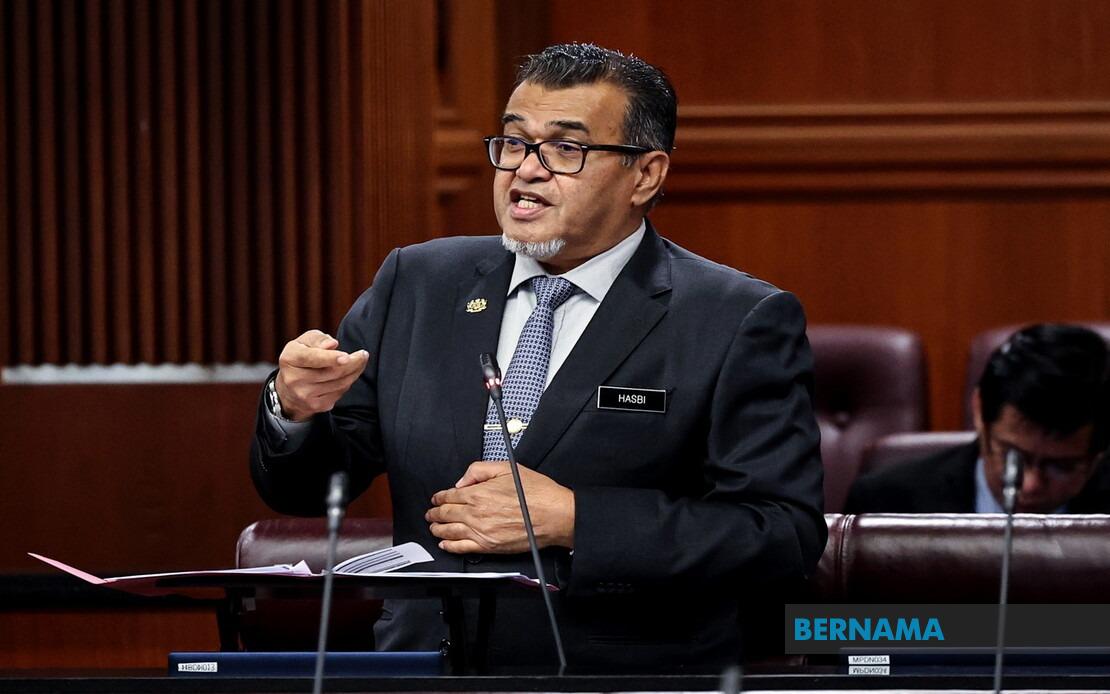
The Malaysian government is moving swiftly to close legislative loopholes that have allowed criminals to operate with relative impunity on the country's rail network. Deputy Transport Minister Datuk Hasbi Habibollah confirmed to Parliament this week that comprehensive amendments to existing laws are in their final stages, designed to introduce substantially heavier punishments for those involved in trespassing, vandalism, and theft targeting railway infrastructure. The legislation is set to reach lawmakers later in 2024, representing a significant escalation in the government's response to a persistent security challenge that has drained resources and created operational disruptions across the network.
The urgency behind these legal reforms becomes apparent when examining the scale of the problem facing Malaysia's rail system. Over the past three years, authorities have documented 393 separate incidents of cable theft alone, accounting for approximately 19,756 metres of stolen material valued at roughly RM16.3 million. These are not isolated occurrences but rather part of a systematic problem that reflects broader vulnerabilities in how the rail network is protected. The cables targeted by thieves often carry both power and communication signals vital to railway operations, meaning their removal creates cascading problems extending far beyond the direct financial loss.
Current legislation has proven inadequate as a deterrent. Under existing law, the penalty for railway trespassing stands between RM500 and RM1,000—a sum so modest that it provides minimal disincentive for determined criminals operating within an organized theft ecosystem. Hasbi highlighted this disparity in his parliamentary response, emphasizing that cable theft involving security-critical infrastructure must attract substantially higher financial and custodial penalties. The proposed amendments specifically target cable theft as a priority area, with penalties being calibrated to reflect both the material loss and the operational danger posed by removing components essential to railway safety and function.
The government's multi-layered approach extends well beyond legislative change. Recognizing that theft occurs within a broader criminal supply chain, authorities are actively engaging scrap metal dealers and operators to sever the market for stolen goods. This represents sophisticated crime prevention strategy rather than enforcement alone—by making it economically unviable for dealers to purchase stolen copper and other valuable metals, the government aims to eliminate the profit motive driving initial thefts. Such dealer cooperation initiatives have proven effective in other jurisdictions and represent a pragmatic understanding that supply-side pressure must accompany demand-side legal consequences.
Technology deployment forms another critical pillar of the security enhancement strategy. The Railway Assets Corporation has invested RM14 million to install 1,146 closed-circuit television systems incorporating artificial intelligence throughout high-risk locations across the network. These are not conventional security cameras but smart systems capable of identifying suspicious behaviour patterns, detecting unauthorized access, and flagging anomalies in real-time. The AI functionality allows security teams to move beyond passive recording toward active threat identification, potentially intercepting theft attempts before they occur rather than investigating them afterward.
Drone surveillance represents an innovative addition to the security arsenal, particularly valuable for monitoring areas difficult to access through conventional ground patrols. Railway corridors often traverse challenging terrain, remote locations, and densely vegetated zones where traditional foot and vehicle patrols prove inefficient. Unmanned aerial systems provide persistent overhead monitoring of these vulnerable sections while freeing personnel for response operations. For a sprawling rail network serving a nation as geographically diverse as Malaysia, this technological flexibility addresses practical enforcement limitations that no amount of additional personnel could overcome.
The Keretapi Tanah Melayu Berhad's recent acquisition of twenty scrambler motorcycles for Auxiliary Police units further extends enforcement presence into areas where conventional patrol vehicles face mobility constraints. Motorcycles enable rapid response to incidents, swift movement through congested urban areas adjacent to rail corridors, and presence in locations inaccessible to larger vehicles. This combination of drone monitoring, smart camera systems, and mobile tactical patrols creates layered surveillance and response capabilities designed to make theft operations substantially riskier and slower to execute.
Coordination with the Royal Malaysian Police strengthens enforcement beyond railway-specific operations. By integrating rail security efforts with the broader national police apparatus, the government creates interconnected intelligence networks and unified command structures. Police can pursue cases involving stolen goods across jurisdictional boundaries, investigate organized theft rings with felony-level resources, and apply specialized investigative techniques beyond what railway-specific security personnel alone could deploy. This institutional linkage transforms rail security from a siloed railway company concern into a component of national crime prevention.
The escalating theft problem reflects wider economic pressures within Malaysia that lawmakers must acknowledge. Rising scrap metal prices create powerful financial incentives for theft, particularly affecting vulnerable populations willing to engage in illegal extraction and sale of materials. While harsher penalties and improved technology represent necessary responses, they function best when paired with broader economic policies addressing poverty and informal employment. The government's multi-pronged approach suggests recognition that security challenges require enforcement, technology, and systemic solutions working in concert.
For regional observers, Malaysia's railway security initiative offers instructive lessons in comprehensive infrastructure protection. Many Southeast Asian nations face similar challenges of cable theft, trespassing, and operational disruption across transportation networks that are simultaneously critical economic assets and vulnerable public spaces. The combination of legal reform, technological investment, inter-agency coordination, and supply-chain disruption represents a replicable model adaptable to different national contexts and resource levels. As the proposed amendments reach Parliament later this year, the approach will be tested against the ingenuity of organized criminal networks already active within the ecosystem.

