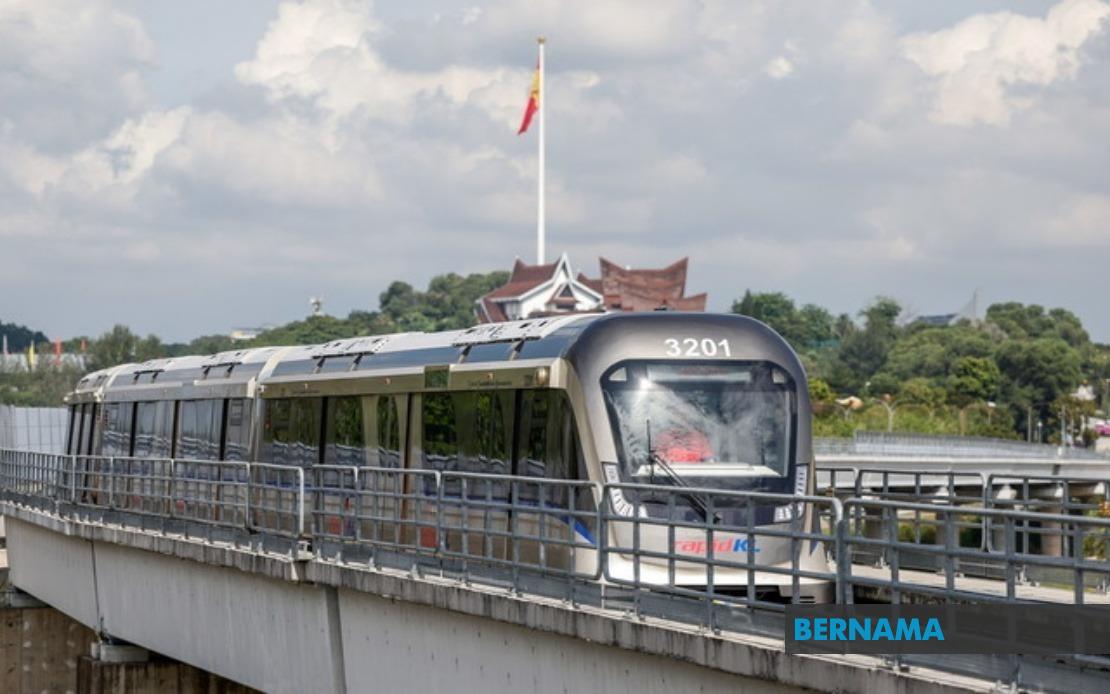
The MADANI Government has committed to seeking a formal audience with Sultan Sharafuddin Idris Shah, the Sultan of Selangor, to offer detailed explanations regarding ongoing concerns about the LRT3 Shah Alam Line project. Transport Minister Anthony Loke made this announcement while speaking to reporters at a charity dinner in Kuala Lumpur, acknowledging the Ruler's recent public remarks about the transit initiative's trajectory since 2018. The government's willingness to engage directly with the palace underscores the political sensitivity surrounding a major infrastructure project in one of Malaysia's most economically significant states, where royal scrutiny carries considerable weight in shaping public discourse and government accountability.
The Ruler's concerns, articulated in his statement yesterday, centred on substantial modifications to the project scope that have fundamentally altered its original ambitions. Sultan Sharafuddin highlighted how the Federal Government's transition in 2018 led to an 18-month suspension of construction activities, compounding the project's timeline challenges. When development resumed, the infrastructure initiative faced an additional 19-month setback attributable to the COVID-19 pandemic, delays that persisted through 2021. These disruptions triggered cascading compromises that reshaped the project's physical footprint and service capacity in ways that merit serious examination.
During the extended delay period, project planners implemented several cost-reduction measures that diminished the LRT3's intended service capability. The physical dimensions of individual stations were reduced from original specifications, a decision that affects passenger flow and facility functionality. The procurement schedule for train carriages was also curtailed, meaning fewer vehicles will operate on the line compared to initial planning documents. Most significantly, five proposed stations initially included in the alignment were removed entirely from the construction scope, eliminating planned connections to several communities in the Klang Valley corridor that had anticipated transit access.
The Sultan's intervention carries particular importance because it reframes the infrastructure discussion beyond mere technical or financial metrics. His Royal Highness explicitly stated that the LRT3 project should not be evaluated as a prestige undertaking designed to showcase government capability, but rather as an essential public service intended to serve the genuine transportation needs of Selangor's growing population. This distinction matters considerably in Malaysian governance, where royal oversight of state-level development reflects constitutional accountability mechanisms and cultural expectations about how rulers safeguard their subjects' interests.
Minister Loke's response demonstrates awareness that dismissing or downplaying royal concerns would be politically untenable. By committing to seek an audience and provide "further clarification," the government signals respect for the institution while simultaneously preserving space for dialogue rather than confrontation. The terminology of accepting the Ruler's "remarks" reflects careful diplomatic language—acknowledging legitimacy without necessarily conceding all points. This approach aligns with established protocols in Malaysian politics where respectful engagement with constitutional monarchies remains essential to maintaining governance legitimacy.
Beyond the immediate LRT3 controversy, Loke used the same platform to announce transport ministry initiatives supporting the 16th Johor State Election scheduled for July 11. The government has coordinated with Keretapi Tanah Melayu Berhad (KTMB) to increase Electric Train Service (ETS) frequencies operating between Kuala Lumpur and Johor Bahru, enabling outstation voters to return home more conveniently for polling day. This practical support reflects recognition that electoral participation depends partly on removing logistical barriers, particularly for voters residing or working outside their home constituencies.
The enhanced ETS schedule particularly benefits those returning from Singapore, who can now access direct rail connections through Segamat and Labis rather than navigating indirect routes. Northern region voters also gain improved transit options to reach Johor for voting, with increased service frequency making same-day or weekend return trips more feasible. The transport ministry's framing positions these enhancements as facilitating civic participation rather than as partisan electoral advantage, though the timing during a state election campaign naturally invites scrutiny regarding political motivations.
The Johor State Election encompasses 172 candidates competing for 56 state seats across a compressed electoral schedule. Early voting occurs on July 7, with main polling day on July 11, concentrating electoral activity into a brief window. For voters working in federal territories or neighbouring states, reliable public transport becomes critical infrastructure enabling democratic participation. The government's transport investments thus serve dual purposes—addressing longstanding service gaps while simultaneously reducing practical obstacles to voting among dispersed electorates.
The LRT3 episode illuminates broader tensions within Malaysian infrastructure governance between federal authority and state-level royal prerogatives. Although the federal government funds and executes major transit projects, sultans retain constitutional roles as custodians of state resources and community welfare. When project implementation diverges substantially from original commitments—through reduced scope, extended timelines, and diminished service capacity—formal intervention by the Ruler reflects legitimate constitutional concern rather than administrative overreach. This dynamic will likely shape how future major projects in sultanate states navigate approval processes and community expectations.
The government's commitment to provide clarification regarding LRT3 decisions also invites reflection on project transparency more broadly. Public understanding of why station sizes contracted, why carriage numbers reduced, and which cost pressures necessitated removing five stations remains limited. A comprehensive royal audience addressing these questions might yield valuable precedent for explaining difficult infrastructure trade-offs to affected communities. In Malaysian governance contexts, royal validation of government decisions frequently carries more persuasive weight than ministerial statements alone, suggesting that constructive dialogue could strengthen public acceptance of necessary compromises.
The convergence of the LRT3 controversy and electoral transport initiatives reveals how infrastructure governance intersects with political cycles in Malaysia. While the timing of enhanced ETS services preceding state elections may appear coincidental, it demonstrates how transport ministry decisions inevitably acquire electoral dimensions. Going forward, mechanisms separating technical infrastructure planning from electoral calendars might enhance public confidence in project decision-making processes, though political realities make such separation perpetually challenging in democratic systems.
For Selangor residents and wider Malaysian observers, the government's willingness to engage the Sultan directly signals that major project modifications warrant explanation beyond bureaucratic channels. The LRT3 case establishes that infrastructure compromises—however necessary from technical or financial perspectives—deserve scrutiny from constitutional institutions representing affected communities. This precedent may influence how subsequent state governments navigate comparable situations where development pressures conflict with original public commitments.

