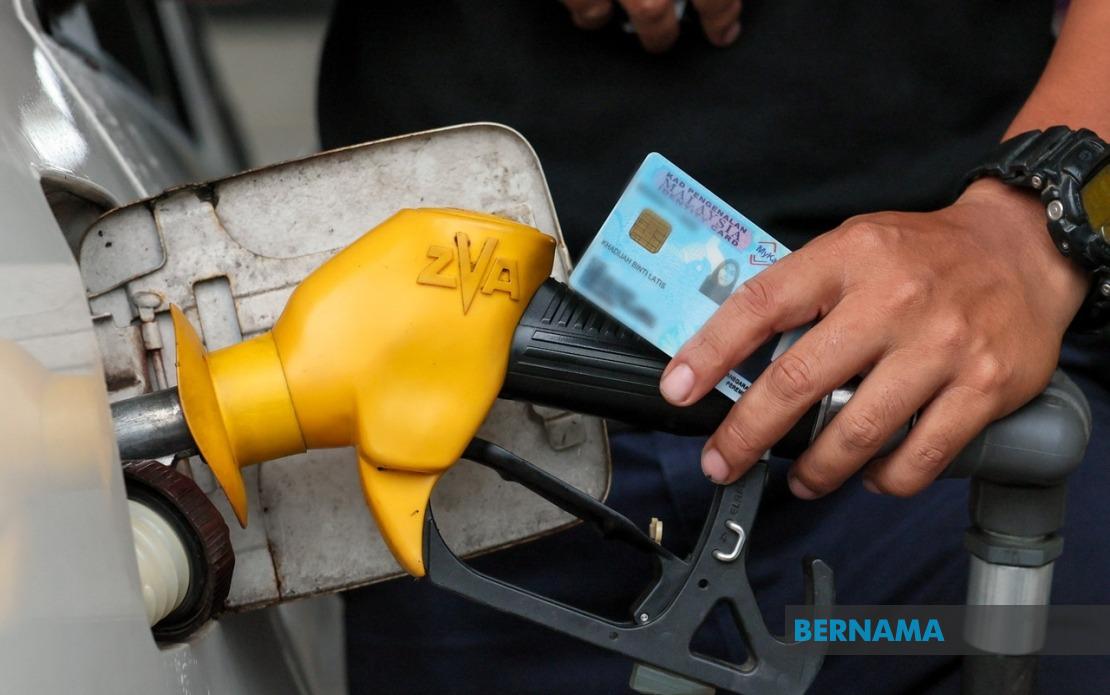
Prime Minister Datuk Seri Anwar Ibrahim announced during the 2026 National Day address in Putrajaya that the government would reinstate the Budi MADANI RON95 quota to its previous 300-litre monthly allocation, a move affecting more than 16 million subsidised fuel users nationwide. The restoration, effective September 1, extends beyond petrol to include an expansion of the diesel subsidy programme, with over half a million eligible owners of diesel-powered pickup trucks and jeeps now eligible to receive up to 400 litres of BUDI Diesel monthly. The decision signals a reassessment of fuel subsidy policy in response to shifting fiscal conditions and evolving global energy market dynamics.
The quota reduction to 200 litres had been implemented against a backdrop of geopolitical instability and international energy price volatility, measures adopted to preserve fiscal capacity during uncertain times. However, as market conditions have stabilised and the government's budgetary assessment has evolved, officials determined that the previous subsidy level could be reintroduced without severely compromising public finances. This recalibration reflects a deliberate policy choice to prioritise household purchasing power and cost-of-living support, particularly for segments of the population most vulnerable to fuel price fluctuations.
Herniza Roxanne Marcus, an economics lecturer at Universiti Teknologi MARA's Sabah campus, emphasises that the restoration will prove especially meaningful for lower and middle-income households, where fuel expenses consume a considerably larger proportion of monthly disposable income compared to affluent families. In regions like Sabah, where geographical constraints limit public transportation infrastructure and residents must rely substantially on private vehicles for work and daily activities, the additional 100 litres monthly provides tangible financial breathing room. The expanded quota allows households to redirect previously allocated fuel money toward other essential expenditures including groceries, children's education, and utilities, thereby directly supporting household budgetary flexibility during an economically challenging period.
While the measure does not necessarily translate into an immediate decline in headline inflation figures, Marcus notes that containing transportation cost pressures helps mitigate secondary inflationary effects across the broader economy. When fuel expenses remain stable or decline, vendors and service providers face reduced incentives to pass transportation costs onto consumers through higher prices for goods and services. This indirect effect can help moderate price pressures in supply-dependent sectors such as food distribution and logistics, benefiting consumers across multiple purchasing categories rather than transportation alone.
The policy adjustment demonstrates a nuanced government approach that attempts to balance fiscal responsibility with social welfare obligations. Marcus characterises the decision as neither indicative of dramatically improved fiscal circumstances nor of reckless spending, but rather a pragmatic recalibration based on current macroeconomic conditions, actualised consumption patterns, and measurable household welfare impacts. The government's ability to reintroduce subsidies at previous levels, without triggering immediate fiscal alarm, suggests that revenue streams and budgetary forecasts have evolved favourably or that subsidy restructuring has improved efficiency.
The timing of the announcement carries additional significance within Malaysia's contemporary political and economic context. Coming shortly after the National Day address, the subsidy restoration serves dual purposes of demonstrating government responsiveness to citizen welfare concerns whilst providing concrete policy benefits that citizens experience immediately at petrol stations. For millions of Malaysian motorists accustomed to the reduced quota, the additional 100 litres represents a palpable improvement in their monthly transport budget without requiring behaviour modification or vehicle purchasing changes.
Rozainah Abdul Rahim, a 36-year-old journalist whose professional duties necessitate substantial daily vehicle usage, exemplifies the segment most impacted by quota fluctuations. Her work requires frequent travel throughout the Klang Valley region, with regular commutes between Port Dickson in Negeri Sembilan and Kuala Lumpur for both professional assignments and personal family obligations. Under the previous 200-litre allocation, she regularly exhausted her monthly quota before month's end, forcing supplementary purchases at unsubsidised market rates. The restoration to 300 litres now aligns more closely with her actual transport requirements, eliminating the frustration of quota depletion and reducing out-of-pocket fuel expenses.
The diesel component of the subsidy expansion broadens the policy's reach beyond passenger vehicle owners to include commercial operators and rural vehicle owners who depend on diesel-powered pickup trucks and four-wheel-drive vehicles. These vehicles, prevalent throughout Malaysia's agricultural and rural regions, serve both personal transportation and small business purposes. By providing up to 400 litres monthly to eligible diesel vehicle owners, the government addresses the needs of constituencies whose livelihoods depend directly on affordable transport, including farmers, smallholder businessmen, and rural residents for whom public transportation remains unavailable.
Economic analysts observe that subsidy policies of this nature require continuous recalibration in response to international oil price movements, domestic fiscal capacity, and inflation trajectories. Malaysia's experience over the past several years demonstrates how fuel subsidies function as automatic stabilisers during periods of economic uncertainty, buffering households from international commodity price shocks whilst allowing the government flexibility to adjust support levels as circumstances warrant. The current restoration reflects confidence that global energy markets have stabilised sufficiently to warrant increased subsidy commitments without creating unsustainable fiscal liabilities.
The policy's implementation across Malaysia's diverse geography and demographic landscape will likely generate varying impacts depending on local conditions. Urban residents with access to public transportation alternatives may utilise the quota at lower rates than rural and semi-urban populations, where private vehicle ownership remains essential rather than optional. Southeast Asian regional observers note that Malaysia's approach to fuel subsidies contrasts with neighbouring countries' policies, with implications for cross-border fuel purchasing and regional energy market dynamics, particularly affecting border regions in Johor, Perlis, and Sabah where fuel price differentials influence consumer behaviour.
Looking forward, policymakers will need to monitor how the restored subsidy affects actual household consumption patterns, inflation metrics, and government expenditure levels. The measure's success will ultimately be judged not merely by its immediate cost-of-living impacts but by whether it achieves sustainable balance between fiscal discipline and social protection. For Malaysian households already navigating elevated costs across multiple categories from food to utilities, the RON95 restoration provides welcome, if modest, relief during a period of economic adjustment and transition.

