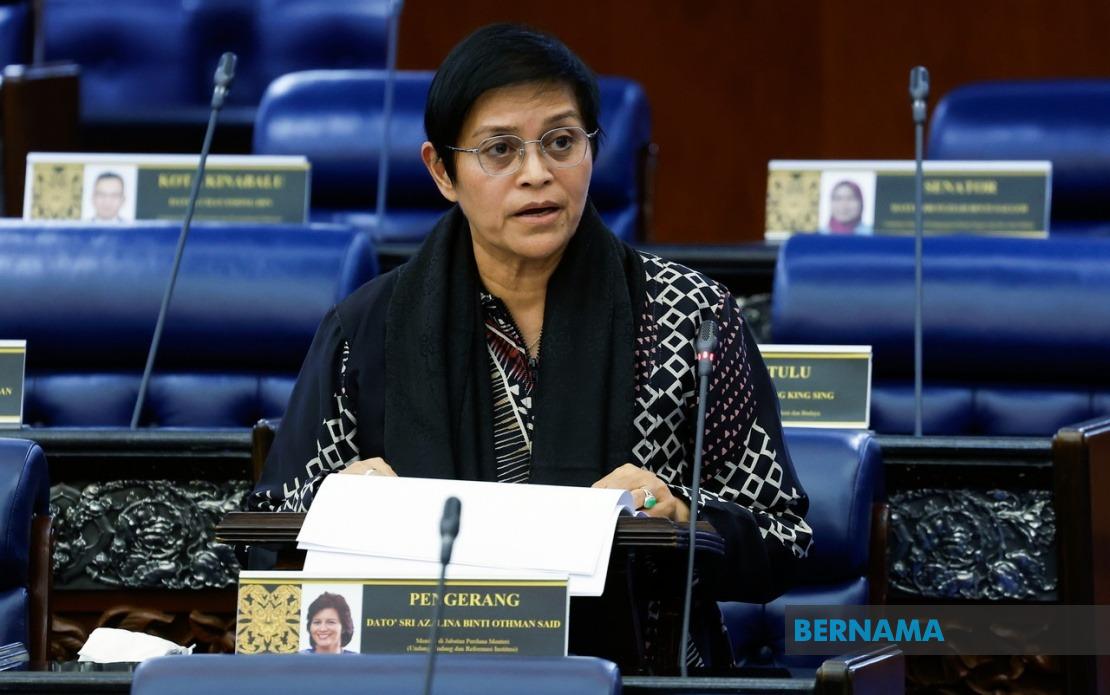
The Malaysian government is prepared to consider establishing a Royal Commission of Inquiry to investigate allegations of 'corporate mafia' activities, provided such a step proves necessary in the public interest, according to Datuk Seri Azalina Othman Said, Minister in the Prime Minister's Department (Law and Institutional Reform). Speaking in a written parliamentary reply, Azalina emphasised that any potential institutional corruption affecting public agencies and confidence in governance structures demands rigorous examination through proper legal channels.
The government's stance reflects growing concern about the scope and nature of these allegations, which ministers have characterised as a serious matter warranting sustained official attention. Azalina stressed that ongoing investigations by relevant authorities must be permitted to progress without interference, ensuring their integrity remains beyond reproach. This commitment to investigative independence signals the administration's attempt to balance transparency with procedural propriety—a delicate equilibrium essential when addressing claims that could implicate high-level officials or institutional practices.
The question originated from RSN Rayer, the Member of Parliament for Jelutong representing the Pakatan Harapan coalition, indicating that corporate mafia concerns have transcended party lines to become a matter of broader parliamentary interest. This cross-party focus underscores the political salience of institutional integrity in contemporary Malaysian governance discourse. When opposition lawmakers raise such matters, they often reflect public anxiety about systemic corruption, suggesting that allegations of coordinated corporate misconduct have gained sufficient traction to demand legislative scrutiny.
A Royal Commission of Inquiry represents Malaysia's most formal investigative mechanism for matters affecting the state and public institutions. The legal framework governing RCI establishment is the Commissions of Enquiry Act 1950, a statute that codifies procedural requirements designed to maintain institutional legitimacy. Azalina outlined the established process: a lead ministry must first prepare a Cabinet memorandum documenting the matter's public significance, followed by Cabinet approval, after which the Prime Minister formally approaches the Yang di-Pertuan Agong for royal consent. This hierarchical procedure, while appearing bureaucratic, embeds checks and oversight into the inquiry mechanism itself.
Following royal assent, additional preparatory phases would involve defining the Commission's terms of reference—the specific questions it will investigate—determining its composition, setting duration limits, and formalising these details through publication in the Federal Government Gazette. Each element carries substantive weight. Terms of reference shape investigative scope; membership determines investigative competence and perceived neutrality; duration affects thoroughness versus cost. The gazette publication requirement ensures public notice and transparency, establishing the inquiry's constitutional legitimacy before it commences substantive work.
Azalina's emphasis on allowing current investigations to proceed reflects a measured approach that avoids appearing either dismissive of concerns or precipitously escalating to formal commission status. By tying any future RCI decision to findings emerging from ongoing probes, the government positions itself as evidence-responsive rather than pre-judgemental. This framing suggests that investigators will be given opportunity and resources to complete preliminary work before determining whether an RCI's enhanced powers and public profile become warranted. For Malaysian observers accustomed to governance delays, this iterative approach may inspire either confidence in thoroughness or concern about indefinite postponement.
The corporate mafia concept itself reflects anxieties about organised networks within business-state interfaces that operate beyond formal oversight mechanisms. Such networks allegedly leverage their proximity to decision-making power to extract advantages, manipulate contracts, or shield associates from accountability. These dynamics carry particular resonance in Malaysia's complex business environment, where family-linked enterprises, political patronage networks, and formal corporate structures often interpenetrate. Allegations of coordinated misconduct touching multiple agencies suggest systemic rather than isolated problems, justifying the parliamentary and ministerial attention now focused on these matters.
From a Southeast Asian perspective, Malaysia's deliberate RCI framework reflects colonial-era institutional legacies adapted for contemporary democratic governance. Unlike regional neighbours employing truth commissions or special investigative committees with varying procedures, Malaysia's formal approach embeds procedural rigidity. This can bolster legitimacy through established process but may also delay urgent matters or create opportunities for protective interventions. The government's openness to considering an RCI appears calibrated to satisfy democratic accountability expectations while avoiding immediate commitment to a potentially politically sensitive inquiry.
The government's stated commitment to justice, rule of law, and fact-based decision-making sets benchmarks against which any eventual RCI or investigative conclusions will be judged. Should preliminary investigations vindicate corporate mafia allegations, withholding RCI status might invite criticism that the government shielded sensitive matters from enhanced public scrutiny. Conversely, rapid RCI establishment without sufficient predicate evidence might appear to validate unsubstantiated claims. The government's incremental approach attempts to navigate these competing pressures, though it risks satisfying neither sceptics of the allegations nor advocates for institutional reform.
For Malaysian businesses and investors, institutional responses to corporate mafia allegations carry significant implications. Enhanced investigative scrutiny, whether through normal channels or formal commissions, could expose contractual irregularities, misallocated public resources, or compromised procurement processes. Legitimate enterprises operating transparently face minimal risk, but those benefiting from opaque arrangements may encounter disruption. Additionally, investment climate perceptions depend partly on governance credibility—strong institutional responses to corruption allegations can reassure foreign investors, while perceived inadequacy might raise concerns about systemic reliability.
Azalina's parliamentary response establishes a conditional framework rather than a definitive commitment. The government acknowledges corporate mafia concerns as serious, commits to independent investigations, and remains receptive to formal inquiry mechanisms if justified by emerging evidence. Implementation depends on investigative findings and cabinet assessments, leaving timing and scope uncertain. For RSN Rayer and parliamentary stakeholders seeking accountability measures, this represents progress toward institutional scrutiny whilst deferring firm commitments. The critical question becomes whether preliminary investigations uncover sufficient evidence to trigger the formal RCI process or whether findings remain contained within existing investigative structures, leaving public concerns partially unresolved.

