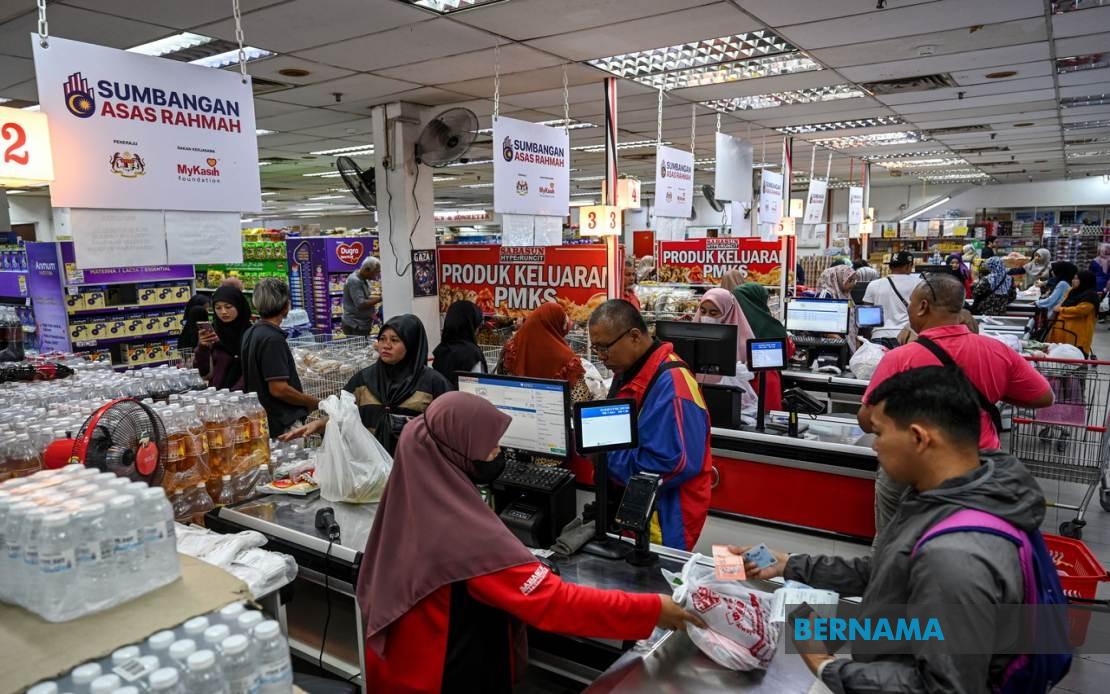
Prime Minister Datuk Seri Anwar Ibrahim has signalled openness to enhancing the country's two key cash assistance programmes, Sumbangan Tunai Rahmah (STR) and Sumbangan Asas Rakmah (SARA), provided Malaysia's economic trajectory supports such an expansion. Speaking during a community engagement programme in Ipoh on July 19, Anwar indicated that discussions with Treasury leadership have already commenced on the feasibility of increasing benefit amounts, with decisions expected to emerge during the upcoming budget deliberations.
The Prime Minister, who simultaneously holds the Finance Ministry portfolio, acknowledged that existing beneficiary groups receiving STR and SARA payments remain a priority for the MADANI administration. His remarks reflect a balancing act between recognising the genuine hardship faced by vulnerable Malaysians and the government's need to maintain fiscal discipline. By framing any potential increases within an "economy permitting" caveat, Anwar has set realistic expectations whilst keeping options open, a pragmatic approach given Malaysia's complex economic picture and lingering uncertainties from global market volatility.
Conversations with Tan Sri Johan Mahmood Merican, the Treasury secretary-general, form the foundation of this policy consideration. That engagement between the political and bureaucratic leadership indicates the matter has received serious consideration beyond mere political rhetoric. The upcoming budget cycle will prove decisive; this is where economic projections, revenue forecasts, and expenditure priorities converge into concrete policy. For millions of Malaysians relying on these programmes for basic necessities, the budget announcement will carry profound implications for household budgeting and financial stability.
The STR and SARA schemes have become cornerstones of the government's social protection architecture since their inception. These direct cash transfers target lower-income households and represent a departure from earlier, more paternalistic welfare approaches. Malaysian recipients of these payments span diverse demographics—urban informal workers, rural populations, pensioners, and persons with disabilities—making any adjustment to benefit levels a matter affecting a substantial cross-section of society. The fact that Anwar himself is personally championing review of these amounts underscores their political and social significance.
Economic conditions remain the decisive variable. Malaysia's growth trajectory has shown resilience despite global headwinds, yet vulnerabilities persist. Inflation, though moderating from recent peaks, continues eroding purchasing power among lower-income groups who spend disproportionately on essentials like food and energy. Wage growth in many sectors has lagged price increases, intensifying pressure on household budgets. Against this backdrop, assistance programme adjustments carry tangible consequence—an increase of even a few ringgit monthly can help bridge the gap between sufficiency and deprivation for vulnerable families.
The Prime Minister also used the Ipoh engagement to address the welfare needs of security personnel, particularly members of RELA, the Malaysian Volunteer Corps Department. This reflects governmental recognition that frontline responders—whether uniformed or volunteer—warrant enhanced support packages. The allocation of RM3 million for RELA welfare, maintained at last year's level, signals commitment, though Anwar candidly acknowledged this sum remains inadequate relative to genuine needs. This honesty about resource constraints lends credibility to his broader economic contingency messaging regarding STR and SARA.
The timing of these announcements matters strategically. Community programmes like the MADANI KITA initiative, bringing together government officials and grassroots participants, create forums where policy intentions can be communicated directly. By articulating these considerations in Ipoh rather than through press releases, Anwar demonstrates accessibility and engages voters where they live. The presence of Home Ministry and RELA leadership underscores inter-agency coordination on welfare matters, reflecting holistic governmental thinking about citizen wellbeing beyond purely financial metrics.
For Malaysian policymakers, the consideration of STR and SARA increases reflects a broader transition in social thinking. Direct cash transfers have gained international credibility as effective poverty reduction instruments, with evidence suggesting such programmes stimulate local economic activity when recipients spend locally on goods and services. Enhanced allocations could therefore carry micro-economic benefits beyond immediate poverty alleviation, supporting small traders and service providers in lower-income communities.
The "if the economy allows" framework provides crucial flexibility for budget architects. Should Malaysia experience unexpected revenue shortfalls or require increased allocations to other priorities—infrastructure, healthcare, education—the government retains latitude to postpone enhancements. Conversely, should performance exceed projections, capacity exists to move forward with increases. This conditionality, while potentially frustrating to beneficiaries hoping for certainty, reflects fiscal prudence that prevents unsustainable commitments.
Regional context adds perspective. Neighbouring countries employ varying social protection models, from targeted cash transfers to universal basic income pilots. Malaysia's STR and SARA programmes occupy a middle ground, attempting efficiency through means-testing whilst providing coverage breadth. Monitoring how peer nations structure and finance equivalent programmes informs Malaysian policymaking, particularly regarding sustainability and adequacy of benefit levels relative to poverty lines.
The path forward hinges on composite factors: economic growth rates, inflation dynamics, government revenue collection, competing budgetary demands, and political considerations around social cohesion. Anwar's positioning allows the government to demonstrate responsiveness to citizen welfare whilst maintaining honest communication about constraints. The upcoming budget will reveal whether economic conditions have indeed aligned sufficiently to translate these signals into concrete benefit increases for millions of Malaysians dependent on STR and SARA support.

