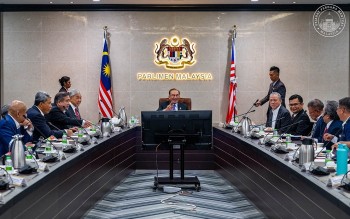
Prime Minister Datuk Seri Anwar Ibrahim has moved to shield Malaysia's manufacturers from mounting cost pressures stemming from global supply chain disruptions by directing two key government ministries to establish dialogue with affected industries. Speaking through social media on Monday, Anwar—who also holds the finance portfolio—announced that the Ministry of Investment, Trade and Industry (MITI) and the Ministry of Economy will conduct targeted engagements with manufacturing stakeholders to develop relief measures and preserve the sector's long-term competitiveness.
The directive came after the National Economic Action Council (MTEN), chaired by Anwar earlier in the day, convened to assess mechanisms for strengthening the resilience of Malaysia's manufacturing ecosystem. The timing reflects growing anxiety within the industrial sector as international supply disruptions continue to create headwinds for businesses dependent on global logistics and raw material flows. The council's focus on this matter signals that supply chain vulnerabilities have moved from the periphery to the centre of economic policy discussions in the highest corridors of government.
The plastics industry emerged as a particular area of concern during the council's deliberations, underscoring how vulnerabilities in upstream sectors can cascade through multiple downstream industries. This focus is strategic rather than incidental: plastics manufacturing and processing underpins production across food packaging, electrical and electronics (E&E), automotive and medical devices—all sectors integral to Malaysia's manufacturing reputation and export earnings. The interconnected nature of these supply chains means that stress on one segment rapidly transmits to others, potentially undermining Malaysia's position in global value chains where manufacturers depend on timely, cost-effective supply of materials.
Economy Minister Akmal Nasrullah Mohd Nasir provided concrete evidence of the sector's importance during a public briefing on Monday, revealing that the plastics industry generated sales valued at RM62.69 billion in 2025, a decline from RM64.78 billion the previous year. This year-on-year contraction, while modest in percentage terms, points to underlying pressures already taking their toll on what was once a growth segment. The shrinkage carries particular weight given Malaysia's historical reliance on plastics manufacturing as an anchor of the industrial economy, especially in regions with established processing clusters.
The distribution of demand within the plastics sector illuminates where pressures are concentrating. Packaging applications account for 45 per cent of market value, making them the dominant use case, while the E&E sector claims 29 per cent of demand. These proportions reveal that Malaysia's plastics industry is deeply embedded in consumer-facing supply chains vulnerable to global trade fluctuations and logistics bottlenecks. Food packaging in particular has experienced inflationary pressures as raw material costs and freight have spiked, ultimately feeding through to consumer prices and potentially dampening demand for packaged goods.
Nasir's analysis extended beyond immediate cost concerns to articulate the systemic risks posed by plastics industry stress. When upstream plastics manufacturers face margin compression, the transmission mechanism to downstream sectors becomes inevitable. Food packaging producers must absorb higher material costs or raise prices on their customers; E&E manufacturers sourcing plastic enclosures and connectors face component shortages or price hikes; automotive suppliers relying on plastic compounds and composites confront similar dilemmas. The medical devices sector, which demands stringent quality standards and specialised plastic formulations, faces particular vulnerability as any supply disruption cannot simply be met with substitutes.
The government's approach reflects a recognition that market forces alone may be insufficient to navigate the current turbulence. By directing MITI and the Ministry of Economy to engage directly with industry, the administration is positioning itself as an active participant in problem-solving rather than a passive observer. This engagement is expected to take several forms: mapping specific bottlenecks and cost drivers, identifying where government procurement policies might offer stabilising demand signals, exploring tariff or logistics support mechanisms, and potentially facilitating industry-to-industry dialogue to coordinate responses across sectors.
For Malaysian manufacturers, the government's intervention carries both immediate and strategic implications. In the short term, formal dialogue channels may yield targeted relief through customs procedures, port facility improvements, or targeted support for struggling enterprises. More broadly, the visibility of governmental attention may restore some business confidence that supply chain disruptions are being treated as a policy priority rather than a cyclical inconvenience to be weathered passively. This psychological dimension matters significantly in manufacturing, where investment and hiring decisions depend on forward-looking confidence in the operating environment.
The supply chain crisis also reflects broader structural vulnerabilities in Malaysia's manufacturing base that extend beyond plastics. The country's position in regional and global production networks means that any shock originating elsewhere—whether in Southeast Asian neighbours, China, or other major suppliers—reverberates quickly through domestic firms. The prevalence of just-in-time inventory systems, while efficient in normal times, leaves little buffer when logistics or supply agreements come under strain. For policymakers, this underscores the tension between lean operational efficiency and resilience in an uncertain geopolitical and environmental context.
International precedents offer mixed lessons. Other Asian economies facing similar pressures have experimented with supply chain diversification initiatives, strategic stockpiling of critical inputs, and development of domestic alternatives to imported materials. Singapore has pursued sophisticated supply chain risk management; South Korea has invested heavily in advanced materials to reduce dependence on commoditised inputs. Malaysia's response through government-industry dialogue is pragmatic but will require follow-through: identifying which support measures yield genuine long-term resilience rather than temporary relief that postpones adjustment.
The broader context involves global macroeconomic uncertainties that constrain how much policy intervention alone can achieve. Freight rates, global energy prices, and raw material costs remain determined by international markets beyond Malaysia's direct control. Nonetheless, improving domestic operational efficiency and reducing regulatory friction can edge manufacturing competitiveness in directions available to policy. If the MITI and Ministry of Economy engagements yield concrete process improvements or logistics coordination across sectors, the exercise will have justified the governmental attention it has received.

