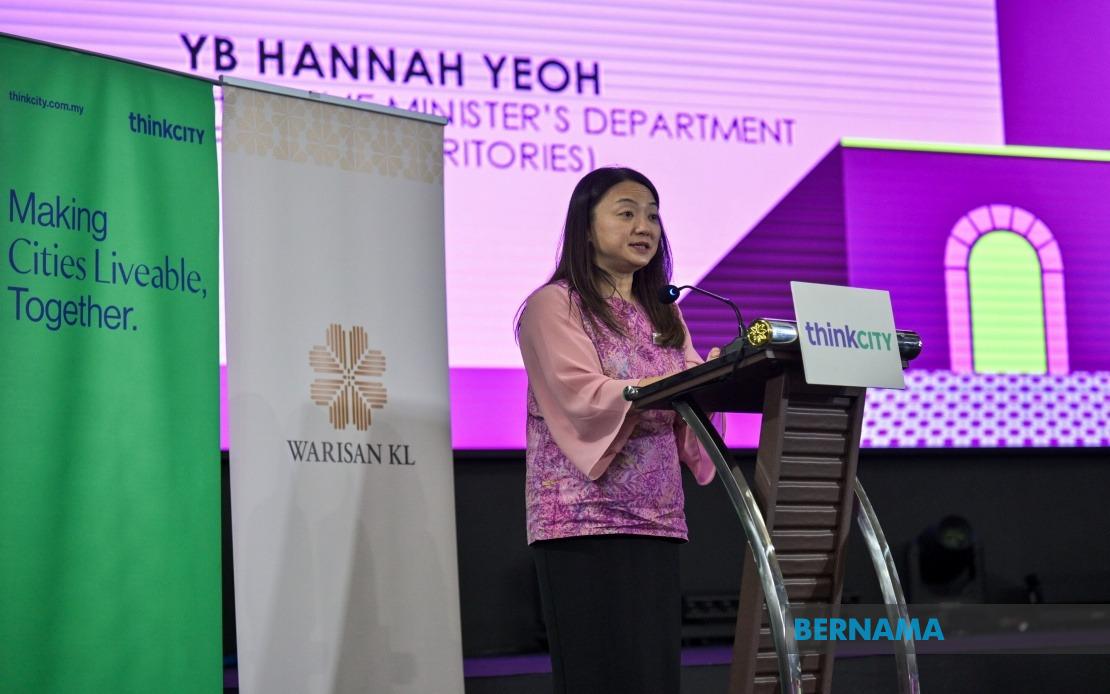
The Malaysian government has unveiled a RM1 million initiative aimed at revitalising Kuala Lumpur's city centre while safeguarding its rich heritage. Minister in the Prime Minister's Department (Federal Territories) Hannah Yeoh announced the Downtown Kuala Lumpur Grants Programme 2026, which will distribute funding in tranches of RM30,000 to RM100,000 to successful applicants. The scheme targets local communities, entrepreneurs and creative practitioners seeking to undertake projects that blend cultural preservation with contemporary urban development.
Yeoh framed the initiative as recognition that Kuala Lumpur's future depends on honouring its past while building momentum for the city's continued evolution. She articulated this dual vision by noting that the capital simultaneously narrates historical narratives and remains actively engaged in writing its next chapter. This philosophical underpinning suggests the government views heritage not as static museum pieces but as living components of urban vitality. The minister emphasised that downtown success will ultimately be measured not by isolated architectural projects or infrastructure investments, but by whether the city attracts residents, businesses and returning visitors—markers of genuine community confidence and economic dynamism.
Cultural and heritage sectors have gained prominence in Malaysia's economic strategy, with the federal government positioning them as engines for job creation and tourism revenue. Kuala Lumpur's 2023 designation as a UNESCO Creative City reinforces this positioning, signalling international recognition of the city's cultural significance. The grants programme directly channels this recognition into practical support, linking cultural preservation explicitly to economic opportunity. By embedding arts and heritage within broader economic development frameworks, the government signals that creative industries are no longer peripheral to national growth but central to competitive positioning.
Yeoh's emphasis on transforming City Hall's institutional culture carries particular weight for local entrepreneurs and community groups. Historically, Kuala Lumpur City Hall (DBKL) has earned a mixed reputation among business operators and residents, sometimes perceived as bureaucratically onerous rather than supportive. The minister's stated intention to reposition DBKL from regulatory obstacle to facilitating partner addresses a longstanding friction point between municipal administration and the local ecosystem. This rhetorical shift, if matched by substantive operational changes, could meaningfully alter how downtown stakeholders interact with government structures and perceive their space for creative initiative.
Think City, designated as the programme's strategic coordinator, will manage application processes and announce detailed eligibility criteria imminently. This partnership arrangement leverages the expertise of an established urban development organisation while allowing the ministry to focus on policy direction and funding allocation. The involvement of a specialised intermediary typically accelerates project assessment, reduces bureaucratic delays and ensures technical expertise informs funding decisions. For Malaysian practitioners and entrepreneurs unfamiliar with government grant mechanisms, Think City's involvement suggests accessible guidance and streamlined application pathways.
The RM1 million allocation, while modest relative to total urban development expenditure, carries symbolic importance beyond its numerical value. It signals deliberate government commitment to downtown revitalisation at a moment when Southeast Asian capitals increasingly compete for creative talent and cultural tourism revenue. Bangkok's renewed investment in Old Town districts, Singapore's heritage preservation initiatives, and Vietnam's aggressive cultural economy positioning have raised regional benchmarks. Malaysia's comparable investment demonstrates recognition that downtown renewal matters to national competitiveness, though funding levels may require expansion if the programme generates substantial demand.
The timing of the programme launch reflects broader discussions within federal territories administration about Kuala Lumpur's role in Malaysia's development narrative. As Kuala Lumpur transitions from primary economic engine to one node within a more distributed national system, downtown revitalisation takes on heightened symbolic weight. A thriving, culturally vibrant city centre represents successful capital management and attracts knowledge workers, entrepreneurs and tourists whose spending flows throughout the broader economy. Heritage preservation becomes intertwined with contemporary economic strategy rather than viewed as conservation expense.
For Malaysian creative practitioners, the grants offer rare access to government support specifically calibrated to cultural projects. Many Asian governments have recognised that creative industries generate disproportionate economic returns relative to investment, yet Malaysia's cultural sector has historically received fragmented support. A dedicated, transparent grants programme with clear criteria and predictable allocation timelines could catalyse project development, particularly among emerging artists and community organisations lacking capital reserves. The ceiling of RM100,000 per grant suggests projects ranging from public art installations and heritage documentation initiatives to community cultural spaces and creative entrepreneur incubation.
The programme also reflects evolving understanding of urban economics post-pandemic. Downtown revitalisation increasingly emphasises activation through events, cultural programming and community engagement rather than solely through commercial development. This approach typically proves more inclusive of existing residents and smaller operators than development-led gentrification models. By explicitly supporting heritage and arts practitioners, the grants programme implicitly endorses people-centred downtown strategies that generate cultural vitality without displacing established communities.
Regional implications extend beyond Kuala Lumpur itself. If the grants programme successfully generates visible downtown improvements and demonstrates cultural economy benefits, it may influence how other Malaysian cities approach their own commercial centres. Penang, Melaka, and other heritage-rich cities facing downtown decline might adopt comparable models, creating distributed networks of revitalised urban cores. This could strengthen Malaysia's cultural tourism positioning relative to regional competitors while distributing economic benefits more widely across the country.
Applications will soon become available as Think City releases detailed criteria, establishing a critical moment for entrepreneurs and communities to mobilise. The success of this initiative will depend on whether the grants genuinely reach intended beneficiaries, whether funded projects achieve visible impact, and whether the programme stimulates ongoing downtown momentum beyond initial allocations. Early project selection and transparent communication of outcomes will establish either a replicable model for Malaysian urban development or a modest initiative absorbed into bureaucratic routine. For downtown Kuala Lumpur stakeholders, the coming months will prove decisive in translating rhetorical commitment into tangible downtown transformation.

