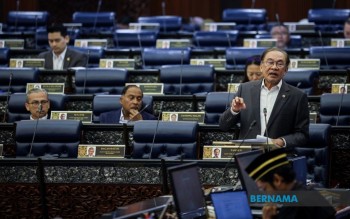
The Malaysian government has rolled out a fresh initiative designed to lighten the regulatory and financial load on small business operators, with Prime Minister Datuk Seri Anwar Ibrahim announcing the e-Invoice Voluntary Declaration Programme during parliamentary proceedings on July 7. The scheme, which extends through December 31, 2027, represents a deliberate policy pivot toward encouraging greater voluntary compliance among micro, small and medium enterprises struggling with the complexities of digital tax administration. By framing the programme as penalty-free, the government signals a recognition that blanket enforcement measures alone have failed to smoothly transition Malaysia's informal and semi-formal business ecosystem into the digital age.
The centrepiece of this initiative lies in its core concession: businesses that make voluntary corrections, updates, or adjustments to their e-invoice declarations during the three-and-a-half-year window will face no financial penalties from the Inland Revenue Board of Malaysia. Finance Minister Anwar, who doubles as the portfolio holder overseeing fiscal affairs, explicitly acknowledged that such lenient treatment remains unorthodox within Malaysia's income tax framework, signalling an extraordinary departure from standard enforcement protocols. This departure underscores the administration's acknowledgement that the transition to mandatory digital invoicing, though technologically sound and globally aligned, has created genuine friction points for businesses operating on thin margins with limited IT infrastructure.
The timing of this announcement responds directly to parliamentary concerns raised by Lee Chuan How, the Ipoh Timor MP from the ruling Pakatan Harapan coalition, who had queried the government's broader strategy for supporting the business sector during a period of global economic uncertainty. The question reflected a genuine anxiety within Malaysia's political establishment about the survival prospects of smaller enterprises caught between international supply chain disruptions, domestic cost pressures, and the compliance demands of an increasingly digitised tax system. By introducing the voluntary declaration window, the government attempted to reconcile two competing imperatives: maintaining the integrity of revenue collection mechanisms while offering businesses breathing room to achieve full compliance without punitive consequences.
Beyond the penalty waiver, the government has simultaneously accelerated tax incentive structures intended to reward early adoption and full engagement with e-invoice implementation. The scheme permits eligible companies to claim full capital allowances for e-invoice deployment expenses within a single tax year, rather than spreading deductions across multiple periods. This acceleration of deduction timing effectively reduces the after-tax cost of digital infrastructure investment, converting what might otherwise appear as a regulatory burden into a tax-efficient capital allocation decision. The measure demonstrates an understanding that many MSMEs approach compliance initiatives through a straightforward cost-benefit lens, and that financial incentives structured intelligently can shift behavioural outcomes more effectively than regulatory mandates alone.
Contextualising this latest intervention requires acknowledging that the government had already moved the compliance goalpost earlier. In December 2025, the administration raised the income threshold for e-invoice exemption from RM500,000 to RM1 million, an adjustment that removed over one million taxpayers from the mandatory digital invoicing requirement. That earlier expansion of the exemption ceiling effectively created a two-tier system wherein smaller operators remained outside the framework entirely, while mid-range businesses faced full compliance obligations. The new voluntary declaration programme now adds a third layer of flexibility, permitting businesses within the compliance universe to regularise their affairs without incurring the enforcement costs that would ordinarily apply to discovered non-compliance.
For Malaysian and Southeast Asian business communities, this policy combination signals a maturing regulatory philosophy centred on pragmatism rather than rigid adherence to implementation timelines. Digital tax administration remains an essential long-term objective for revenue mobilisation and economic transparency, yet the pathway toward universal adoption need not be uniformly compressed into short timeframes. By extending the voluntary declaration window and offering accelerated capital allowances, Malaysian policymakers have implicitly accepted that sustainable compliance emerges from graduated encouragement rather than sudden enforcement escalation.
The scheme also carries broader implications for how Malaysia positions itself within regional discussions about digital economy governance. Neighbouring jurisdictions including Singapore, Indonesia, and Thailand have each grappled with similar questions about balancing digital compliance demands against the operational realities facing smaller enterprises. Malaysia's approach—combining threshold adjustments, penalty waivers, and targeted tax incentives—offers a potential template for other nations seeking to expand digital tax administration coverage without triggering widespread business resistance or survival crises.
Implementation success will depend significantly on communication clarity and administrative capacity. Many MSMEs operate with minimal accounting personnel and limited technological sophistication, meaning that knowledge of the voluntary declaration opportunity must permeate business chambers, accountancy bodies, and local government networks. The Inland Revenue Board will require sufficient staffing to process voluntary declarations efficiently, ensuring that businesses completing corrections within the window experience expedited closure rather than prolonged uncertainty about their tax standing.
The three-year timeframe itself merits scrutiny, as it suggests the government views this flexibility window as transitional rather than permanent. By 2027, the expectation presumably is that most eligible businesses will have embedded e-invoice processes into standard operating procedures, rendering the penalty-free correction phase unnecessary. This implicit sunset clause creates incentives for businesses to achieve compliance well before the deadline, as penalties would presumably resume normal application thereafter.

