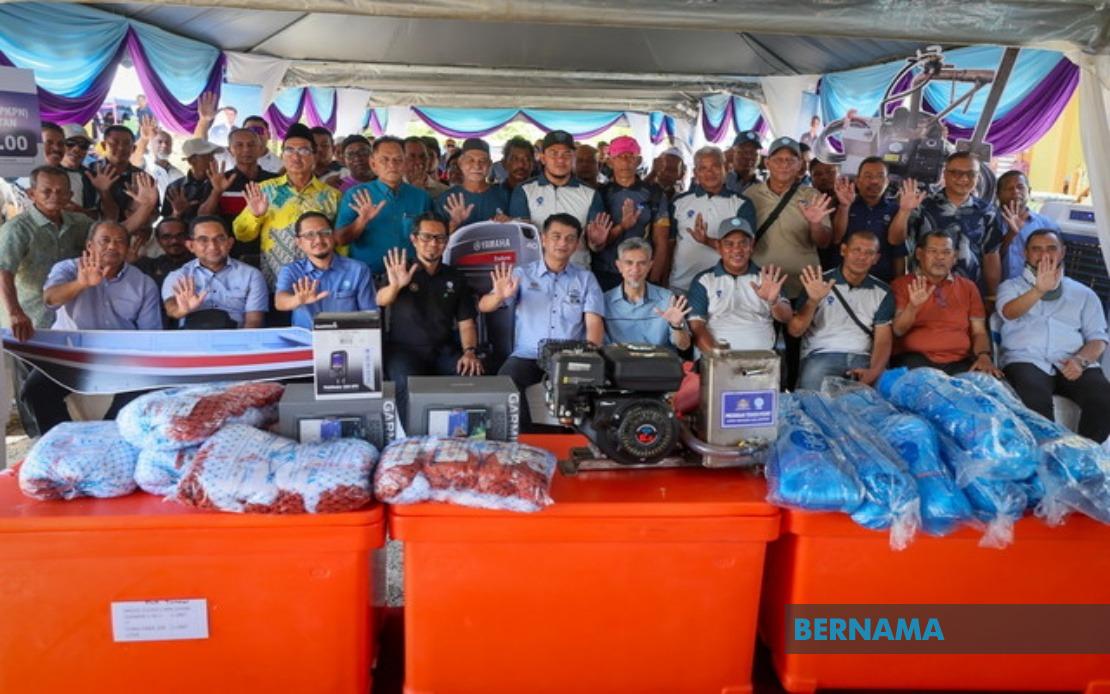
The Malaysian government has channelled RM10 million into the Special Fishermen Housing Project this year, signalling a broad commitment to raising living standards across the nation's fishing communities whilst addressing deeper structural challenges within the sector. The Fisheries Development Authority of Malaysia, which manages the initiative, has divided the funding into two distinct streams: rehabilitation of existing dwellings and construction of new residential units for eligible fishermen. This dual approach reflects recognition that housing insecurity remains a tangible hardship affecting coastal and river-dependent populations, particularly in traditionally fishing-dependent states like Kelantan.
The repair component accounts for the larger share of this year's budget, with RM6.8 million directed toward restoring 344 fishermen's homes across the country. According to LKIM leadership, this work has progressed substantially, reaching approximately eighty per cent completion with expectations that the entire repair initiative will conclude by the end of the third quarter. The remaining RM3.1 million supports construction of thirty-six newly built houses, a slower-moving segment of the programme complicated by complications surrounding land ownership and inheritance claims—bureaucratic friction that frequently ensnares housing initiatives in rural Malaysia. Despite these delays, officials anticipate completion within the calendar year.
The financial parameters governing the housing scheme vary geographically, reflecting cost-of-living disparities across Malaysia's regions. Peninsular Malaysia recipients of newly constructed homes receive allocations of RM84,000 per unit, whilst eligible fishermen in Sabah and Sarawak benefit from higher entitlements of RM95,000 per unit. For repair work, the authority offers up to RM20,000 per household, enabling significant structural rehabilitation without requiring full reconstruction. Within Kelantan specifically, the state has received RM388,000 in dedicated funding for the housing project, underscoring the importance of the fishing industry to the state's economic identity and rural livelihoods.
Beyond housing, government strategy toward fishermen has undergone substantial reorientation in recent years, reflecting mounting pressures on conventional marine and freshwater fishing operations. The LKIM authority is actively promoting aquaculture development as a complementary income stream, seeking to wean fishing communities away from exclusive dependence on traditional catching methods. This repositioning arises from a confluence of challenges: dwindling fish stocks, substantially elevated operational expenses particularly in fuel costs, and the reality that government fuel subsidies, whilst maintained, cannot indefinitely absorb industry-wide cost increases. The aquaculture pivot represents an acknowledgement that the sector's future viability depends on economic diversification.
Government policy envisions aquaculture providing four-tenths of national fish production by 2030, marking an ambitious target that necessitates significant investment and widespread adoption among existing fishing operators. The authority frames this transition as economically essential rather than merely advantageous, warning that fishing communities that fail to embrace aquaculture opportunities risk remaining trapped in an increasingly precarious economic position. Kelantan exemplifies this strategy through a RM400,000 allocation granted to the Kelantan State Fishermen's Association for tank-based prawn farming operations, establishing a model intended for replication across other states and regions.
The aquaculture initiative carries particular significance for Southeast Asian fisheries policy. As climate change intensifies pressure on wild fish stocks throughout the region and neighbouring countries like Thailand, Indonesia, and Vietnam have substantially accelerated their own aquaculture sectors, Malaysia's push toward inland farming represents both a defensive necessity and a competitive repositioning. The tank-based prawn farming model selected for Kelantan represents a capital-efficient entry point for individual fishing operators, requiring substantially less land than traditional agricultural aquaculture whilst delivering relatively rapid returns on investment.
From a broader policy perspective, the simultaneous investment in housing infrastructure and sector restructuring reflects a recognition that rural development cannot occur through income generation alone. Fishermen operating from unstable or substandard housing face barriers to accessing credit, engaging with formal economic institutions, and stabilising their families—all prerequisites for successful economic transition. By coupling housing improvements with aquaculture promotion, authorities aim to create conditions where fishing communities can develop economic resilience and reduce vulnerability to commodity price shocks and resource depletion.
The housing project also addresses a demographic challenge: younger Malaysians have been progressively exiting fishing occupations in pursuit of urban employment and education opportunities. Improved living conditions and supplementary income from aquaculture may help retain economically active fishing populations in their home communities, preventing the complete hollowing-out of coastal and riverine settlements. This concern has relevance across Southeast Asia, where rural depopulation threatens social cohesion and creates urban pressure.
Implementation challenges remain evident. Land ownership complications affecting the housing construction component suggest broader governance difficulties in rural property documentation and inheritance law. The authority's acknowledgement of these delays indicates awareness that technical housing construction represents only one facet of a more complex social challenge. Effective programme delivery requires coordinated action across multiple government agencies, from land administration to fisheries to housing authorities.
For Malaysian consumers and the broader economy, the initiative's success carries market implications. Expanded aquaculture production could stabilise domestic fish prices and reduce import dependence, contributing to food security at a time when global supply chains remain volatile. Success in transitioning fishing communities toward sustainable aquaculture could also establish a model for other resource-dependent sectors facing similar environmental and economic pressures, from timber communities to palm oil producers seeking sustainability credentials.
The RM10 million allocation, whilst substantial in nominal terms, represents a relatively modest commitment relative to the total fishing population and the scale of structural challenges confronting the sector. Industry observers suggest that sustained, multi-year funding with flexibility for community-specific adaptation will ultimately determine whether housing improvements and aquaculture promotion succeed in fundamentally reshaping economic prospects for Malaysia's fishing communities.

