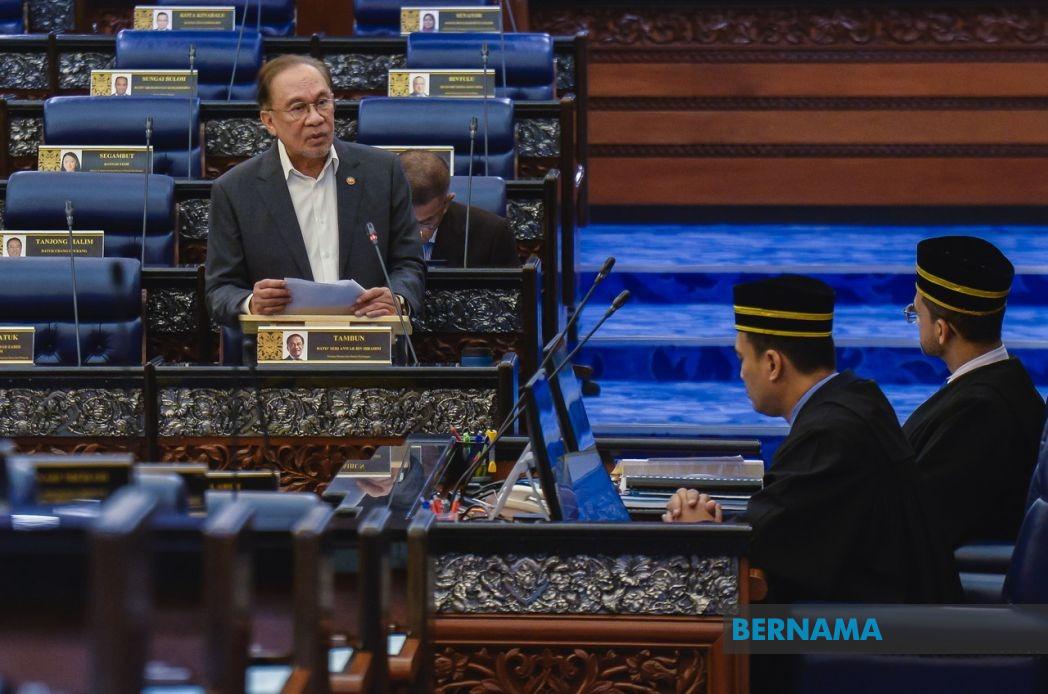
Prime Minister Datuk Seri Anwar Ibrahim moved to dispel concerns about government restrictions on activities in Federal Land Development Authority settlements, emphasising during parliamentary question time that no blanket prohibition exists on programmes being organised in these communities. His clarification came in response to queries about whether the administration was preventing state governments and other entities from holding events in FELDA areas, a sensitive issue given the political significance of these settlements across Malaysia.
The distinction the Prime Minister drew is crucial for understanding current government policy: while state authorities and other organisations remain free to stage programmes within FELDA settlements, what is prohibited is the deployment of federal government machinery—including FELDA's own resources and personnel—for the explicit purpose of election campaigning. This aligns with the existing electoral framework that governs the conduct of public officials and government bodies during campaign periods.
Anwar further elaborated that state governments retain full authority to undertake various initiatives within FELDA areas as part of their devolved responsibilities. He specifically cited the example of state governments issuing land titles, noting that while such actions fall within their constitutional prerogatives, they must still adhere to electoral regulations that apply across the country. The Prime Minister's remarks suggest that the constraint is narrowly tailored to prevent misuse of state apparatus for partisan advantage rather than broadly restricting civic and governmental activities.
Direct addressing remarks from Datuk Seri Hamzah Zainudin of Perikatan Nasional, who represents the Larut constituency, Anwar categorically denied having issued any directive to cancel the FELDA Settlers' Day programme that was scheduled for Kluang in Johor on June 20 and 21. This denial carries weight given speculation that had circulated in certain quarters about potential government interference with events celebrating the FELDA settler community. The cancellation of such programmes would have represented a concerning signal about government attitudes toward these historically important agricultural communities.
Beyond defensive posturing, Anwar used the parliamentary forum to reaffirm the MADANI Government's commitment to advancing the welfare and living standards of FELDA communities through concrete developmental initiatives. He characterised previous administrations as having neglected these settlements, allowing them to fall behind in rural development priorities despite their historical importance to Malaysia's agricultural economy and social fabric. This positioning frames the current government's approach as remedial, seeking to reverse years of comparative abandonment.
Among the tangible measures the government has already implemented are the establishment of dialysis centres within FELDA settlements, a healthcare initiative that directly addresses chronic health challenges affecting settler populations, particularly elderly residents. Additionally, the administration has expanded development facilities and infrastructure through various federal government agencies, signalling broader commitment beyond symbolic gestures. These health and infrastructure investments suggest a substantive reorientation of resources toward communities that historically benefited from state support during their establishment phases but subsequently experienced relative marginalisation.
Deputy Prime Minister Datuk Seri Dr Ahmad Zahid Hamidi appears to be playing a prominent role in this FELDA-focused agenda alongside the Prime Minister, indicating that revitalisation of these communities has secured backing from the highest echelons of the federal executive. The partnership between Anwar and Zahid on this portfolio demonstrates political will to prioritise settler welfare across what might otherwise be divided political constituencies. This collaborative approach could prove significant in demonstrating unified government purpose on development matters that transcend normal partisan boundaries.
The controversy surrounding FELDA programmes and potential restrictions reflects deeper anxieties within settler communities about their political relevance and government attention. FELDA settlements, established across multiple states and historically bastions of particular political movements, have evolved into demographically diverse communities with varied political preferences. Any perceived government discrimination in terms of programme restrictions could be interpreted as political victimisation, making Anwar's clarification particularly important for managing community perceptions.
The Prime Minister's emphasis on the distinction between programme prohibition and machinery prohibition also carries implications for how electoral rules are interpreted and enforced during campaign periods. Malaysian election law has long struggled with defining the boundary between legitimate governmental activities and improper campaign conduct, particularly at state level where lines between governing and campaigning frequently blur. Anwar's articulation suggests the government favours a reading that preserves state autonomy in developmental and administrative matters while constraining the direct application of government resources to electoral advantage.
For FELDA settlers scattered across Peninsular Malaysia, the government's stated position offers some reassurance about continued access to platforms for engagement with authorities and political actors. These settlements represent specific demographic cohorts with distinct economic interests in agricultural policy, pricing mechanisms, and social support structures. Their ability to host diverse programmes and engage with state officials without government obstruction could influence how different political forces seek to maintain relationships with these communities.
The timing of these remarks in mid-2024 comes amid ongoing political consolidation within Malaysia's federal government structure. Questions about programme restrictions in FELDA areas may reflect broader tensions about the use of state apparatus during periods of political flux or competition for electoral support. By publicly clarifying that no general ban exists, Anwar appears to be signalling that the MADANI Government respects established democratic norms regarding state neutrality in certain contexts, even as it pursues its developmental agenda.
Looking forward, the government's commitment to FELDA welfare initiatives will likely become a metric by which these communities evaluate federal commitment. Infrastructure improvements, healthcare access, and economic support measures will communicate more forcefully than parliamentary clarifications about the priority these settlements receive. The government's ability to translate stated intentions into tangible improvements will ultimately shape perceptions of whether FELDA communities are genuinely being prioritised or merely receiving rhetorical reassurance.

