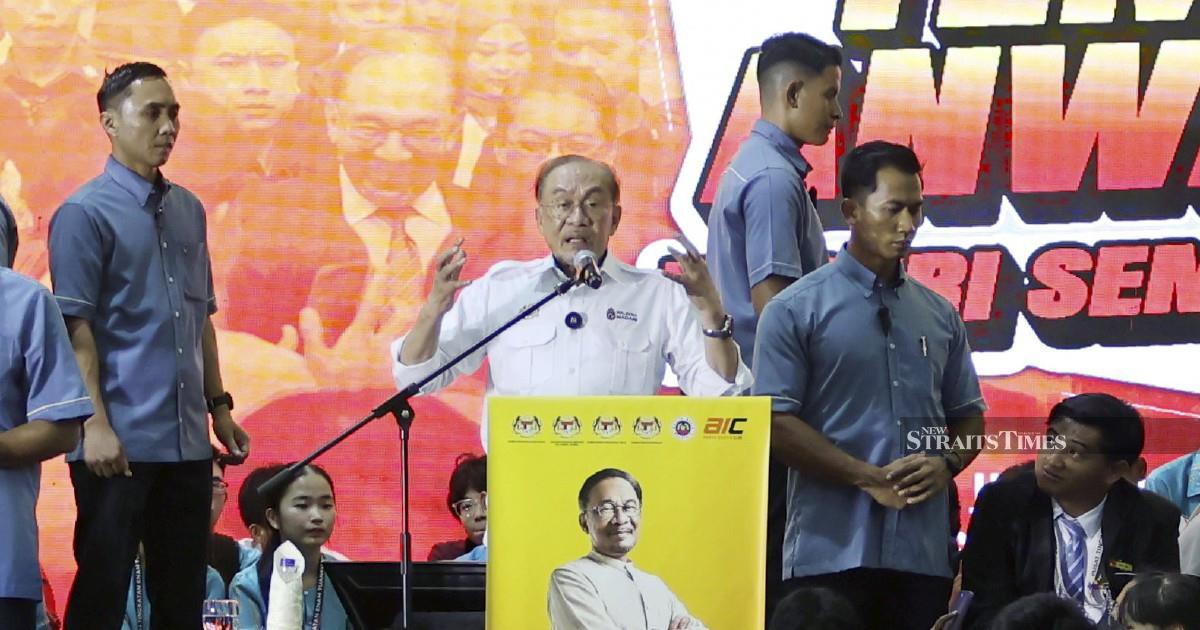
Prime Minister Datuk Seri Anwar Ibrahim has defended the government's financial intervention in Tabung Haji, arguing that state funds were necessary to stave off the institution's imminent collapse. Speaking in Seremban, Anwar made clear that without the injection of capital, Malaysia's pilgrimage savings fund would have descended into insolvency, a prospect the administration could not permit given the institution's critical role in supporting millions of Muslim Malaysians.
The Tabung Haji crisis represents one of the most sensitive financial challenges facing the government, touching not only economic stability but also matters of deep religious and cultural significance. The fund manages savings for Malaysian Muslims preparing for the hajj pilgrimage to Mecca, making its health a matter of national concern. Over the past decade, poor investment decisions, management missteps, and exposure to troubled property assets have substantially eroded the fund's capital base, creating a situation where redemptions and ongoing losses threatened to deplete reserves entirely.
Anwar's acknowledgement that intervention was unavoidable signals the gravity of Tabung Haji's underlying predicament. The prime minister's framing emphasizes that this was not a discretionary policy choice but rather a defensive measure to protect a critical national institution. For policymakers, allowing a fund managing the retirement and pilgrimage aspirations of millions to fail would have carried profound political and social consequences, alongside triggering systemic concerns about institutional governance and fiduciary responsibility.
The trajectory of losses at Tabung Haji had accelerated through the 2010s and early 2020s, driven by exposure to real estate ventures that underperformed dramatically. The fund's investment portfolio became increasingly concentrated in illiquid property holdings, many of which failed to generate expected returns. Simultaneously, the organization faced administrative inefficiencies and alleged lapses in oversight that compounded the financial deterioration. By the time the current administration took office, the situation had deteriorated beyond the point where operational adjustments alone could restore stability.
For Malaysian investors and contributors to Tabung Haji, the government bailout carries mixed implications. On one hand, state intervention preserves their accumulated savings and ensures the fund can continue paying out benefits to those retiring or preparing for hajj. On the other hand, the necessity of a rescue underscores how severely management failures and poor governance can damage even flagship national institutions. The rescue does not automatically resolve the underlying structural problems that created the crisis; rather, it buys time for comprehensive restructuring and reform.
The political dimension of this rescue cannot be overlooked. The government's willingness to commit substantial resources to Tabung Haji reflects the electoral importance of Muslim voters and the symbolic weight of supporting pilgrimage aspirations in Malaysia's Islamic-majority democracy. However, Anwar's public explanation also acknowledges taxpayers' legitimate questions about why they should bear the cost of bailing out an institution whose management made poor decisions. Framing the intervention as necessary to prevent catastrophic failure attempts to position the decision as pragmatic rather than politically motivated.
Regionally, Malaysia's experience with Tabung Haji resonates across Southeast Asia, where several countries operate hajj savings schemes serving their Muslim populations. The Malaysian fund's difficulties illustrate how vulnerable such institutions can become when governance frameworks are weak and risk management is inadequate. Other governments administering similar programs may view the Tabung Haji crisis as a cautionary tale prompting them to strengthen oversight mechanisms and diversify investment portfolios.
The broader question of institutional accountability looms behind Anwar's statement. While saving Tabung Haji was necessary, the government will ultimately need to address how senior management allowed the fund to deteriorate so severely. Questions about personal responsibility, potential misconduct, and systemic failures in governance structures require serious investigation. The rescue operation cannot be seen as a substitute for accountability; rather, it should be coupled with comprehensive reforms ensuring that such crises do not recur.
Moving forward, Tabung Haji faces the challenge of rebuilding both its financial position and public confidence. The injection of government funds provides the immediate breathing room, but the fund must undergo substantial restructuring. This includes diversifying investment strategies away from concentrated real estate exposure, strengthening governance and internal controls, improving transparency in operations, and potentially reconsidering the fund's business model to align with sustainable long-term objectives.
For Malaysian Muslims who contributed to Tabung Haji throughout their working lives, Anwar's statement offers reassurance that their interests were not abandoned. Yet it also serves as a reminder of the imperative for robust institutional governance and independent oversight. The government's rescue decision, while necessary, should catalyze deeper reflection on how to prevent similar institutional failures across Malaysia's public sector.

