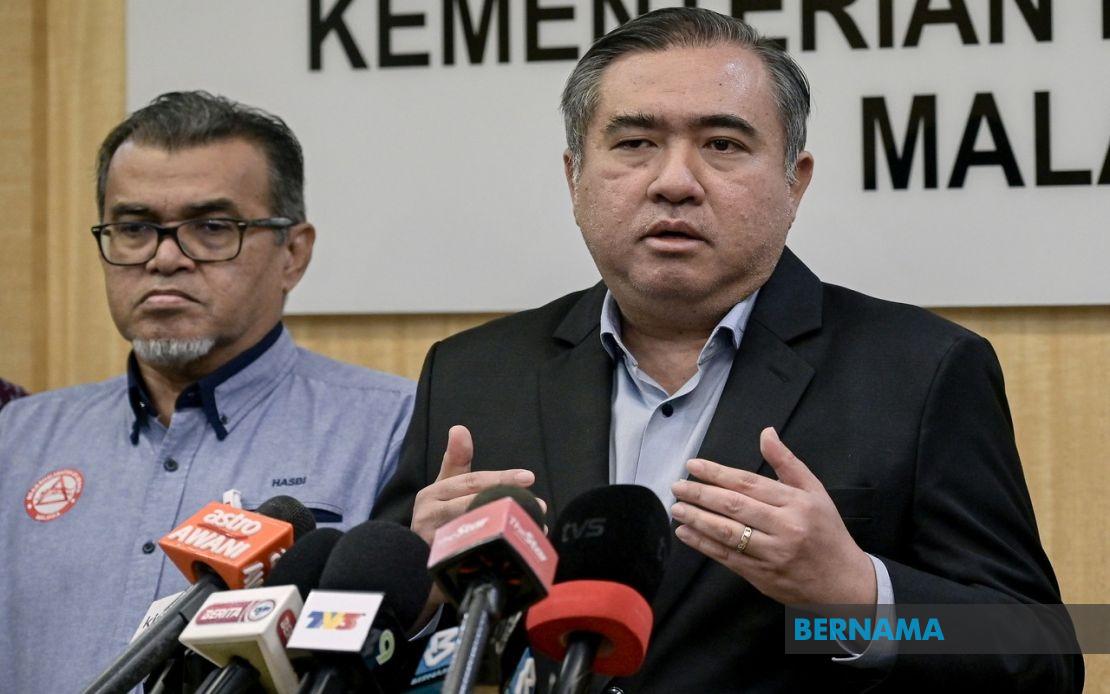
Transport Minister Anthony Loke has drawn a clear distinction between government oversight of port ownership and management autonomy, clarifying that Malaysia's regulatory framework does not extend to corporate staffing decisions at port operators. Speaking at a press conference in Putrajaya on July 17, Loke explained that the administration's primary concern lies with maintaining majority Malaysian ownership of companies holding strategic national concessions, rather than dictating who leads these organisations operationally.
The minister's remarks came in response to international media coverage surrounding the appointment of Sultan Ahmed Sulayem, the former chairman and chief executive of DP World, to the position of executive chairman at MMC Ports Holdings Bhd. The leadership change followed the sudden resignation of group chief executive officer Azman Shah Mohd Yusof, an event that had drawn scrutiny from overseas news outlets examining governance shifts within Malaysia's port infrastructure sector.
Loke articulated the government's regulatory philosophy with precision, emphasising that ownership structures remain the focus of state oversight. Companies operating port concessions or managing other strategic national assets must maintain at least 51 per cent Malaysian ownership, a threshold that underpins the nation's approach to managing critical infrastructure. This policy ensures that control of strategically important sectors remains fundamentally anchored within Malaysia, even as operational management may involve international expertise and foreign personnel.
However, once this ownership benchmark is satisfied, the minister stressed that day-to-day management and executive appointments constitute internal corporate governance matters outside government purview. This distinction reflects a pragmatic understanding that restricting management decisions could deter foreign investment and expertise necessary for competitive port operations in an increasingly globalised maritime economy. The Port of Tanjung Pelepas exemplifies this approach, with foreign nationals serving as chief executive officers despite the government's broader ownership requirements.
Loke's statement addresses a tension inherent in Malaysia's economic policy: balancing nationalist concerns about foreign control of critical assets with the practical reality that competitive advantage in sectors like port management often depends on attracting global talent and investment. By maintaining the 51 per cent ownership floor while permitting foreign executive leadership, the government attempts to preserve strategic control without compromising operational excellence. This model acknowledges that ownership and management represent distinct levers of power, with the former being more politically significant than the latter.
The clarification becomes particularly relevant given Malaysia's position as a major Southeast Asian maritime hub and the increasing competition among regional ports for cargo volumes and shipping lines. Port efficiency, innovation, and service quality depend substantially on leadership experience and international best practices, resources that foreign executives often bring from prior postings at major global port operators. By restraining from interference in management appointments, Malaysia positions itself as hospitable to talent acquisition while maintaining the ultimate safeguard of majority ownership.
Loke additionally noted that any substantive alterations in shareholding arrangements must be formally communicated to the government through established channels, particularly the Public-Private Partnership Unit (UKAS). This requirement ensures transparency and allows authorities to verify compliance with ownership thresholds before changes become operational. Regarding the specific situation at MMC Ports Holdings Bhd, the Transport Ministry indicated it had received no official notification of ownership changes from either the company or its concessionaire, suggesting that Sulayem's appointment represented a management reshuffle rather than a shift in the underlying capital structure.
The distinction between management and ownership oversight carries important implications for corporate governance in Malaysia's strategic sectors. Companies enjoy freedom in selecting leaders based on merit, track record, and organisational needs, while government retains the power to challenge any structural changes that might erode Malaysian control. This separation prevents bureaucratic interference in operational decisions while preserving the state's capacity to intervene when national interests genuinely require it—a balance that has become increasingly important as Malaysia seeks to maintain competitiveness in infrastructure sectors facing regional and global competition.
For port stakeholders, shipping lines, and cargo operators, Loke's remarks offer reassurance regarding predictability and meritocratic governance. The Transport Minister's comments suggest that port management will be evaluated on performance metrics rather than the nationality of those making decisions, an approach that could enhance the attractiveness of Malaysia's port operations to international shipping networks. Investors and operators can anticipate that qualified executives from anywhere in the world may lead these facilities, provided underlying ownership remains Malaysian-controlled.
The minister's clarifications also reflect broader shifts in how Malaysia approaches foreign participation in strategic sectors. Rather than blanket restrictions on foreign involvement, the framework permits international expertise and leadership while maintaining ultimate ownership control—an approach increasingly recognised as necessary for competing in globally integrated industries. Port operations exemplify this reality; few countries attempt to restrict managerial appointments at ports, as such restrictions typically undermine competitiveness without delivering corresponding security benefits.
Looking forward, the government's stated position suggests that future appointments of foreign executives to senior positions at Malaysian port operators should encounter minimal regulatory friction, provided ownership structures remain unchanged and formal notification procedures are observed. This clarity may ease transitions as port operators seek to strengthen leadership teams with international experience and networks. For Malaysia's broader economic positioning, such openness to foreign talent in strategic sectors signals pragmatism about globalisation while maintaining the nationalist scaffolding of majority ownership that domestically reassures stakeholders concerned about foreign domination of critical infrastructure.

