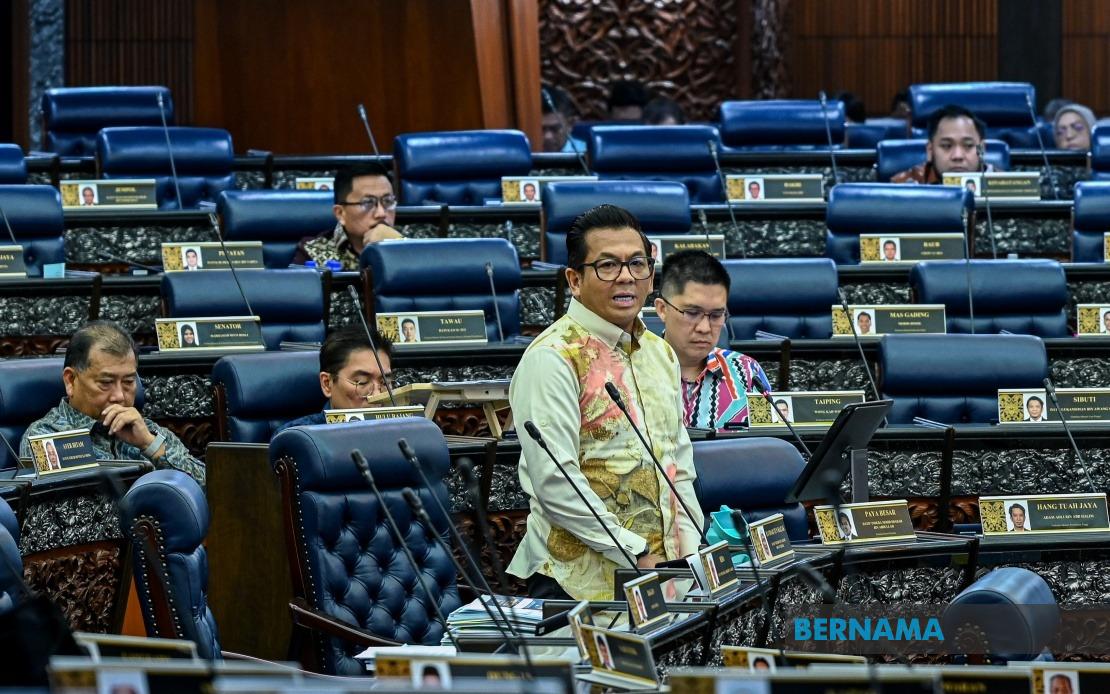
Malaysia's government is deploying the Basic Living Expenditure (PAKW) framework as a data-driven tool to identify and tackle the persistent gap in cost of living between urban and rural communities. Deputy Economy Minister Datuk Mohd Shahar Abdullah outlined the approach during Parliament's question-and-answer session, revealing how the Department of Statistics Malaysia developed the mechanism to inform targeted policy interventions that account for geographical and economic variations across the country.
The PAKW framework represents a recognition that household spending patterns diverge significantly depending on location, employment opportunities, and local economic conditions. Rather than applying blanket policies, the government is using granular spending data to tailor solutions that reflect the distinct needs and affordability constraints faced by different communities. This approach moves beyond treating Malaysia's cost-of-living challenge as a uniform national problem and instead acknowledges the reality that a ringgit stretches differently in Kuala Lumpur than it does in Kelantan or Sabah.
To democratise access to this data, the authorities have created a public calculator at myPAKW.dosm.gov.my, allowing individual Malaysians to track and understand their own spending patterns in relation to official benchmarks. This transparency serves dual purposes: it enables households to evaluate their financial health and informs policymakers about actual consumption behaviour beyond theoretical models. Such citizen-level engagement with economic data is relatively uncommon in Southeast Asia and signals a shift toward participatory governance in Malaysia's economic planning.
The disparity in baseline living costs is stark and instructive. Kuala Lumpur's PAKW value stands at RM5,639, substantially higher than Kelantan's RM4,254 and Sabah's RM4,511. These figures underscore why a single minimum wage or cost-of-living allowance would be inadequate across all regions. Urban centres require higher incomes simply to maintain equivalent living standards due to elevated housing, transportation, and services costs. Rural areas, while presenting lower absolute spending requirements, often face different challenges such as limited income-earning opportunities and reduced access to competitive markets.
The government's response strategy extends beyond mere measurement and into active income elevation through training programmes designed to boost earning potential across both ends of the wage spectrum. This dual-pronged approach targets not just the poorest segments but also aims to lift upper-income thresholds, acknowledging that Malaysia's development depends on broadening the middle class and reducing inequality simultaneously. These initiatives are embedded within the Five-Year Malaysia Plans, ensuring continuity and regular recalibration rather than ad-hoc interventions.
The evolution of the Poverty Line Income (PLI) provides concrete evidence of policy adjustment informed by periodic reassessment. The national PLI jumped to RM2,705 in 2024, representing a dramatic increase from RM980 in 2016. This adjustment reflects both inflation and a recalibration of what constitutes adequate income for basic dignity and participation in society. For Malaysian households, particularly those in vulnerable categories, such revisions carry immediate significance as they determine eligibility for assistance programmes and influence wage negotiations.
The implicit philosophy behind this framework is that addressing cost-of-living pressures requires understanding before intervention. Rather than reacting to inflation with broad subsidies or price controls, which can distort markets and create inefficiencies, the PAKW approach diagnoses the problem with precision. This allows the government to target support where it is needed most and to design programmes that address root causes such as low productivity and limited skills rather than merely treating symptoms.
For Malaysian policymakers, the PAKW framework offers a template applicable to other regional disparities. The same principle that justifies different thresholds for Kuala Lumpur and Kelantan could inform decisions about support for newly developed regions, industrial zones, or areas undergoing economic transition. It also provides a mechanism for monitoring whether development initiatives are actually improving living standards rather than simply generating headline growth figures that obscure persistent regional inequalities.
The significance of this approach extends beyond domestic politics into the broader Southeast Asian context. Many nations in the region struggle with urban-rural divides and cost-of-living pressures that outpace wage growth. Malaysia's experience with the PAKW framework, should it prove effective in reducing regional disparities and improving targeting efficiency, could offer valuable lessons for neighbours grappling with similar challenges. The willingness to measure, publish, and act upon granular economic data represents a step toward evidence-based governance that other developing economies might emulate.
Yet challenges remain in translating this data infrastructure into tangible improvements in living standards. The framework's effectiveness ultimately depends on whether the training programmes and other interventions prove sufficient to boost incomes, whether implementation is consistent across all regions, and whether political priorities remain stable across electoral cycles. For ordinary Malaysians facing persistent cost pressures, the availability of better data is meaningful only if it translates into concrete support and genuine opportunity to earn higher incomes.
The government's invocation of the PAKW framework signals recognition that contemporary cost-of-living crises require sophisticated analysis rather than simple solutions. By anchoring policy responses in geographic and household-level data, Malaysia is attempting to move beyond one-size-fits-all approaches that often fail to reach those most in need. Whether this translates into measurable relief for households struggling with affordability will ultimately determine whether the framework delivers on its promise to bridge the urban-rural divide.

