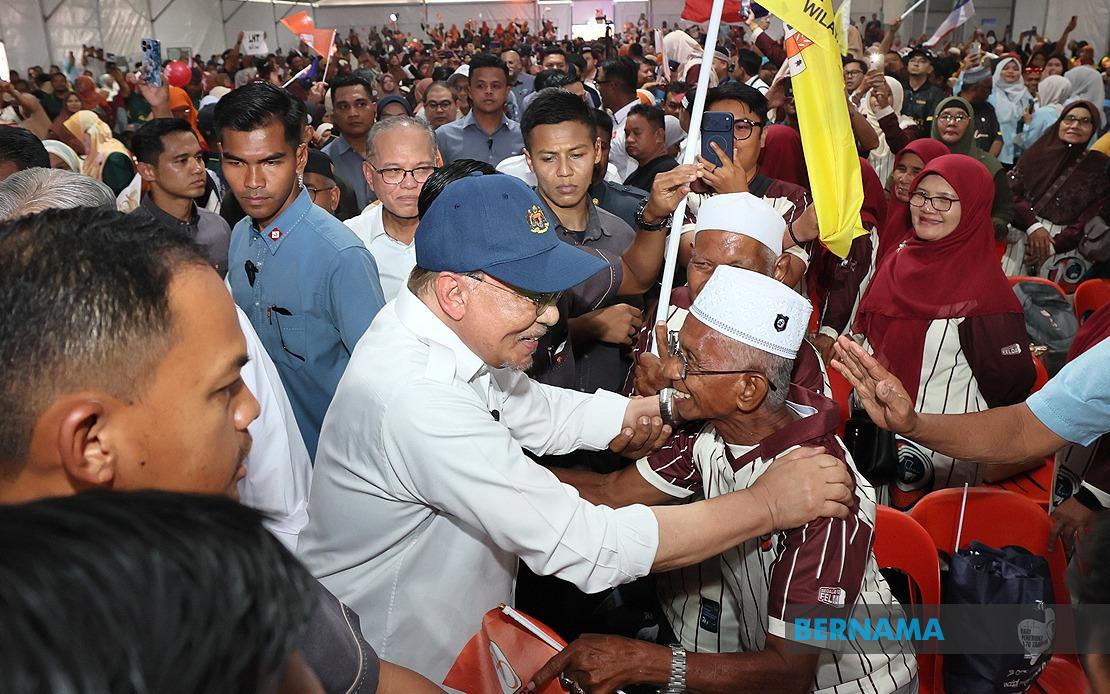
The Federal Land Development Authority marked its seventh decade of operation with a series of government-backed initiatives aimed at reversing the fortunes of one of Malaysia's oldest rural development schemes. At the FELDA Settlers' Day and 70th Anniversary celebration held at Tun Abdul Razak Stadium in Jengka, Pahang, Prime Minister Datuk Seri Anwar Ibrahim unveiled a multi-pronged package of allocations totalling RM29 million designed to address contemporary challenges facing the settler community. The announcement reflects a strategic pivot toward enhancing the liveability and economic viability of FELDA communities at a time when younger generations face mounting pressure to leave settlements for urban employment opportunities.
The digital literacy initiative stands out as a forward-looking component of the package, with RM15.85 million directed toward building technological capacity among settlers across 317 eligible FELDA settlements nationwide. This programme addresses a critical gap in skills development, particularly acute in rural areas where access to technology training remains limited. For a demographic that includes many retirees alongside younger inhabitants, digital literacy represents not merely a convenience but a necessity for accessing government services, participating in e-commerce opportunities, and maintaining connection with family members in urban centres. The scope of the initiative, spanning over 300 settlements, underscores the recognition that digital exclusion could deepen economic disparities between FELDA communities and other parts of Malaysia.
Educational infrastructure received substantial attention through an allocation of RM10 million dedicated to rehabilitating 370 primary and secondary schools situated within FELDA areas. These repairs address longstanding maintenance backlogs that have accumulated in rural educational institutions, directly impacting learning conditions for students in FELDA settlements. The condition of school facilities carries particular significance in rural development, as deteriorating infrastructure can discourage investment in education by families and contribute to brain drain as parents increasingly view relocation as necessary to secure quality schooling for their children. By committing to systematic school improvements, the government sends a signal that FELDA settlements warrant the same attention to educational quality as other communities.
Healthcare provision formed the third pillar of the announcement, with RM3 million allocated to support FELDA MAYA Squad healthcare teams. These mobile medical units have become integral to primary healthcare delivery in scattered rural settlements where conventional clinic infrastructure may be inadequate or geographically inaccessible. The allocation reflects acknowledgment that ageing settler populations require accessible healthcare services, while also supporting the healthcare workers who service these communities often under challenging conditions.
Millah Yoot, a 73-year-old FELDA Chemplak settler in Segamat, Johor, and recipient of the 2025 Outstanding Woman Settler Award, characterised the government allocations as validation of official commitment to settler welfare. Her comments highlighted the psychological dimension of rural development policy—that sustained government investment demonstrates recognition of rural communities' contributions to national development. Yoot emphasised the importance of younger settlers engaging actively with available programmes, framing government support not as passive assistance but as enabling infrastructure for continued self-improvement and community stewardship.
Haron Sulaiman, a FELDA Jerangau Barat settler in Ajil, Terengganu, articulated how digital literacy programmes specifically address anxieties facing rural communities navigating rapid economic transformation. At 66 years old, Sulaiman's perspective reflects the reality that FELDA settlers increasingly find themselves managing technological transitions while supporting younger family members pursuing opportunities elsewhere. His warm reception of the digital initiative suggests recognition that technological capability represents a prerequisite for remaining economically relevant in contemporary Malaysia rather than a discretionary enhancement.
The government's legislative agenda regarding housing development demonstrates parallel ambitions for FELDA modernisation. Amendments to the Land (Group Settlement Areas) Act 1960 would permit construction of multiple housing units on single residential lots owned by FELDA settlers, enabling property subdivision and potentially unlocking equity held in FELDA land. This proposed legislative change addresses a longstanding constraint on settler wealth accumulation and intergenerational property transfer. Muhammad Farizul Hafiz Awang, a 36-year-old FELDA Panching Utara resident in Kuantan, identified this housing initiative as particularly significant for younger settlers seeking to establish independent households while remaining within FELDA communities.
The cumulative effect of these initiatives suggests recalibration of FELDA policy toward retention and sustainability rather than mere maintenance of existing arrangements. Historical FELDA development emphasised agricultural production and settlement consolidation; contemporary policy increasingly addresses quality-of-life factors that determine whether younger generations remain in or depart from these communities. Digital connectivity, educational quality, healthcare access, and housing flexibility all represent factors influencing settlement viability in an era when rural youth possess multiple options for geographic mobility.
For Malaysian policymakers, FELDA's evolution carries broader implications regarding rural development strategy. The authority encompasses hundreds of thousands of residents spread across hundreds of settlements, making it simultaneously a historical institution and a contemporary policy challenge. The 70th anniversary initiatives indicate government recognition that technological disruption and demographic change require proactive response beyond traditional subsidy and administrative frameworks. The scale of investment—RM29 million distributed across hundreds of settlements—represents meaningful commitment while also suggesting the magnitude of ongoing needs in rural development infrastructure.
The emphasis on younger generation engagement reflects awareness that FELDA's future depends on intergenerational sustainability rather than reliance on founding generations of settlers. By directing resources toward digital skills, school quality, and housing flexibility, policy attempts to create conditions where remaining in FELDA settlements represents a viable choice rather than necessity born of limited alternatives. Responses from settlers like Yoot, Sulaiman, and Awang suggest receptivity to these approaches, though implementation effectiveness will ultimately determine whether announced allocations translate into tangible improvement in settler circumstances and whether such improvements sufficiently alter the calculus for younger Malaysians considering their futures in FELDA communities.

