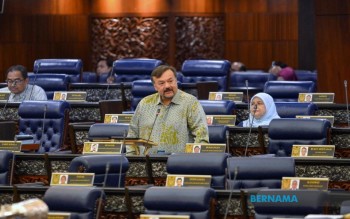
Finance Minister II Datuk Seri Amir Hamzah Azizan disclosed that the government had channelled more than RM500 million in micro-financing to entrepreneurs during a seven-week window from May 15 to June 26, 2026, representing a concerted push to stabilise the small business sector. The programme has already touched the lives of more than 30,000 business owners seeking capital to navigate an environment marked by mounting operational expenses and tightened consumer spending. The announcement came during the Minister's Question Time in Parliament, where Amir Hamzah was responding to concerns raised about the government's strategy for keeping small traders, hawkers and enterprises afloat amid a challenging international economic backdrop.
These approvals form part of a substantially larger government initiative, the Micro Financing Facility Programme, which carries an allocation exceeding RM5 billion. The scheme targets micro enterprises specifically, a segment of the economy that typically operates on thin margins and struggles to access conventional banking finance. By reserving such a substantial pool of capital, the government signals its intention to maintain liquidity within grassroots commerce even as broader macroeconomic conditions remain uncertain. The diversification of delivery channels—through Amanah Ikhtiar Malaysia, Agrobank, Bank Simpanan Nasional, Bank Rakyat, MARA and TEKUN Nasional—ensures that entrepreneurs in both urban and rural areas have pathways to access these funds, reflecting a deliberate attempt to avoid geographic disparities in financial access.
Parallel to the micro-financing stream, the government has launched the RM5 billion MADANI Government Assistance Guarantee Scheme, administered by Syarikat Jaminan Pembiayaan Perniagaan Bhd (SJPP). This initiative addresses a persistent barrier to MSME growth: the difficulty smaller firms face in securing lending without collateral or established track records. Between May 15 and June 20, SJPP approved RM219 million in financing guarantees, benefiting more than 300 MSMEs. Notably, the scheme has demonstrated particular traction in traditionally capital-intensive sectors such as agriculture, construction, logistics and tourism—industries where the multiplier effects of support are especially pronounced for employment and export competitiveness.
The SJPP's mandate extends beyond simple guarantee provision. The agency is actively collaborating with commercial banks to restructure and reschedule existing debt obligations for struggling firms, a mechanism that provides immediate cash-flow relief without requiring fresh borrowing. Additionally, the scheme incorporates targeted repayment assistance, essentially subsidising or deferring portions of loan servicing for the most vulnerable borrowers. Such interventions reflect a more nuanced approach than blanket lending: rather than flooding the market with new credit, the government acknowledges that many existing borrowers need breathing room to restructure operations before taking on additional debt.
Bank Negara Malaysia's launch of the RM5 billion SME Stabilisation Relief Facility in mid-May 2026 represents a third pillar of the government's crisis-response architecture. Within weeks of its rollout, nearly RM1 billion had been approved for more than 1,500 MSMEs, suggesting strong demand and rapid deployment. The rapid uptake indicates that many firms have indeed been squeezed by cost pressures and that the relief window opened at a critical juncture. The facility's focus on stabilisation rather than expansion-oriented lending reflects pragmatic recognition that survival takes precedence over growth during economic downturns.
Combining the three schemes—the Micro Financing Facility Programme, the MADANI Government Assistance Guarantee Scheme, and the SME Stabilisation Relief Facility—the government has effectively mobilised over RM10 billion in support mechanisms within a compressed timeframe. By late June, approximately RM1.7 billion had been deployed through various channels, leaving roughly RM4 billion in available funds. This reserve capacity provides both a buffer against unforeseen demand surges and reassurance to potential applicants that the programmes are not oversubscribed or near depletion. For Malaysian entrepreneurs assessing whether to apply, knowing that substantial funds remain accessible reduces the anxiety that applications might be rejected due to programme exhaustion.
The sectoral distribution of SJPP approvals—agriculture, construction, logistics and tourism—warrants particular attention for Southeast Asian policymakers. These are sectors intrinsically tied to regional supply chains and sensitive to global trade dynamics. By shoring up firms in these industries, Malaysia is effectively protecting vulnerabilities in its own export ecosystem and the interconnected economies of Brunei, Indonesia, the Philippines, Singapore, Thailand and Vietnam. Disruptions in Malaysian logistics or agricultural export capacity ripple across ASEAN, so domestic support measures have regional significance.
For hawkers and street traders specifically, the micro-financing schemes address a longstanding grievance: traditional banks have historically viewed this segment as too risky or expensive to serve. By directing institutional capital through specialist agencies like AIM and TEKUN—which employ relationship-based lending rather than collateral-based criteria—the government creates an inclusion pathway. Many developing economies struggle with this problem; Malaysia's multi-channel approach offers a replicable model for other Southeast Asian governments grappling with informal-sector credit access.
The timing of these announcements during parliamentary Question Time also carries political significance. By publicly reporting progress on MSME support, the government demonstrates responsiveness to backbench MPs and, by extension, their constituents. Datuk Andi Muhammad Suryady Bandy's question from Kalabakan, a district with significant smallholder agriculture, underscores how rural constituencies view MSME resilience as essential to local livelihoods and political legitimacy. Ministers' transparent reporting of disbursed funds and beneficiary numbers thus serves both accountability and confidence-building functions.
Looking forward, the RM4 billion remaining across the three schemes represents both opportunity and constraint. If deployment continues at recent rates, the funds will sustain the programmes into the third or fourth quarter of 2026. However, should economic conditions deteriorate further—a possibility given global inflation and potential trade disruptions—the government may face pressure to seek additional appropriations. The sufficiency of RM5 billion per programme depends on assumptions about average loan sizes, default rates, and the intensity of demand. For MSMEs planning to apply, the open question is whether processing times and approval thresholds will tighten as the programmes mature and programme managers become more risk-averse.
The government's integrated approach—combining direct lending, guarantee schemes, and debt restructuring—reflects evolved thinking about MSME support. Rather than relying on a single instrument, policymakers have constructed a toolkit allowing for differentiated responses to varied business problems. A newly formalised hawker might qualify for micro-financing; an established but overleveraged construction firm might benefit more from guarantee-backed refinancing; a tourism operator facing temporary revenue collapse might need repayment assistance. This granularity increases the likelihood that interventions match actual needs, though it also imposes administrative complexity on delivery agencies managing multiple schemes simultaneously.

